

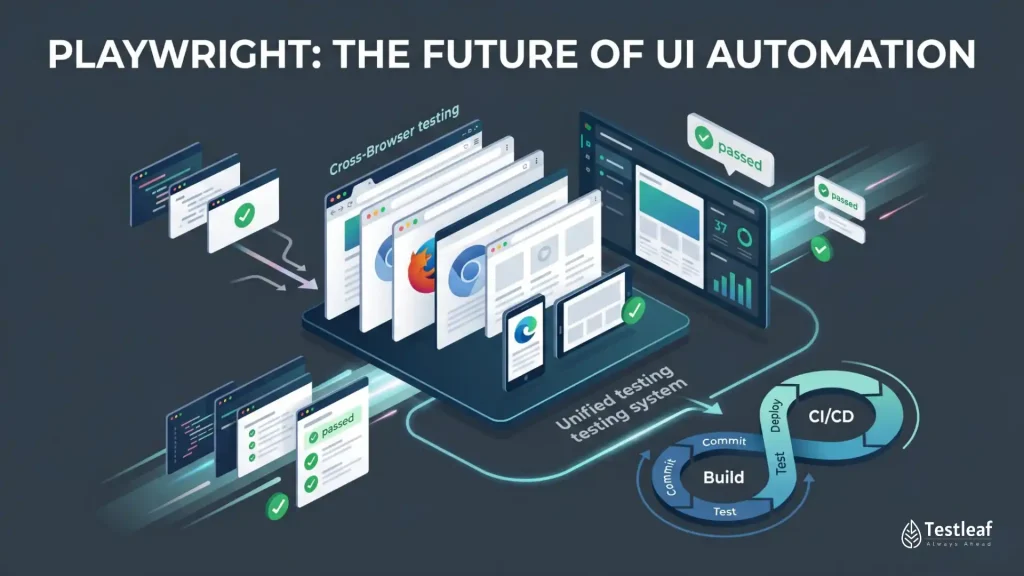
In this blog series, based on an insightful Q&A with Babu Manickam, we’ll explore Playwright, a modern tool for automation testing. In this first blog, we’ll dive into why Playwright is quickly becoming the preferred tool for UI automation and how it is shaping the future of test automation.
Playwright is considered the future of UI automation because it offers faster execution, built-in auto-waiting, cross-browser testing with a single API, better stability for modern web apps, and smoother CI/CD integration. These strengths help QA teams reduce flaky tests and build reliable automation for fast-moving software releases.
Why Playwright is Gaining Popularity
Playwright is rapidly becoming a preferred tool for automation testers, and it’s easy to see why. While Selenium has been the go-to tool for years, Playwright provides a modern approach to automation testing with features that make it stand out.
1. The Rise of Playwright: Speed, Stability, and Cross-Browser Testing
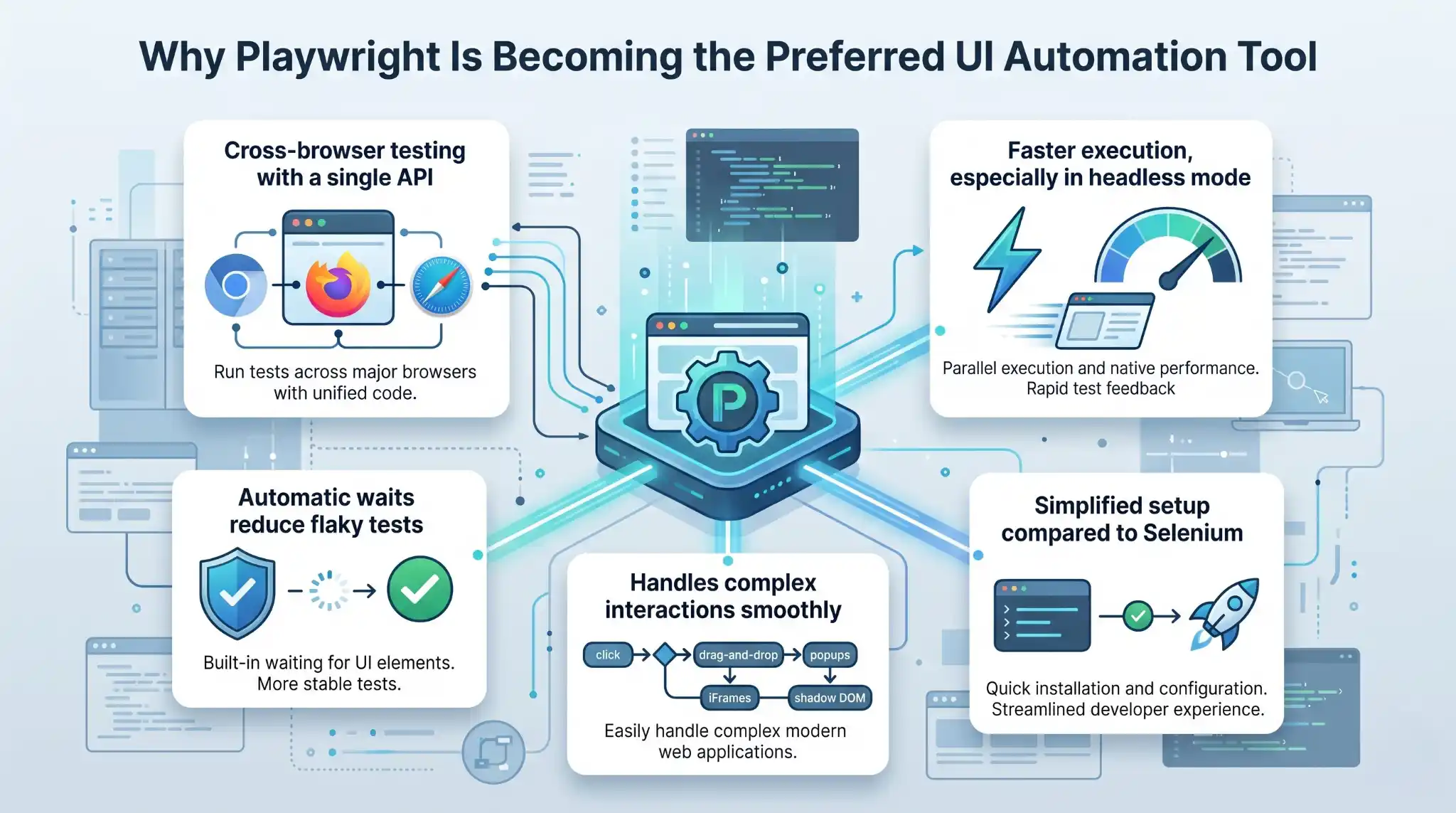

Playwright was designed to solve many of the challenges that testers face with older tools like Selenium. One of its standout features is the ability to support cross-browser testing across Chrome, Firefox, and WebKit with a single API. This gives testers the flexibility to run tests on different browsers seamlessly without having to deal with browser-specific complexities.
Speed is another area where Playwright excels. The tool is known for its faster execution times compared to Selenium, especially when running in headless mode (without a graphical user interface). Playwright’s automatic waiting for elements and its ability to handle complex interactions without relying on external waits significantly reduces flaky tests, which are common with Selenium.
Recommended for You: playwright interview questions
2. Simplicity and API Consistency
One of the main reasons Playwright is becoming a go-to tool is its unified API. Unlike Selenium, which requires separate browser drivers for each browser, Playwright provides a single, consistent API that works across all supported browsers. This streamlines the process for testers, saving them time and reducing the complexity of maintaining separate driver configurations.
With Playwright, testers can focus more on writing tests and less on handling setup and configuration, which is a common issue with older tools like Selenium.
Playwright is gaining attention because modern QA teams need automation tools that are fast, stable, and easy to maintain. Its support for Chrome, Firefox, and WebKit through one API makes it useful for cross-browser testing, while automatic waiting and CI/CD-friendly execution help teams improve reliability. For testers preparing for 2026, Playwright is becoming an important skill for modern UI automation.
Comparing Playwright to Selenium: The Battle for the Future of Automation Testing
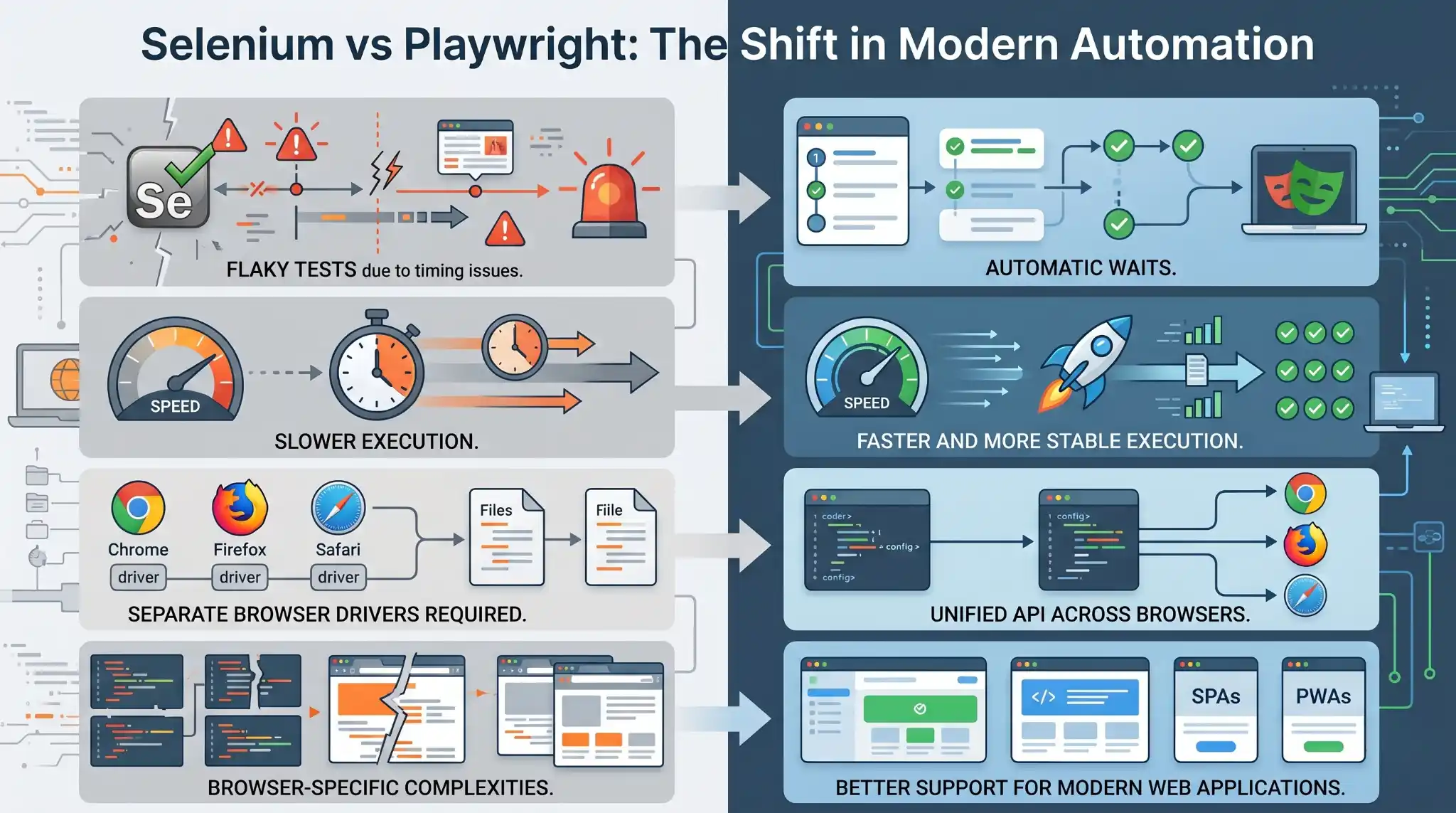
While Selenium has been the industry standard for over a decade, Playwright is fast becoming the preferred tool due to its modern capabilities.
Selenium’s Challenges
Selenium, although reliable, has faced several challenges:
- Flaky tests: Timing issues often lead to unreliable test results.
- Performance: Tests can run slower, particularly in headless mode.
- Browser-specific issues: Selenium requires separate drivers for each browser, which can be cumbersome.
Playwright’s Advantages
Playwright, on the other hand, addresses these pain points:
- It provides automatic waits, reducing the risk of flaky tests.
- Its cross-browser support eliminates the need for different drivers for different browsers.
- Playwright’s tests are significantly faster and more stable, especially for modern web applications.
| Area | Selenium | Playwright |
|---|---|---|
| Browser support | Strong WebDriver ecosystem | Chromium, Firefox, WebKit with one API |
| Setup | Often needs browser drivers | Simpler setup |
| Test stability | Can face wait-related flakiness | Built-in auto-waiting improves stability |
| Speed | Reliable but can be slower | Faster for many modern UI workflows |
| Best use case | Existing enterprise regression | Modern web apps and CI pipelines |
The Growing Demand for Playwright Skills in 2026
The rise of Playwright in the industry has made automation testing a highly sought-after skill, and companies are increasingly looking for testers who are proficient in it.
Why Playwright Is in High Demand
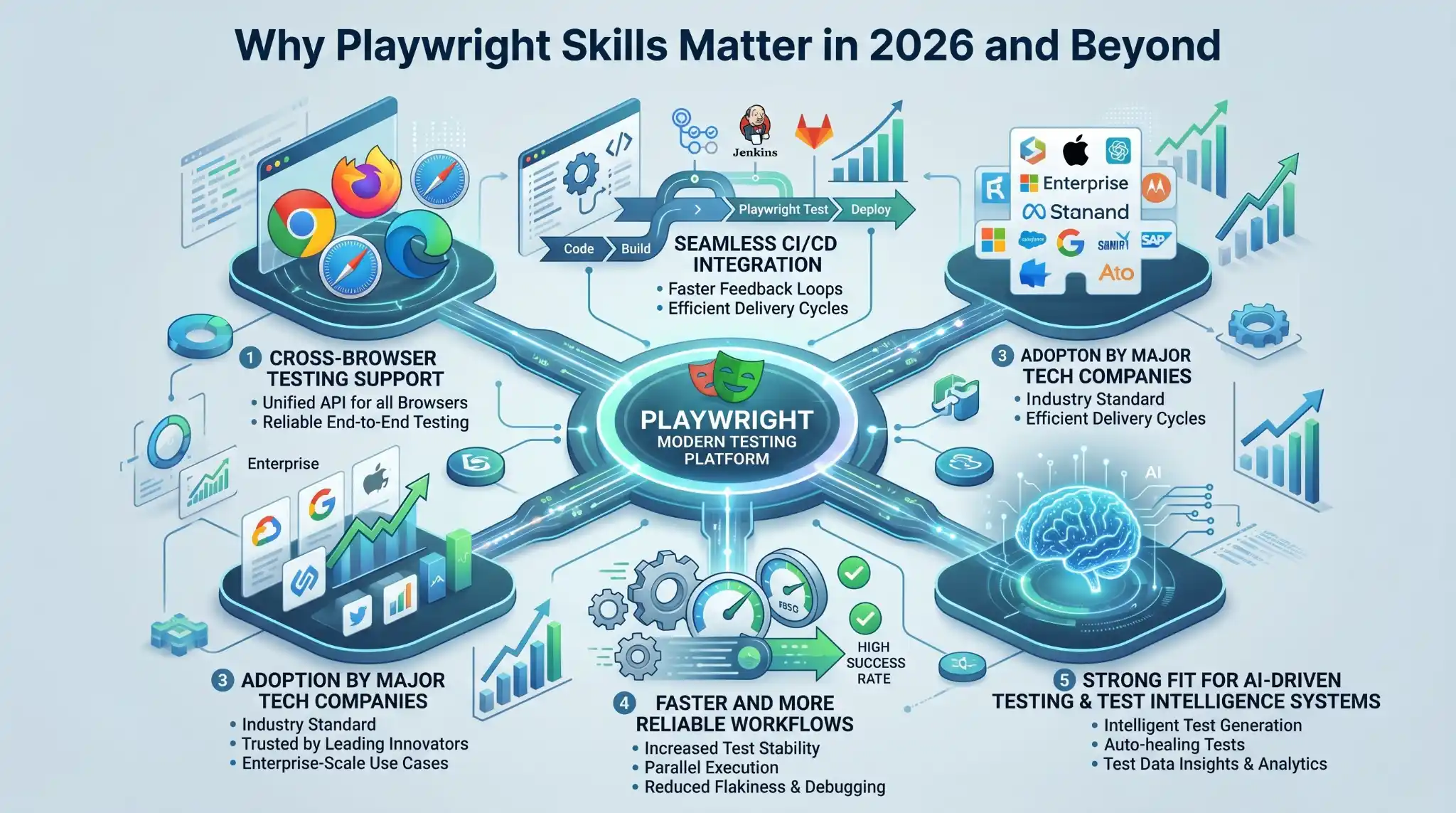
- Cross-browser testing: With the growing complexity of web apps, tools like Playwright that allow testing across multiple browsers with ease are becoming essential.
- CI/CD integration: Playwright’s ability to seamlessly integrate into continuous integration and delivery (CI/CD) pipelines makes it ideal for modern testing workflows.
- Adoption by major companies: Leading tech companies are adopting Playwright to improve their testing processes, which leads to a higher demand for professionals skilled in Playwright.
Other Helpful Articles: Product based companies in chennai
Looking Forward: The Future of Playwright
Playwright’s future is incredibly promising. As more companies modernize their tech stacks and adopt cloud-native applications, Playwright will play a key role in ensuring quality at speed. Additionally, as AI-driven testing and test intelligence technologies continue to grow, Playwright’s ability to integrate with these systems will make it an even more valuable tool in the coming years.
Playwright is evolving quickly, with frequent updates and new features that enhance its functionality. As companies seek faster, more efficient testing solutions, tools like Playwright that offer greater speed, stability, and flexibility will be the cornerstone of modern testing strategies.
Conclusion
In this first blog of our series, we’ve seen why Playwright is quickly becoming the future of UI automation testing. It’s faster, more stable, and more efficient than older tools like Selenium, making it the go-to tool for modern web applications. As the demand for Playwright skills increases, testers who invest in learning this tool will be well-positioned for career growth in 2026 and beyond.
Stay tuned for our next blog, where we’ll dive into how to get started with Playwright as a beginner and explore its core features.
Ready to take the first step in learning Playwright?
Explore Testleaf’s Playwright Masterclass and get hands-on experience with this powerful tool. Comment below or reach out to us to learn more about how you can get started with Playwright today!
FAQs
Why is Playwright the future of UI automation?
Playwright is the future of UI automation because it simplifies cross-browser testing, runs faster, integrates seamlessly with CI/CD pipelines, and reduces flaky tests with built-in auto-waiting.
What are the main advantages of Playwright over Selenium?
Playwright provides a unified API for cross-browser testing, faster execution, automatic waiting for elements, and better stability for modern web applications, unlike Selenium’s separate browser drivers.
Can Playwright replace Selenium?
Playwright can replace Selenium in many cases, especially for modern web apps. It’s faster, more stable, and requires less configuration, but Selenium is still useful for legacy frameworks.
Why is Playwright in high demand for 2026?
Playwright is in high demand because of its speed, stability, and ability to integrate easily into modern CI/CD pipelines. It’s becoming the tool of choice for efficient, cross-browser UI automation.
How does Playwright help reduce flaky tests?
Playwright reduces flaky tests with automatic waiting, ensuring elements are ready before actions are performed, and handling complex interactions without relying on external waits.
What makes Playwright better for CI/CD integration?
Playwright’s fast execution, stable tests, and built-in browser support make it ideal for CI/CD pipelines, enabling seamless automation and faster feedback loops in modern development workflows.
We Also Provide Training In:
- Advanced Selenium Training
- Playwright Training
- Gen AI Training
- AWS Training
- REST API Training
- Full Stack Training
- Appium Training
- DevOps Training
- JMeter Performance Training
Author’s Bio:


Content Writer at Testleaf, specializing in SEO-driven content for test automation, software development, and cybersecurity. I turn complex technical topics into clear, engaging stories that educate, inspire, and drive digital transformation.
Ezhirkadhir Raja
Content Writer – Testleaf