Transition from Manual to Automation skills – Challenges and Solutions (2026)
If you’re a manual tester thinking, “I need to move into automation,” you’re not alone. Software releases are faster than ever, and teams want reliable feedback in hours—not days. The good news: you don’t need to become a “developer overnight.” You need a clear learning path, consistent practice, and the right mindset.
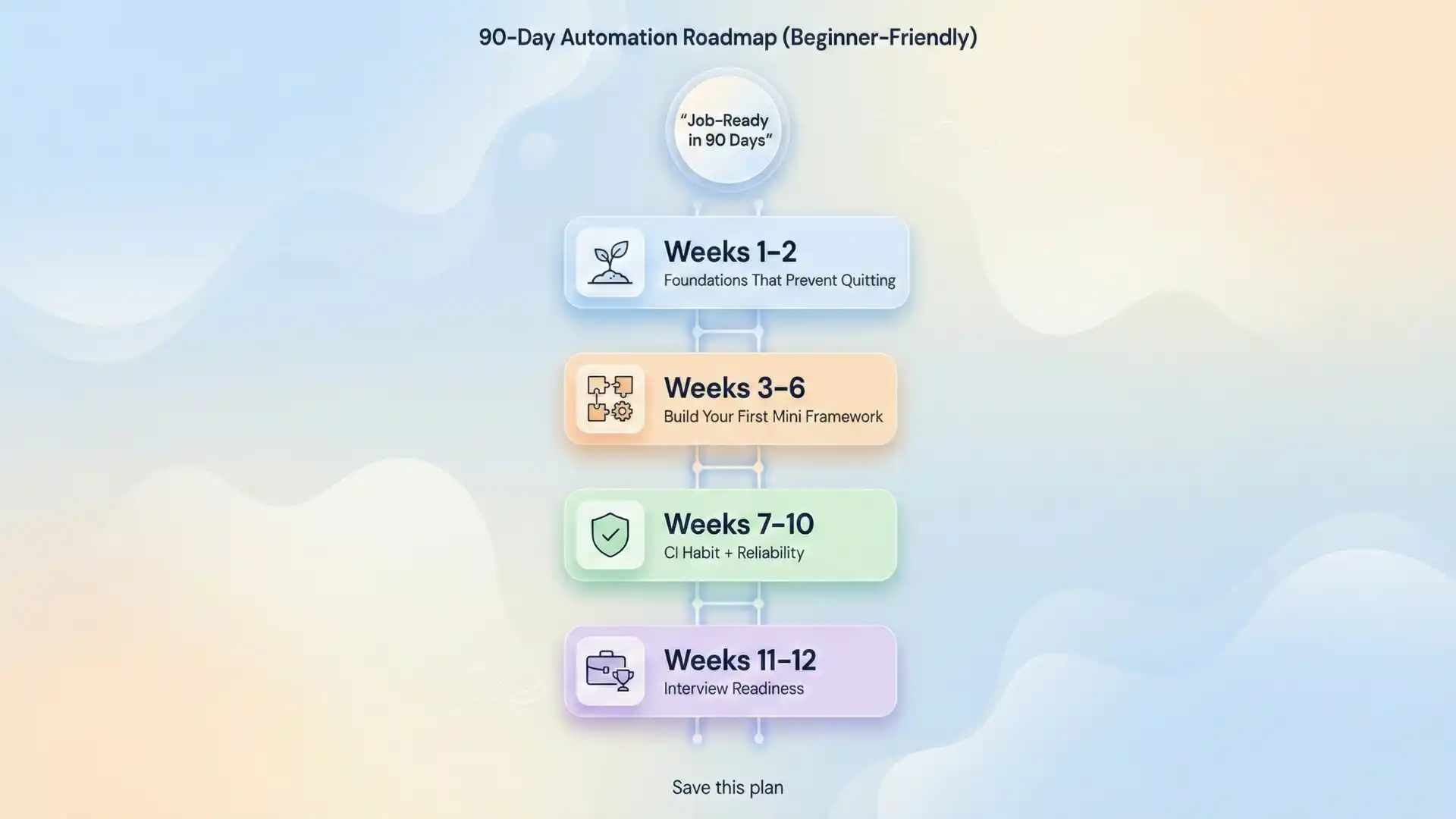
Transitioning from manual to automation means learning coding basics, choosing one tool (Selenium or Playwright), and building repeatable scripts that run reliably in CI. Most people struggle due to weak practice routines, flaky test design, and no mentorship. A simple 90-day roadmap with weekly mini-projects makes the shift achievable.
Automation success needs intent + consistency, not just finishing a course.
Skill fades fast unless you apply it regularly (“use it or lose it”).
Confidence comes from practice + debugging, not memorization.
If you support India/global users, expect region-based cookie banners, A/B experiments, language changes, and first-time user popups. Build a simple “state checklist” (cookies, locale, test data, environment parity) so results match locally and in CI.
Forces of Change: Why manual testers must adapt
We live in a digital-first world. Businesses compete through software, and software changes constantly. When releases increase, regression testing pressure rises too. Manual testing still matters, but manual-only workflows cannot scale with modern delivery speeds.
Automation is not about replacing testing. It’s about scaling it. In 2026, teams care about stable pipelines, predictable releases, and faster feedback loops. If you can combine manual test thinking with automation execution, you become more valuable across projects.
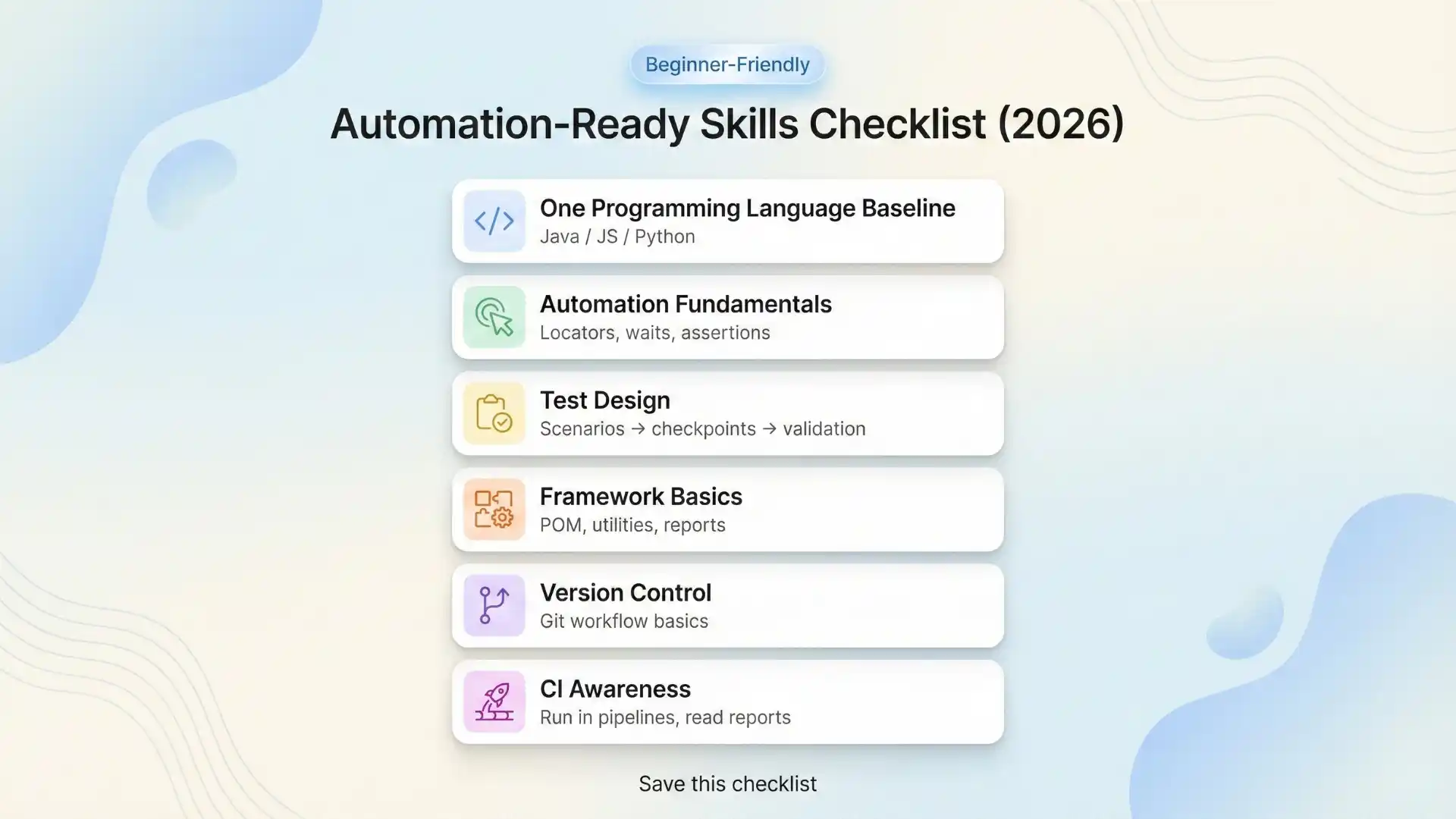
Version control: Git basics (commit, push, pull, branching awareness)
CI awareness: understand how tests run in pipelines, read reports, debug failures
You don’t need to learn every tool. You need to master fundamentals and apply them repeatedly.
The hidden timeline: skill vs competency
Many people underestimate the time required. That’s where frustration starts.
Skill means: “I can write a script.”
Competency means: “I can build stable tests, debug failures in CI, and maintain a suite.”
Learning automation tools can be quick. Becoming dependable takes longer. A realistic truth: it may take months to get job-ready and years to become seasoned, depending on practice and exposure.
This doesn’t mean it’s hard. It means it’s like fitness: results come from a routine, not from a single burst of effort.
Challenge: “I finished training but I can’t write tests alone.” ✅ Fix: Do 30 minutes daily + 2 mini scripts weekly. Consistency beats weekend bursts.
Challenge: “My scripts work once and then fail.” ✅ Fix: Replace sleeps with meaningful waits. Assert outcomes, not animations.
Challenge: “I don’t have an automation project in my company.” ✅ Fix: Automate a small smoke suite after work and show it to your lead. Real output creates opportunities.
Challenge: “I forget coding quickly.” ✅ Fix: “Use it or lose it” is real. Schedule practice like a gym routine.
Challenge: “CI failures kill my confidence.” ✅ Fix: CI is a different environment. Collect evidence (logs/screenshots/traces) and solve the root cause, not the symptom.
Final thought
The transition from manual to automation is not a single jump. It’s a set of small, repeatable steps. If you build a habit, choose one tool, and practice with real scenarios, you will become job-ready faster than you expect. In 2026, the winners won’t be the people who “watched more tutorials.” They’ll be the people who built proof.
FAQs
How long does it take to move from manual to automation?
Most learners can start writing basic automation scripts within 4 to 8 weeks. However, real confidence comes from consistent practice and building real-world automation projects over several months.
Should I learn Selenium or Playwright first in 2026?
Choose based on the roles you are targeting. Selenium is widely used across many enterprise stacks, while Playwright is gaining popularity for modern CI-driven testing workflows.
What programming language should a manual tester learn first?
Pick one language such as Java, JavaScript, or Python and focus on mastering the fundamentals. Avoid switching languages too early while learning automation concepts.
Why do automation testers fail after training?
Common reasons include lack of daily practice, weak debugging skills, brittle element locators, and not learning how tests run reliably in CI environments.
What should I automate first as a beginner?
Start with stable workflows such as login, search, and form validation. Avoid highly dynamic UI sections until you gain more experience with automation frameworks.
As CEO of TestLeaf, I’m dedicated to transforming software testing by empowering individuals with real-world skills and advanced technology. With 24+ years in software engineering, I lead our mission to shape local talent into global software professionals. Join us in redefining the future of test engineering and making a lasting impact in the tech world.