
In the previous blog, we explored the advanced Playwright capabilities modern QA teams cannot ignore — from auto-waiting and network interception to debugging tools and AI-driven automation possibilities. During a conversation with Babu Manickam, another important point became very clear:
“Automation is no longer valuable if feedback comes too late. Modern QA is all about faster confidence inside CI/CD.”
That single statement explains one of the biggest shifts happening in software testing today.
Automation is no longer just about executing test cases.
It is about:
- Faster feedback
- Stable releases
- Continuous deployment confidence
- Intelligent quality gates
- Developer productivity
And this is exactly why Playwright is becoming deeply connected with modern CI/CD systems.
Why are modern QA teams using Playwright in CI/CD?
Modern QA teams use Playwright in CI/CD because it supports fast feedback, parallel execution, headless testing, stable automation, debugging artifacts, Trace Viewer, and smooth integration with tools like GitHub Actions, Jenkins, Azure DevOps, GitLab CI/CD, and CircleCI. This helps teams reduce flaky tests, speed up releases, and improve deployment confidence.
Why Traditional Automation Pipelines Start Failing at Scale
Many automation frameworks were originally built during slower release cycles.
Back then:
- Releases happened monthly
- Teams deployed less frequently
- UI applications were simpler
- Automation suites were smaller
Modern engineering works very differently now.
Today:
- Teams deploy multiple times daily
- Pull requests move rapidly
- Frontend changes happen continuously
- Microservices increase complexity
- Cloud-native systems evolve quickly
This creates a huge challenge for traditional automation pipelines.
Because slow or unstable automation becomes a bottleneck.
When automation pipelines fail continuously:
- Developers stop trusting tests
- Releases get delayed
- Debugging becomes expensive
- CI pipelines become noisy
- Teams start bypassing automation
This is one of the biggest reasons organizations are redesigning their testing architecture around tools like Playwright.
Popular Articles: playwright interview questions
Why Speed Matters Inside CI/CD
Modern engineering teams expect fast feedback.
Nobody wants to wait:
- 2 hours for regression results
- Overnight execution reports
- Delayed deployment approvals
CI/CD pipelines are designed for rapid iteration.
That means automation must also become:
- Fast
- Parallel
- Reliable
- Scalable
This is where Playwright fits naturally.
Playwright was designed with modern execution speed in mind.
Its architecture supports:
- Parallel execution
- Multi-browser execution
- Lightweight startup
- Efficient browser communication
- Headless execution
This allows teams to execute large automation suites significantly faster.
And in CI/CD environments, speed directly impacts business delivery.
Faster testing means:
- Faster merges
- Faster deployments
- Faster rollback decisions
- Faster bug identification
- Faster customer feedback
Automation speed is no longer just a technical improvement.
It is a delivery advantage.
Why Flaky Tests Destroy CI/CD Confidence
One of the biggest problems inside automation pipelines is flaky tests.
Tests pass randomly.
Fail inconsistently.
Succeed locally.
Fail in pipelines.
This creates massive frustration for engineering teams.
Eventually developers stop trusting automation results entirely.
Many traditional frameworks struggle because synchronization handling becomes unstable in modern asynchronous applications.
Teams try solving this using:
- Hard waits
- Retry mechanisms
- Complex utility libraries
- Framework-level hacks
But these often increase maintenance complexity further.
Playwright approaches this differently.
Its built-in auto-waiting system intelligently waits for:
- Element visibility
- Stability
- Actionability
- Network readiness
This dramatically improves automation stability inside CI/CD environments.
And stability is everything in modern pipelines.
Because automation only creates value when teams trust the results consistently.
Parallel Execution Changes Everything
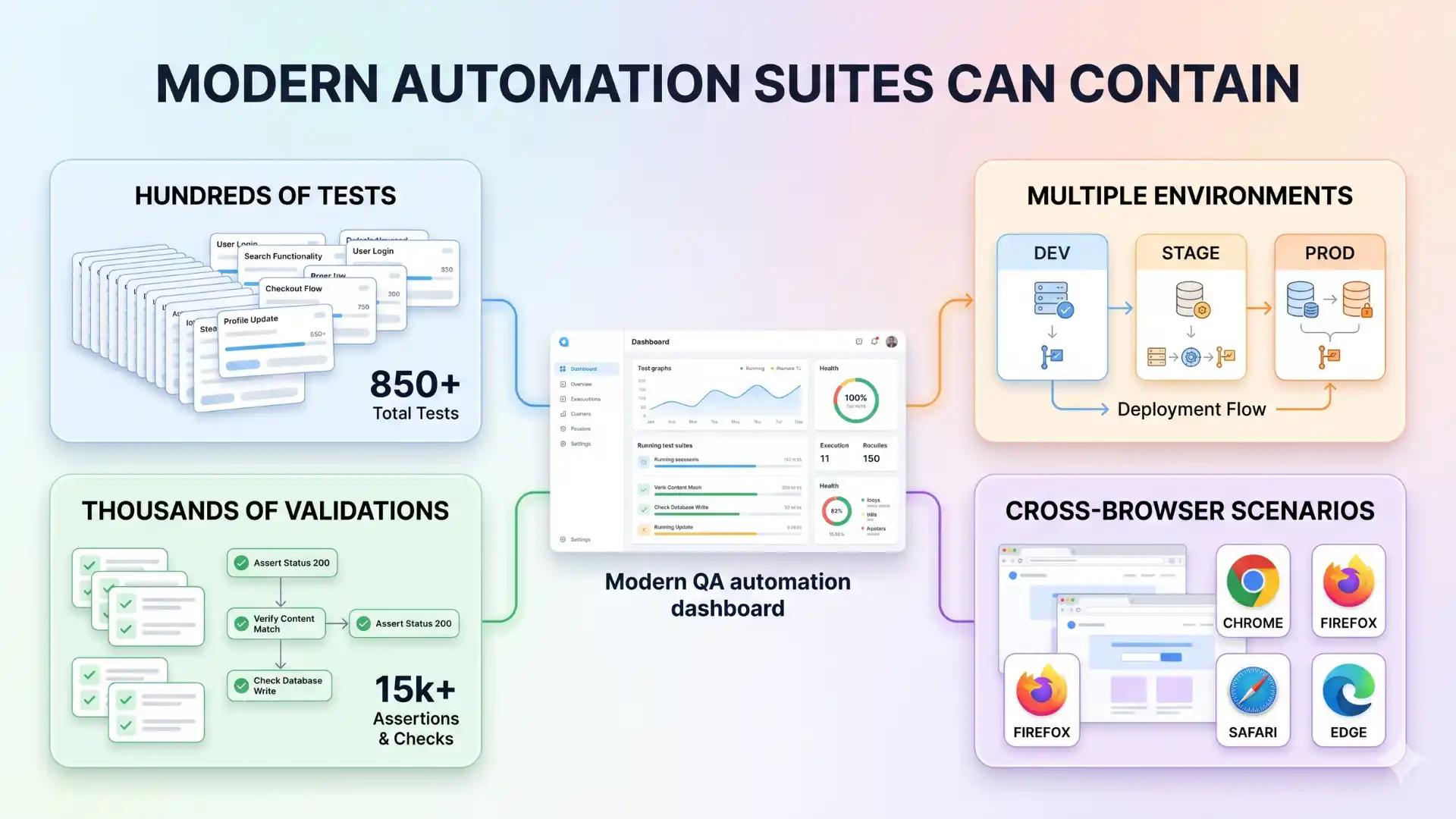
Modern automation suites can contain:
- Hundreds of tests
- Thousands of validations
- Multiple environments
- Cross-browser scenarios
Sequential execution becomes extremely slow.
Playwright solves this through native parallel execution support.
This allows multiple tests to execute simultaneously across workers.
The impact is massive:
- Reduced execution time
- Faster pipeline completion
- Better infrastructure utilization
- Faster release cycles
For organizations practicing continuous deployment, this becomes critical.
Because modern DevOps workflows depend heavily on rapid automated validation.
More Insights: selenium interview questions for 5 years experience
Why Headless Execution Became Essential
In CI/CD pipelines, graphical browser execution creates infrastructure overhead.
Headed execution consumes:
- More memory
- More CPU
- More infrastructure resources
Playwright’s optimized headless execution allows teams to run automation efficiently in:
- Docker containers
- Cloud runners
- Kubernetes environments
- Virtual machines
- Scalable CI agents
This improves:
- Scalability
- Infrastructure efficiency
- Pipeline performance
Modern automation is increasingly moving toward cloud-native execution models.
And Playwright aligns extremely well with this architecture.
GitHub Actions, Jenkins, Azure DevOps and Modern Automation
Today’s QA automation no longer operates independently from DevOps systems.
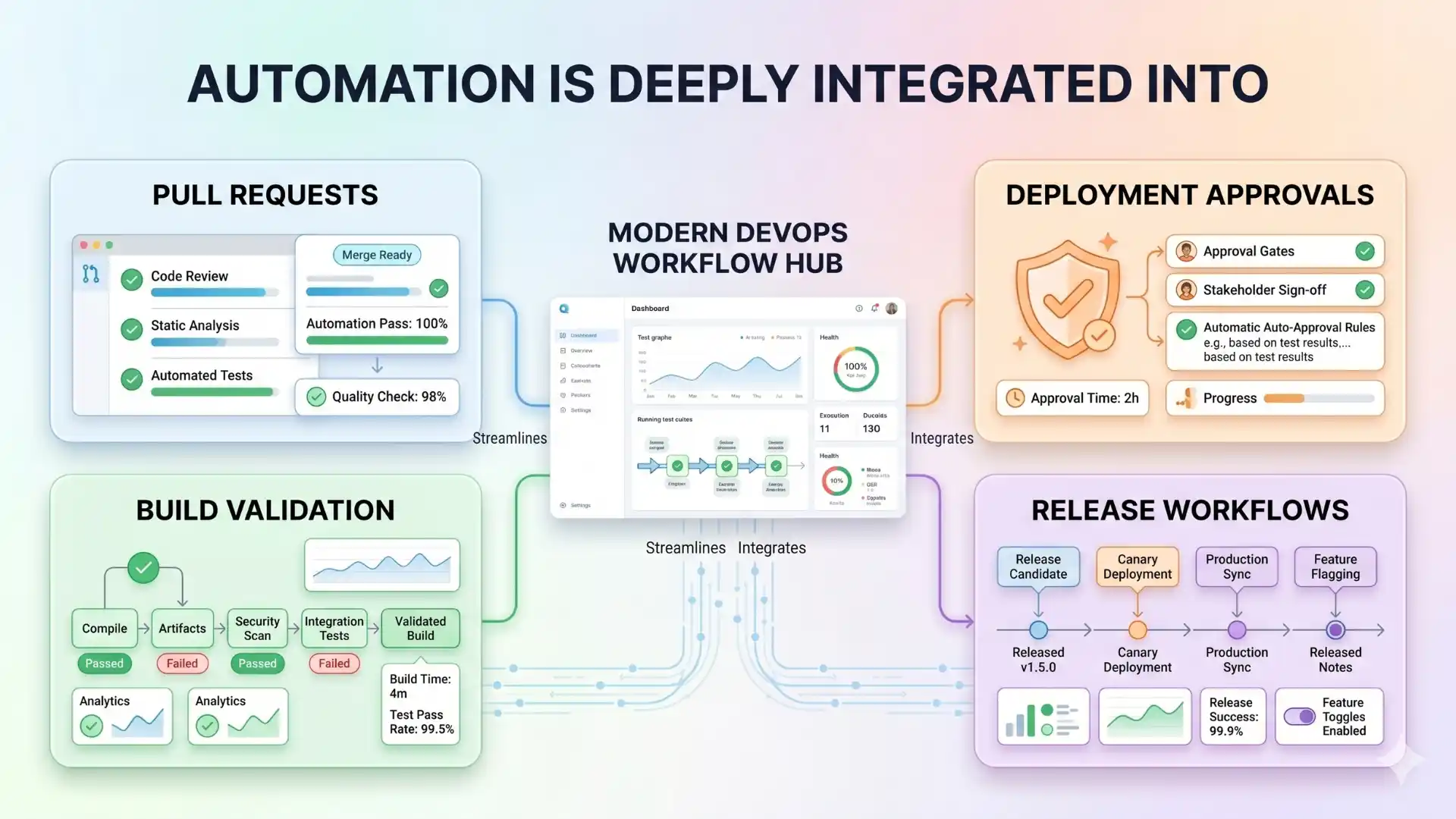
Automation is deeply integrated into:
- Pull requests
- Build validation
- Deployment approvals
- Release workflows
Playwright integrates naturally into modern CI/CD platforms including:
- GitHub Actions
- Jenkins
- Azure DevOps
- GitLab CI/CD
- CircleCI
Teams now configure automation to:
- Run automatically during commits
- Validate pull requests
- Block unstable deployments
- Generate reports instantly
- Capture debugging artifacts automatically
This creates faster engineering feedback loops.
And faster feedback loops directly improve software quality.
Trace Viewer Is Extremely Valuable in Pipelines
One major problem in CI/CD debugging is visibility.
When failures happen remotely inside pipelines, teams often struggle to reproduce issues locally.
Playwright’s Trace Viewer changes this dramatically.
It captures:
- Execution history
- Screenshots
- Network activity
- Console logs
- Step-by-step interactions
Instead of manually guessing what failed, teams can visually replay the entire automation execution.
This significantly reduces:
- Debugging time
- Root cause analysis effort
- Developer frustration
For large engineering teams, this becomes a major operational advantage.
Further Reading: AI and ML engineer salary in india 2026
Modern QA Is Becoming Observability-Driven
Traditional automation focused mostly on pass/fail execution.
Modern QA is evolving beyond that.
Teams increasingly care about:
- Failure analytics
- Execution insights
- Stability patterns
- Risk-based testing
- Deployment confidence
- Intelligent quality signals
Automation is becoming part of engineering observability.
This is why tools that provide better visibility, faster debugging, and scalable execution are growing rapidly.
Playwright fits naturally into this transformation.
Why Playwright Aligns Well with AI-Assisted Testing
Another major shift happening inside CI/CD systems is AI-assisted automation.
Teams are experimenting with:
- AI-generated test cases
- Self-healing automation
- Intelligent prioritization
- AI debugging systems
- Autonomous testing agents
Playwright’s modern architecture makes it highly compatible with these future workflows.
Its strong browser control model, debugging capabilities, and execution reliability make it increasingly suitable for:
- AI orchestration
- MCP integrations
- Browser agents
- Intelligent automation systems
This is one reason future-focused engineering teams are investing heavily in Playwright today.
Automation Is No Longer a Side Activity
Modern organizations no longer view testing as a separate phase.
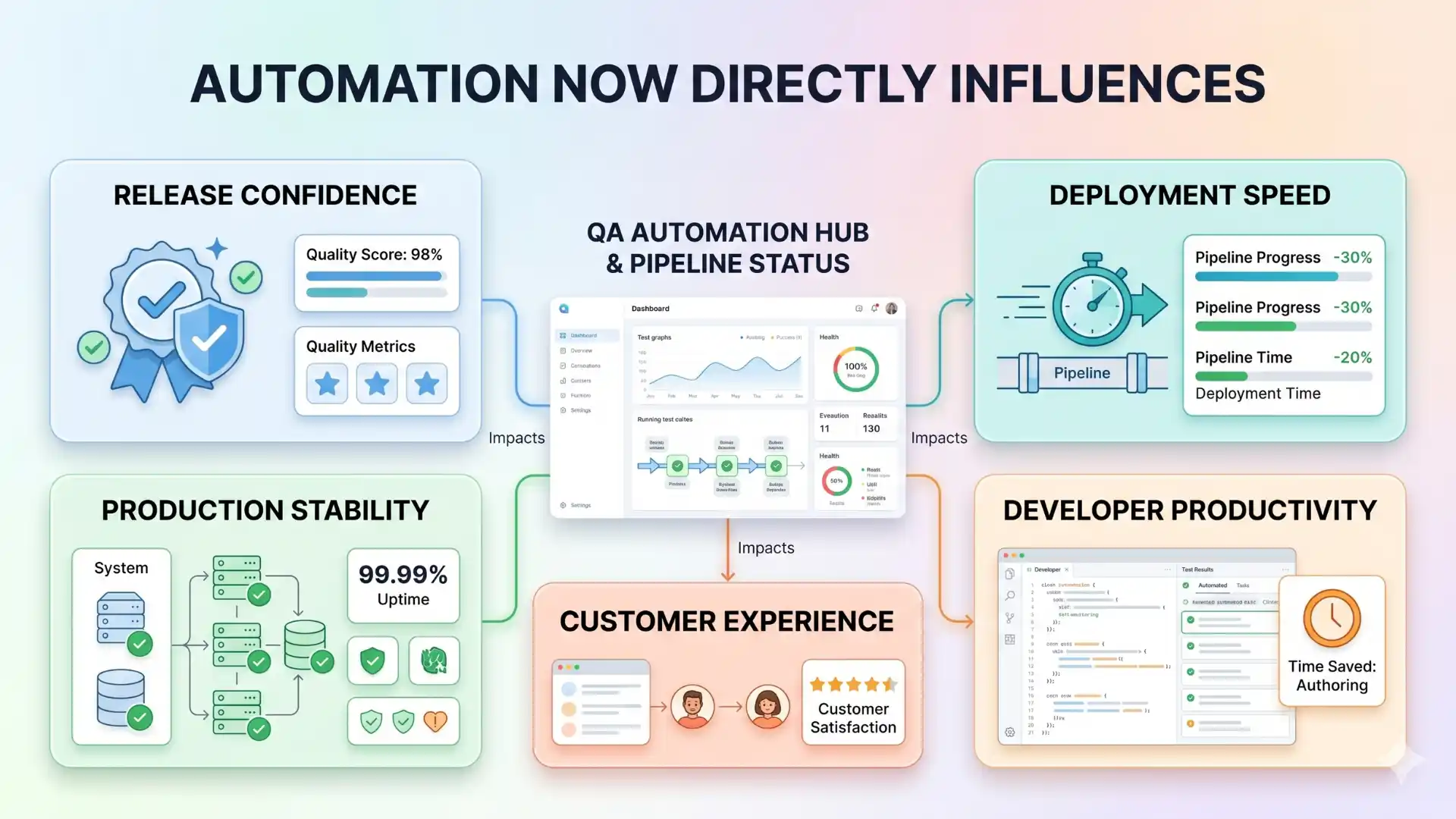
Automation now directly influences:
- Release confidence
- Deployment speed
- Production stability
- Developer productivity
- Customer experience
This changes how QA teams design automation strategies entirely.
Modern automation engineers are increasingly expected to understand:
- CI/CD workflows
- Infrastructure execution
- Pipeline optimization
- Stability engineering
- Intelligent automation systems
And this is exactly where Playwright becomes highly valuable.
Playwright in CI/CD helps QA teams redesign automation pipelines for modern software delivery. Its strengths include fast execution, native parallel testing, headless browser support, stable auto-waiting, multi-browser execution, Trace Viewer debugging, and compatibility with cloud-native environments. For engineering teams practicing continuous integration and continuous delivery, Playwright improves release confidence by making automation faster, more reliable, scalable, and easier to debug.
Key Takeaways
- Playwright helps QA teams get faster feedback inside CI/CD pipelines.
- Native parallel execution reduces test suite runtime.
- Headless execution improves pipeline speed and infrastructure efficiency.
- Trace Viewer helps debug remote CI failures with screenshots, logs, network activity, and step history.
- Playwright supports modern DevOps workflows across GitHub Actions, Jenkins, Azure DevOps, GitLab CI/CD, and CircleCI.
Final Thoughts
The future of automation is not simply about writing more scripts.
It is about building:
- Faster feedback systems
- Stable automation pipelines
- Scalable execution architectures
- Intelligent quality workflows
Playwright is rapidly becoming a major part of this transformation because it was built for modern engineering realities.
Its speed, stability, debugging visibility, parallel execution, and CI/CD compatibility make it highly aligned with the future of automation testing.
As organizations continue accelerating release cycles, automation tools that cannot scale with CI/CD demands will increasingly struggle.
And that is exactly why Playwright adoption is growing rapidly across modern QA teams worldwide.
In the next blog of this series, we will explore one of the biggest challenges in automation engineering — flaky tests — and how Playwright’s architecture helps teams dramatically reduce instability in real-world projects.
FAQs
Why is Playwright useful in CI/CD pipelines?
Playwright is useful in CI/CD pipelines because it supports fast execution, parallel testing, headless mode, reliable auto-waiting, debugging artifacts, and integration with modern DevOps tools.
How does Playwright improve automation pipeline speed?
Playwright improves pipeline speed through parallel execution, lightweight startup, efficient browser communication, headless execution, and scalable test execution across workers.
How does Playwright reduce flaky tests in CI/CD?
Playwright reduces flaky tests using built-in auto-waiting that waits for element visibility, stability, actionability, and network readiness before performing actions.
Why is Playwright Trace Viewer important for CI debugging?
Playwright Trace Viewer helps teams replay failed test executions with screenshots, network activity, console logs, and step-by-step actions, making root cause analysis faster.
We Also Provide Training In:
- Advanced Selenium Training
- Playwright Training
- Gen AI Training
- AWS Training
- REST API Training
- Full Stack Training
- Appium Training
- DevOps Training
- JMeter Performance Training
Author’s Bio:

Content Writer at Testleaf, specializing in SEO-driven content for test automation, software development, and cybersecurity. I turn complex technical topics into clear, engaging stories that educate, inspire, and drive digital transformation.
Ezhirkadhir Raja
Content Writer – Testleaf