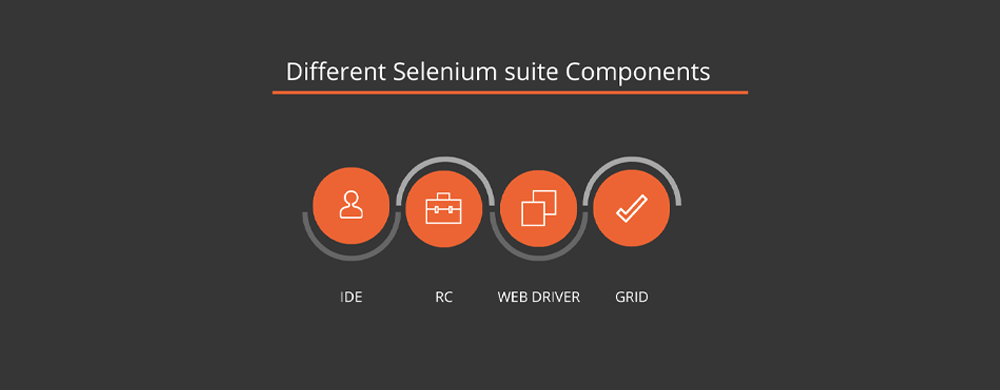

Most Selenium frameworks look clean in the beginning.
A few test cases.
A few page classes.
A few reusable methods.
A simple folder structure that everyone understands.
Everything feels under control.
Then the suite grows.
The product changes every sprint. New features get added. More testers start contributing. The same login, search, upload, approval, checkout, and validation flows appear across multiple test cases. Slowly, the framework that once looked organized starts becoming difficult to maintain.
At that point, teams usually ask:
“Is Selenium the problem?”
In most cases, the answer is no.
Selenium is not the reason many automation frameworks become messy. The real issue is that the framework was designed for the first 20 tests, not the next 500.
That is where mature QA teams think differently.
They do not treat Selenium automation as just script writing. They treat it as framework design, engineering discipline, and long-term maintainability.
Why do Selenium frameworks become hard to maintain?
Selenium frameworks become difficult to maintain when page objects grow too large, business logic mixes with UI code, and frameworks are not redesigned as test suites scale.
In This Article You’ll Learn:
- Why Selenium frameworks break at scale
- Common mistakes in Page Object design
- How mature QA teams structure automation
- When to use Page Object vs Screenplay
- How to build scalable test frameworks
The real reason Selenium frameworks become difficult
Many teams begin Selenium automation with good intentions. They start with the Page Object Model because it gives structure. This is still a very practical starting point. Even Selenium’s own documentation recommends Page Object Models because they reduce duplicated code and make UI changes easier to handle in one place.
But the problem starts when teams assume Page Object alone can solve every future scaling challenge.
Page Object is useful. But Page Object is not magic.
A page class can easily become overloaded when teams keep adding every locator, every action, every validation, and every business condition into the same file.
For example, a simple LoginPage may be fine. But what happens when an OrderPage contains:
- 40 locators
- 25 action methods
- multiple role-based conditions
- validation helpers
- table filters
- modal handling
- file upload logic
- approval and rejection flows
Now the page object is no longer just representing a page. It is carrying too much business logic.
That is when maintainability starts breaking.
Is Page Object Model enough for large automation frameworks?
No. It works well initially, but needs additional layers for scalability.
Also, Explore: AI and ML engineer salary in india
The first warning sign: page classes become “god objects”
A common problem in Selenium frameworks is the rise of huge page classes.
At first, it feels convenient to keep everything in one place. But over time, the class becomes too large, too fragile, and too difficult to understand.
When one page class tries to handle every possible action, the test suite becomes tightly coupled to the UI. A small UI change can force multiple test updates. New testers hesitate to modify the framework because they are afraid of breaking something. Code reviews become slower. Debugging becomes harder.
This is not a Selenium limitation. It is an architecture problem.
Mature teams prevent this by keeping page objects focused. A page object should not become a dumping ground for every business rule. It should expose clean page-level behavior, while business flows should live in a separate reusable layer.
The second warning sign: tests describe pages, not user intent
Many automation scripts fail to scale because they are written from a page perspective instead of a user perspective.
For example:
Open login page.
Enter username.
Enter password.
Click login.
Open dashboard page.
Click order menu.
Open order page.
Click approve button.
This is technically correct, but it does not clearly communicate the business intent.
A mature test should be easier to understand:
An admin approves a pending order.
That one sentence tells us what the user is trying to achieve.
This is where patterns like Screenplay become valuable. Serenity BDD describes the Screenplay Pattern as a modern test automation design pattern created to make test code more scalable and maintainable. It models automation around actors, tasks, interactions, and questions instead of only pages and elements.
In simple words, Screenplay shifts the thinking from:
“Which page am I on?”
to:
“What is the user trying to do?”
That shift matters when the application becomes workflow-heavy.
You Might Also Like: Java selenium interview questions
Page Object is a good start, but not always the final destination
Page Object works well when:
- the application is small or medium-sized
- the team is new to automation
- test flows are mostly page-based
- the framework needs to be simple and teachable
- the number of contributors is limited
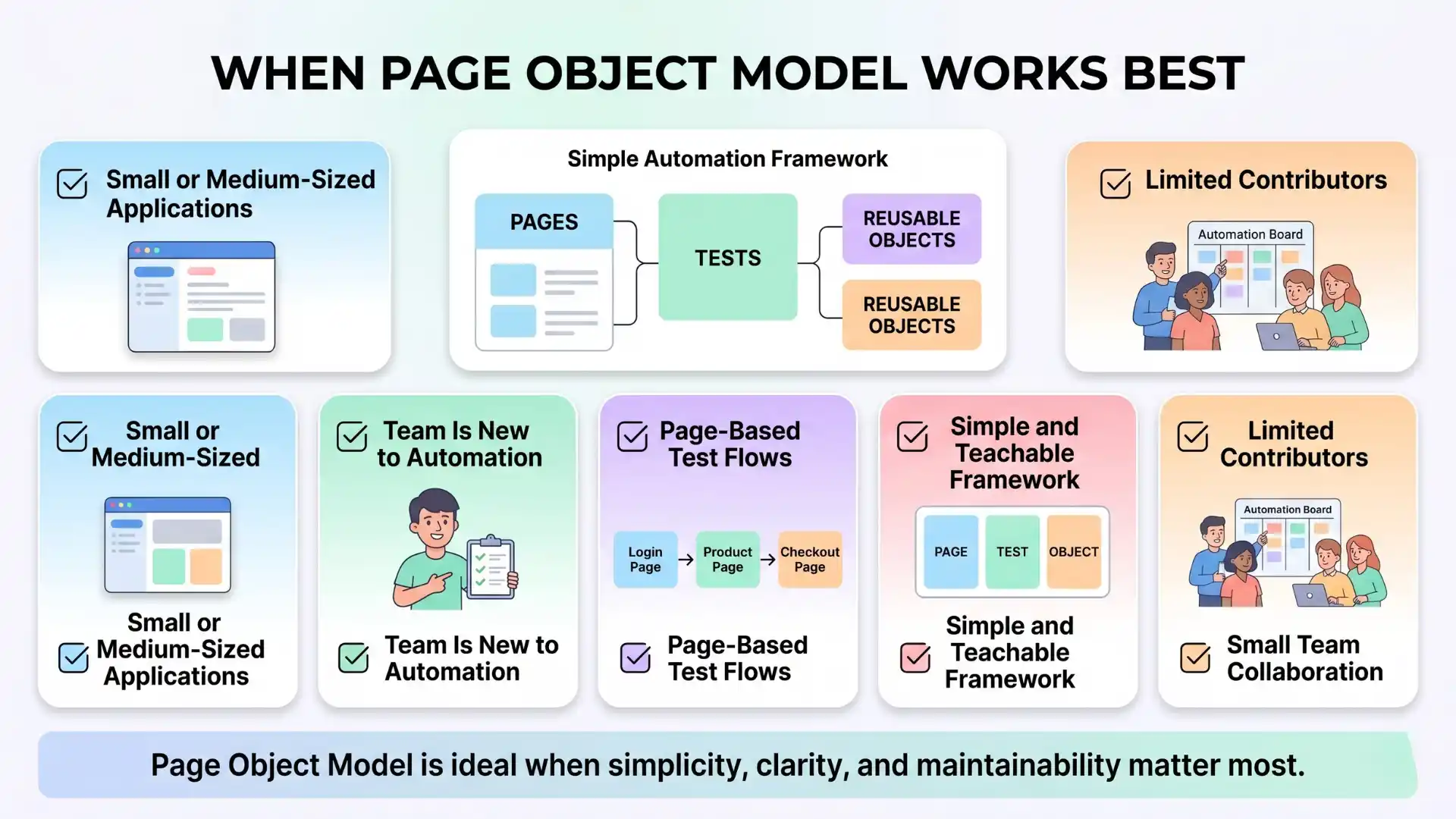
This is why Page Object remains popular. It is simple, readable, and practical.
But as the suite grows, teams need to ask a more mature question:
“Are we still organizing automation around pages, or are we organizing it around business behavior?”
For example, consider a banking application.
A transaction can be approved from:
- the dashboard
- the transaction details page
- the admin queue
- a notification panel
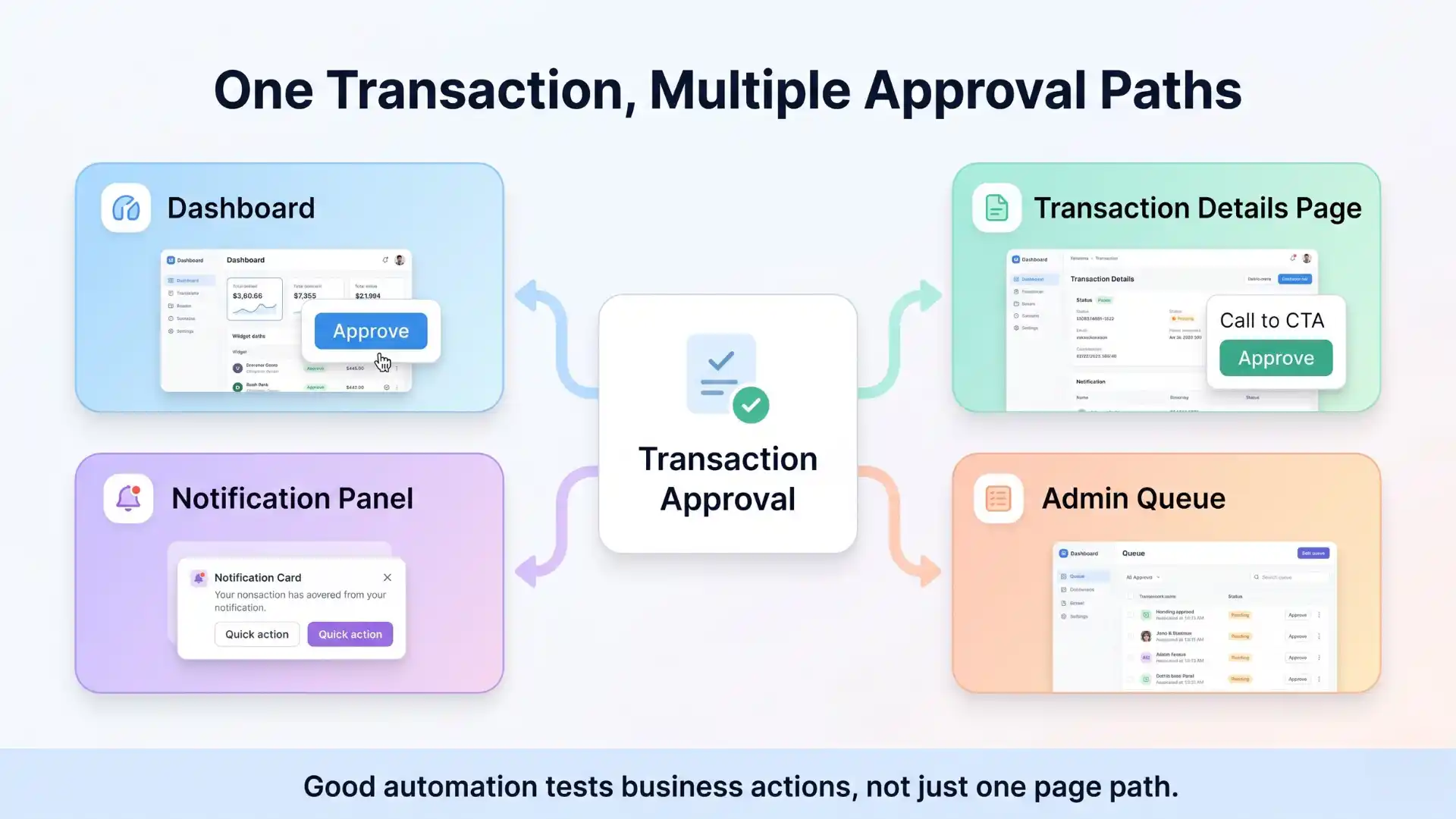
In a pure Page Object approach, approval logic may get repeated across multiple page classes.
In a more mature design, Approve Transaction can become a reusable business task. The UI path may change, but the intent remains the same.
That is the difference between page-level reuse and workflow-level reuse.
When Should You Move Beyond Page Object?
Move beyond Page Object when:
- Page classes become too large
- Test flows span multiple pages
- Business logic repeats across tests
- Multiple contributors work on the same framework
This signals the need for task-based or hybrid design.
Why this matters even more in the AI era
Today, many teams are discussing AI in testing, self-healing automation, and AI-generated test cases. But AI does not remove the need for good framework design.
In fact, it makes framework design even more important.
A 2024 review of AI-assisted test automation found that manual test-code development and test maintenance remain major challenges in test automation. The World Quality Report 2025 also shows that while AI adoption in quality engineering is rising, only 15% of organizations have achieved enterprise-wide implementation.
This tells us something important.
Tools are improving. AI is improving. But scale is still difficult.
Why?
Because enterprise automation is not just about generating scripts faster. It is about maintaining test intent, reducing duplication, improving reliability, and designing frameworks that can survive continuous product change.
If the framework is poorly designed, AI may only help teams create more code that becomes harder to maintain later.
Mature QA teams understand this.
They do not ask, “How fast can we generate tests?”
They ask, “Can this test suite still be understood, maintained, and trusted six months from now?”
Other Useful Guides: playwright interview questions
What mature Selenium teams do differently
Mature teams do not blindly choose Page Object or Screenplay because one sounds more advanced.
They choose architecture based on scale.
For a small team, Page Object may be enough. For a large workflow-heavy product, Screenplay-style thinking may be more effective. For many real-world teams, the best answer is a hybrid model.
A practical hybrid approach looks like this:
Page Objects handle page-level actions.
Reusable tasks handle business workflows.
Tests focus on readable user intent.
Common utilities handle waits, data, configuration, and reporting.
CI pipelines handle execution, reports, failures, and feedback loops.
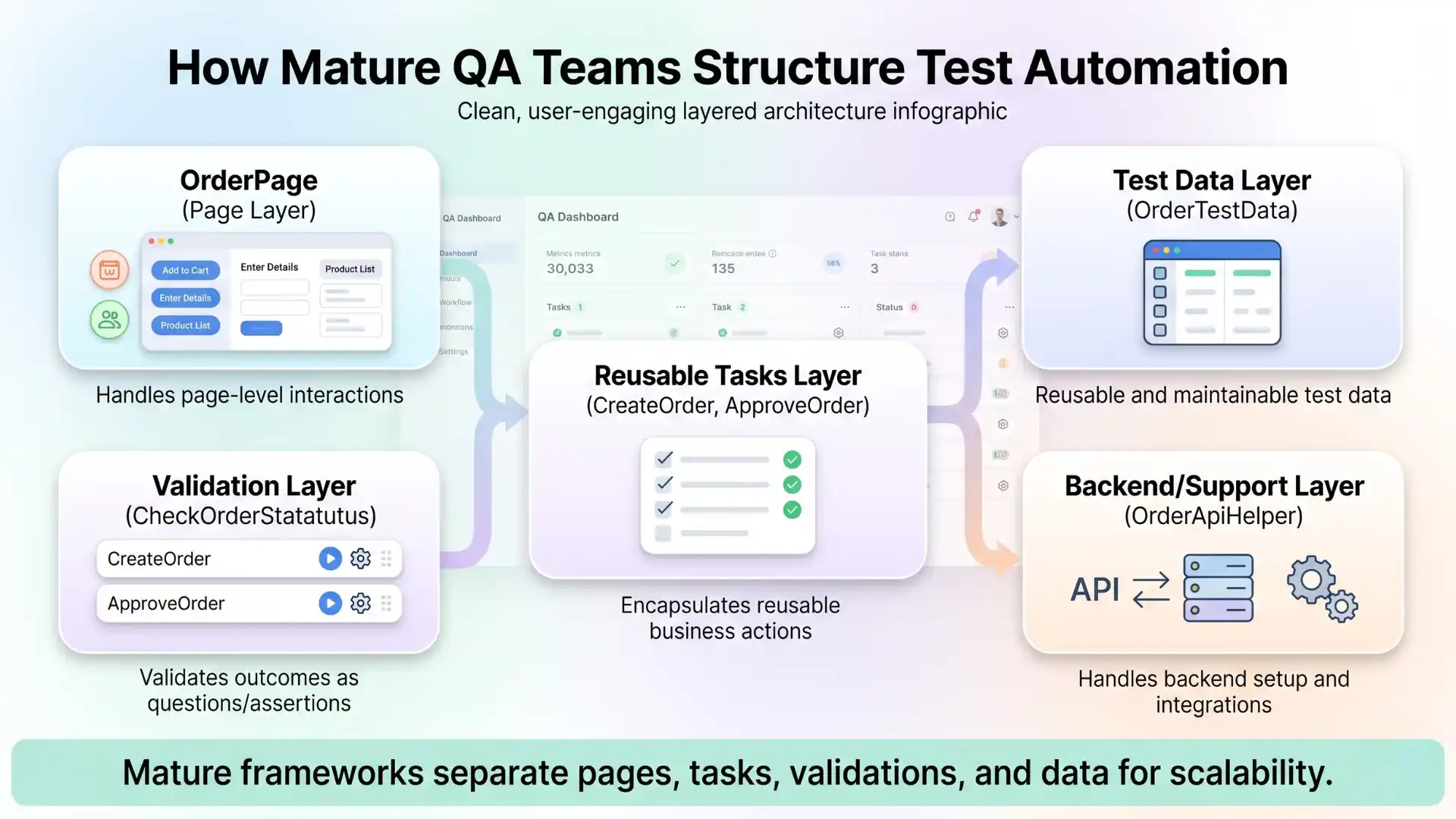
This prevents the framework from becoming either too basic or too over-engineered.
For example:
Instead of putting everything inside OrderPage, mature teams may create:
- OrderPage for page-level interactions
- CreateOrder as a reusable task
- ApproveOrder as a reusable task
- CheckOrderStatus as a validation question
- OrderTestData for reusable test data
- OrderApiHelper for backend setup where needed
Now the test becomes easier to read.
The framework also becomes easier to maintain.
A simple maturity model for Selenium frameworks
Most Selenium frameworks move through these stages:
| Stage | Team behavior | Architecture style |
| Beginner | Tests are written directly with Selenium commands | No clear framework |
| Structured | Locators and actions are moved into page classes | Page Object Model |
| Growing | Common flows are reused across tests | POM + helper/task layer |
| Mature | Tests describe user intent and business behavior | Screenplay-style thinking |
| Enterprise | Framework supports roles, workflows, CI, reporting, and AI-assisted review | Hybrid architecture |
The mistake many teams make is staying too long in one stage.
A framework that worked for 50 tests may not work for 500. A structure that worked for one tester may not work for a team of 15. A page-based design that worked for simple flows may not work for complex user journeys.
Maturity means knowing when the framework needs to evolve.
The Testleaf perspective
At Testleaf, we often see learners start Selenium with Page Object because it is the right foundation. It teaches structure, reuse, and separation of test logic from UI details.
But real automation maturity begins when testers move beyond writing scripts.
They need to understand:
- why frameworks fail
- how duplication enters automation
- how to separate page actions from business flows
- how to design tests that communicate intent
- how to build automation that survives change
That is the difference between someone who only knows Selenium commands and someone who can design reliable test automation.
The future of QA is not just about learning tools. It is about learning how to think like a quality engineer.
So, should teams use Page Object or Screenplay?
The answer depends on maturity.
Use Page Object when the team is starting out, the application is not too complex, and simplicity matters.
Move toward Screenplay-style design when the suite becomes large, workflows cross multiple pages, and different user roles perform repeated business actions.
Use a hybrid model when you need the simplicity of Page Object and the scalability of task-based design.
The best teams do not follow patterns blindly. They understand the trade-off.
Page Object gives structure.
Screenplay gives scalability.
A hybrid model gives practical balance.
How do mature teams maintain large Selenium frameworks?
By separating page logic, business tasks, validation, and data into different layers.
In real-world projects, many teams start with clean Page Object structures but struggle as the test suite grows. Without proper separation of concerns, frameworks become tightly coupled and harder to maintain.
Final thought
Selenium frameworks become hard to maintain when teams keep adding code without evolving the architecture.
The issue is rarely Selenium itself.
The issue is usually that the framework was never redesigned as the product, team, and test suite grew.
Mature teams do something different.
They keep tests readable.
They reduce duplication.
They separate UI details from business intent.
They design for change.
They build frameworks that future team members can understand.
Because in test automation, success is not measured by how many scripts you create.
It is measured by how confidently your team can maintain, scale, and trust those scripts when the application keeps changing.
If you’re looking to move beyond basic script writing and truly understand how to design scalable automation frameworks, choosing the right learning path becomes important. Enrolling in a structured Selenium training in chennai can help you gain hands-on experience with real-world framework challenges, including maintainability, architecture design, and workflow-based automation—skills that are essential for becoming a mature QA engineer.
FAQs
Why do Selenium frameworks become difficult to maintain?
They become hard to maintain when page objects grow too large, business logic mixes with UI code, and frameworks are not redesigned as they scale.
Is Page Object Model enough for large automation frameworks?
No, Page Object Model works well initially but needs additional layers like reusable tasks for scalability.
What is the Screenplay pattern in automation testing?
Screenplay is a design pattern that models automation around user actions, tasks, and interactions instead of pages.
When should teams move beyond Page Object Model?
Teams should move beyond it when test suites grow, workflows become complex, and page classes become difficult to manage.
How do mature QA teams design automation frameworks?
They separate page actions, business workflows, validation logic, and test data into reusable layers.
Does AI solve framework maintenance problems?
No, AI helps generate and analyze tests, but good framework design is still essential for long-term maintainability.
We Also Provide Training In:
- Advanced Selenium Training
- Playwright Training
- Gen AI Training
- AWS Training
- REST API Training
- Full Stack Training
- Appium Training
- DevOps Training
- JMeter Performance Training
Author’s Bio:

Content Writer at Testleaf, specializing in SEO-driven content for test automation, software development, and cybersecurity. I turn complex technical topics into clear, engaging stories that educate, inspire, and drive digital transformation.
Ezhirkadhir Raja
Content Writer – Testleaf