
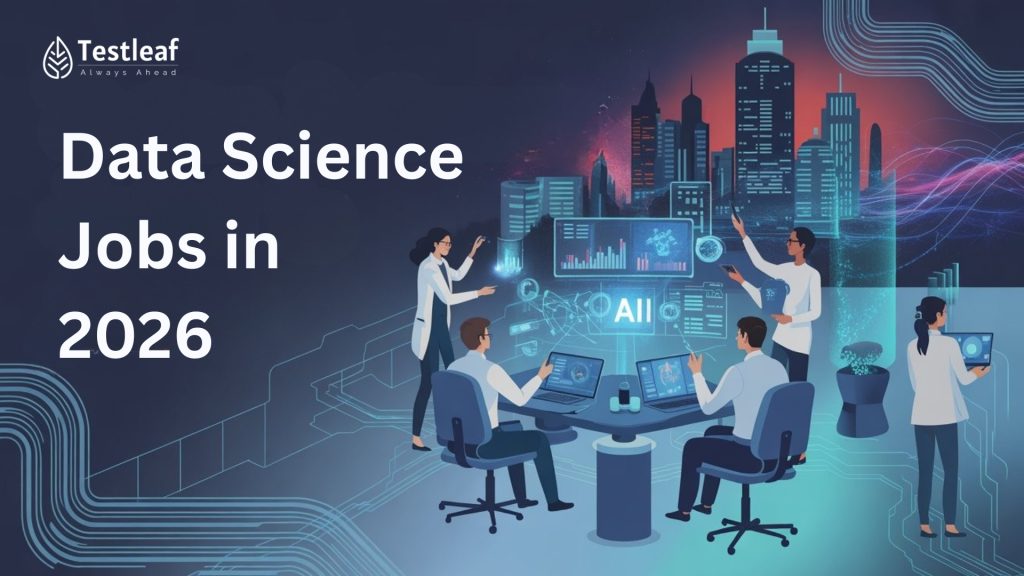
When you search for data science jobs today, you see big salaries, global brands and thousands of openings. It looks exciting. But it can also feel confusing and noisy.
Which data science roles fit your profile?
What are the real data science requirements for companies?
And how do you move from learner to a real offer, not just a certificate?
Let’s break it down in simple, clear steps.
What do data science jobs actually look like?
First, you need to know what these jobs really do day to day.
Most data science job opportunities revolve around one idea: use data to answer business questions. You clean data, explore it, build models, and explain what it means so teams can make better decisions.
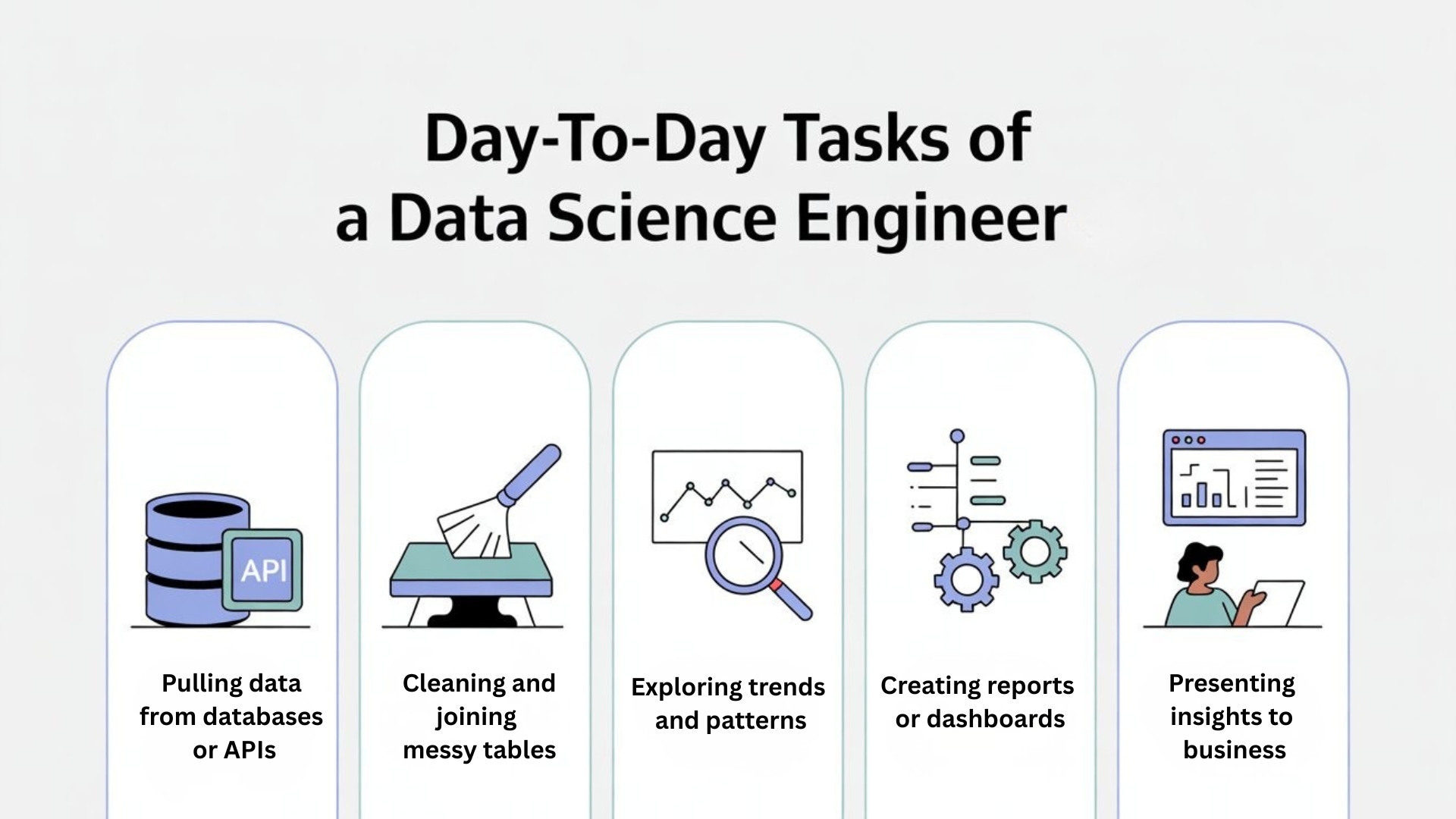
Typical daily tasks include:
-
Pulling data from databases or APIs
-
Cleaning and joining messy tables
-
Exploring trends and patterns
-
Building and tuning ML models
-
Creating reports or dashboards
-
Presenting insights to business or product teams

From this work, several common data science roles appear:
-
Data Analyst – focuses on reports, dashboards, SQL and BI tools
-
Junior Data Scientist – builds models and experiments in notebooks
-
ML Engineer / Associate ML Engineer – ships models into production
-
Business Analyst (Data-focused) – turns data into business decisions
So instead of asking “Can I be a data scientist?”, you should ask, “Which starting role matches my current skills and interests?”
Recommended for You: playwright interview questions
Data science requirements and skills you must have
Now let’s talk about data science requirements for entry-level roles.
Most hiring teams look for three things:
-
Real projects
-
Clear thinking and communication
Therefore, you must know the data science skills required before you invest time and money. Strong foundations usually include:
-
Python and libraries like Pandas and NumPy
-
SQL and basic database concepts
-
Statistics and probability
-
Machine learning basics (regression, classification, clustering)
-
Data visualization with tools like Power BI, Tableau or Matplotlib
-
Git and simple cloud awareness
-
Clear written and spoken communication
A good data science course should teach these in a clean sequence: Python → SQL → stats → ML → projects. It should also give you practice with real datasets rather than only toy examples.

Where are the jobs? Chennai, India and remote
Next, you may ask where these roles actually exist.
Right now, demand comes from IT services, product companies, startups and global capability centers across India. So if you check data science jobs in Chennai on portals, you will often see many openings across domains like fintech, e-commerce and healthcare.
At the same time, data science remote jobs are growing. Many companies now have hybrid teams where analysts and data scientists work from home part of the week. Some global firms even hire fully remote talent in India for their worldwide data teams.
Because of this, you get flexibility:
-
You can target your local city roles
-
You can also apply to remote or hybrid jobs
-
You can grow into global companies without moving countries on day one
How to get into data science fresher jobs
If you are new, you are probably worried about data science fresher jobs. That is normal.
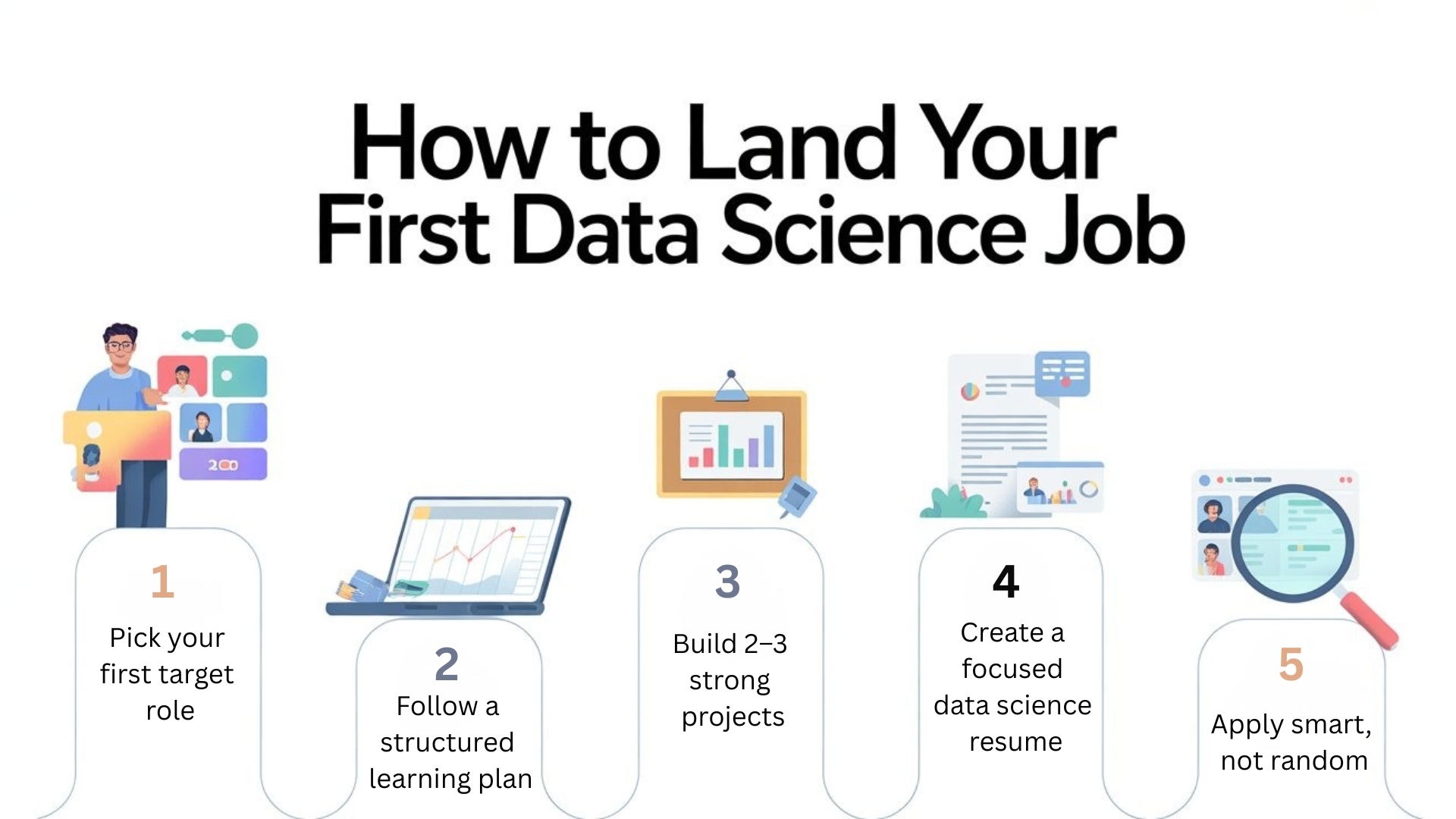
Here is a simple roadmap you can follow:
-
Pick your first target role
Decide if you want to start as a Data Analyst, Junior Data Scientist or Business Analyst. This choice shapes your learning path. -
Follow a structured learning plan
Use a guided data science course or a clear self-study plan. Learn Python, SQL, stats and ML in order. Avoid jumping randomly between topics on YouTube. -
Build 2–3 strong projects
Choose domains you know a bit about, like finance, marketing, operations or testing. Show a clear problem, your approach, the model or analysis, and the impact. -
Create a focused data science resume
Your data science resume should highlight skills, tools, projects and outcomes. Keep it short and clean. Add links to GitHub, dashboards and notebooks so recruiters can verify your work. -
Apply smart, not random
First target entry-level data science job opportunities like Data Analyst, Junior Data Scientist and Associate ML Engineer. As your skill and confidence grow, you can move to heavier roles.
If you repeat this cycle for a few months, your profile starts to look real, not just theoretical.
Why a structured data science course still matters
Today you can learn from many free sources. However, a structured data science course can still save you time and reduce confusion.
A good program should:
-
Cover all core topics from basics to ML
-
Make you work on real, guided projects
-
Give you mentor support and doubt clearing
-
Help you prepare for interviews
-
Review your portfolio and resume
When a course does this, it becomes a bridge between “I watched some videos” and “I am ready for data science fresher jobs and junior roles.”

Final thoughts: your next step into data science
Right now, data is at the center of how companies decide what to build, where to spend and how to grow. So data science job opportunities will stay strong for the next few years.
If you:
-
Learn the core data science skills required
-
Build visible projects
-
Craft a clear, honest data science resume
-
And keep improving one week at a time
…then you can move from curious learner to real candidate faster than you think.
Your next step is simple: choose your first target role, pick a clear learning path, and start building. The data science jobs you see online today can be your reality in the coming year if you move with focus and consistency.
To go deeper, we’re also hosting a live data science webinar called “Become a Data Scientist—faster, with AI-powered skills.” In this session, we walk through the exact roadmap we use at Testleaf: Python → SQL → ML → projects, plus how to use GenAI to speed up your learning and job search. If you’re serious about landing a data science role in 2026, this webinar is the best place to start your journey.
FAQs
Q1. What are the main data science roles for beginners?
Entry-level data science jobs usually include roles like Data Analyst, Junior Data Scientist, Business Analyst and Associate ML Engineer. These roles focus on cleaning data, building basic models, creating dashboards and helping teams make decisions using data instead of guesswork.
Q2. What are the data science requirements for getting hired?
Typical data science requirements include solid skills in Python, SQL, statistics, basic machine learning, data visualization and clear communication. Employers also expect at least a few real projects where you have applied these skills to solve practical problems, not just completed theory or quizzes.
Q3. What data science skills are required for a fresher?
Core data science skills required for a fresher are Python (with Pandas and NumPy), SQL, statistics, simple ML models, and the ability to present findings clearly. If you can show 2–3 good end-to-end projects and explain them well, you stand out for data science fresher jobs.
Q4. Are there data science jobs in Chennai and other Indian cities?
Yes. There are strong data science jobs in Chennai and other major Indian cities across IT services, product companies, startups and GCCs. Many firms also offer hybrid or data science remote jobs, so you can apply locally and to pan-India or global roles.
Q5. How can a data science course help me get a job?
A good data science course gives you a structured path to learn Python, SQL, stats, ML and projects in the right order. It also helps you build a portfolio, refine your data science resume, and prepare for interviews so you can move from learner to job-ready candidate faster.
Q6. What is the best way to write a data science resume as a fresher?
A strong data science resume for freshers highlights key skills, 2–3 real projects, tools used and your role in each project. Keep it one page, use clear bullet points, add GitHub and portfolio links, and match keywords from data science job opportunities you are applying for.
Q7. Can I get data science remote jobs as a beginner?
Yes, but it’s more competitive. Many data science remote jobs prefer candidates who already have proven experience. As a beginner, you improve your chances by having strong projects, a polished online profile, and by first targeting local or hybrid roles to gain experience.
We Also Provide Training In:
- Advanced Selenium Training
- Playwright Training
- Gen AI Training
- AWS Training
- REST API Training
- Full Stack Training
- Appium Training
- DevOps Training
- JMeter Performance Training
Author’s Bio:


Content Writer at Testleaf, specializing in SEO-driven content for test automation, software development, and cybersecurity. I turn complex technical topics into clear, engaging stories that educate, inspire, and drive digital transformation.
Ezhirkadhir Raja
Content Writer – Testleaf