
Search for a data science course online and you’ll see big promises everywhere.
“100% placement.” “7-figure salary.” “No math needed.”
It looks exciting, but also very confusing.
Which course actually helps you switch careers or grow in your current job?
And which ones just look good in ads?
This guide keeps things simple and honest, so you can choose a course that fits you.
What Is Data Science, Really?
Before you pick any program, you must know the basic data science meaning.
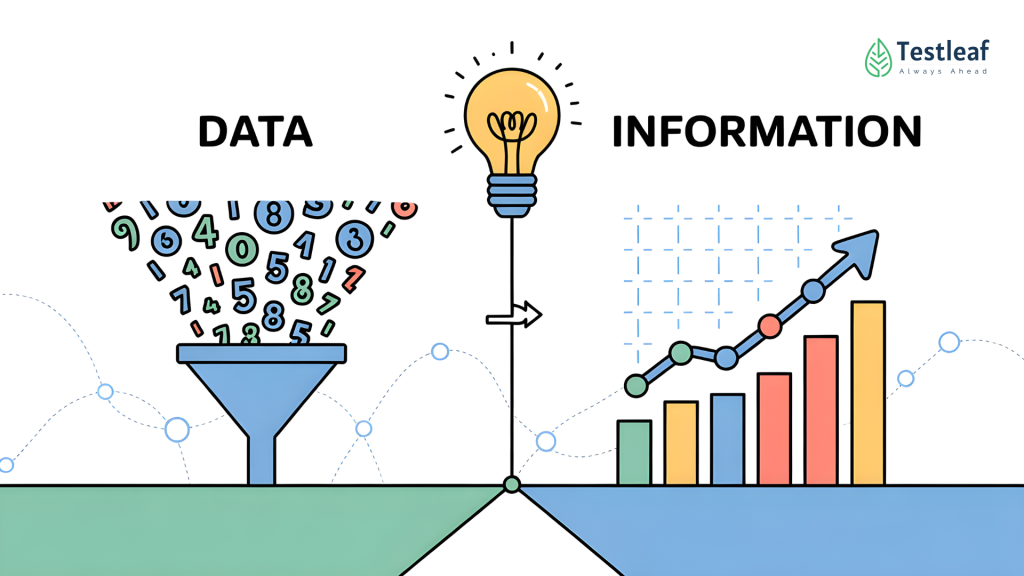
Data science is the process of using data to solve real business problems. You collect data, clean it, explore it, build models, and then explain what the results mean in normal language so others can act on it.
In practice, you will:
- Write code in Python and SQL
- Use statistics to understand patterns
- Apply machine learning to predict outcomes
- Show insights with dashboards and charts
Good courses do not just teach tools. They show how data supports better decisions in finance, healthcare, e-commerce, and more.
Continue Reading: epam interview questions
Data Science Course Eligibility: Can You Really Do This?
Many learners worry about data science course eligibility.
The truth is simple:
- You do not need to be a hardcore programmer
- You do not need a master’s degree in math
- You do need basic logic and willingness to practice
If you are:
- A fresher or final-year student
- A working IT professional (QA, dev, support, BI)
- From non-IT (operations, banking, BPO, marketing)
…you can start, as long as you stay consistent and open to learning something new each week.
A good ai and data science course will start from basics and move step by step: Python → statistics → ML → projects → a bit of GenAI.

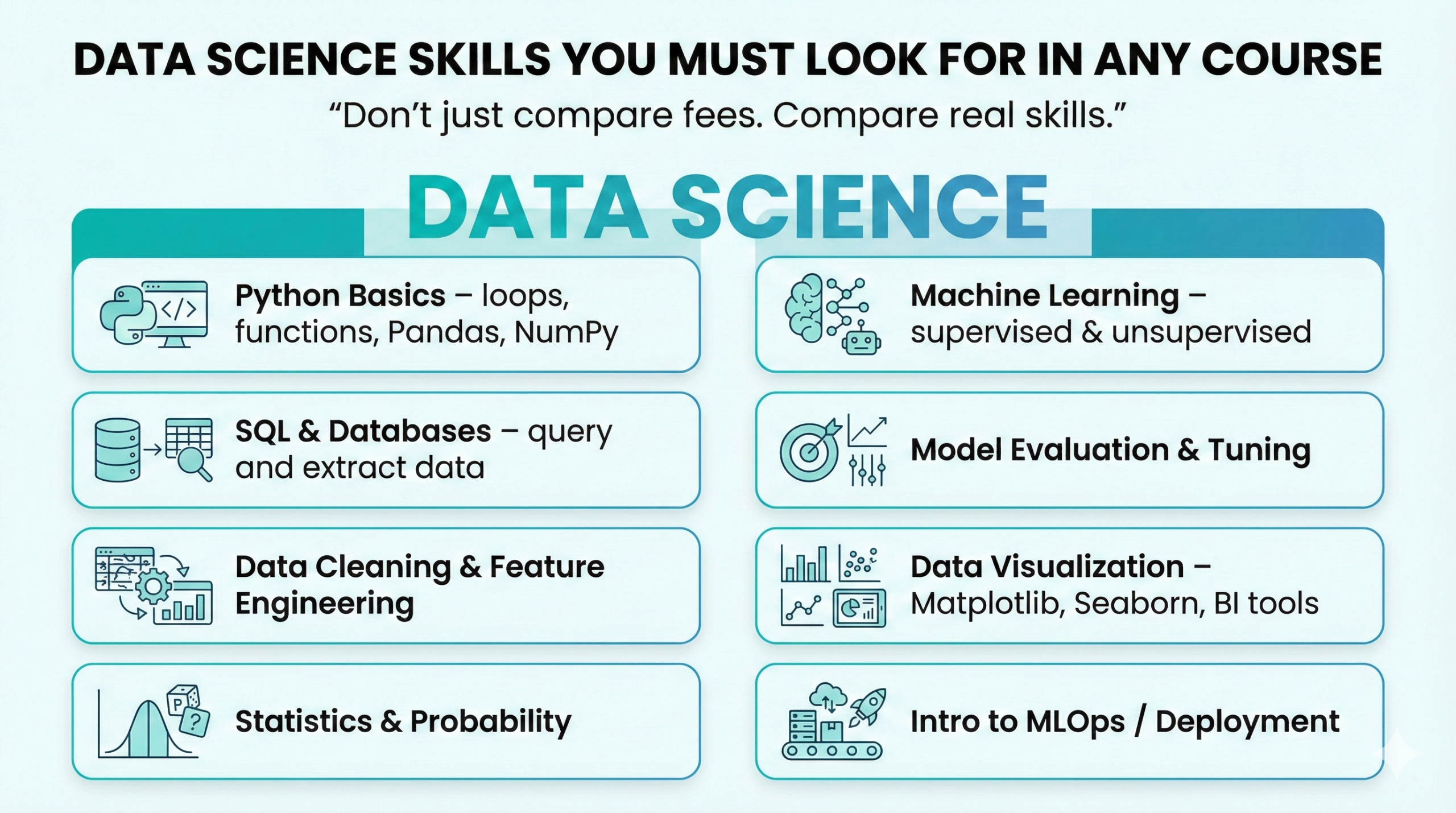
Data Science Skills You Must Look For in Any Course
Instead of only checking duration and fee, focus on data science skills.
Strong courses cover:
- Python basics (loops, functions, libraries like Pandas and NumPy)
- SQL and data extraction from databases
- Data cleaning and feature engineering
- Statistics and probability
- Supervised and unsupervised machine learning
- Model evaluation and improvement
- Data visualization (Matplotlib, Seaborn, or BI tools)
- Intro to MLOps or simple deployment

They also include clear projects, not just small “classroom” examples. For example:
- Sales forecasting
- Customer churn prediction
- Fraud detection
- Text analysis on reviews
These projects help you speak with confidence in interviews.
Recommended for You: api automation interview questions
Why AI Matters: Not Just Data Science, But AI and Data Science
In 2026, AI sits next to data in almost every product. So a strong ai and data science course gives you an edge.
You should get exposure to:
- Large Language Models (like ChatGPT) for data work
- How AI assists with feature engineering and code
- How to use GenAI tools to speed up analysis and reporting
You don’t have to become a deep learning researcher. However, you should know how AI tools support your data pipeline, so you stay relevant for the next five years.
Data Science Salary and Career Growth
Let’s talk about data science salary in a realistic way.
For freshers, entry-level data or analyst roles often start in the mid range compared to other tech jobs. With strong projects and good communication, this number grows as you gain real experience.
Your growth usually looks like this:
- Data Analyst / Junior Data Scientist
- Data Scientist / ML Engineer
- Senior roles like Lead Data Scientist or Analytics Manager
Salary depends on three things:
- Your skills and portfolio
- Your past domain background
- The city and company you target
A good course should tell you this clearly, not just flash the highest package from one lucky student.
Data Science Fresher Jobs: What Can You Expect?
You will not jump straight into a “Chief Data Scientist” role. For data science fresher jobs, expect titles like:
- Data Analyst
- Business Analyst
- Junior Data Scientist
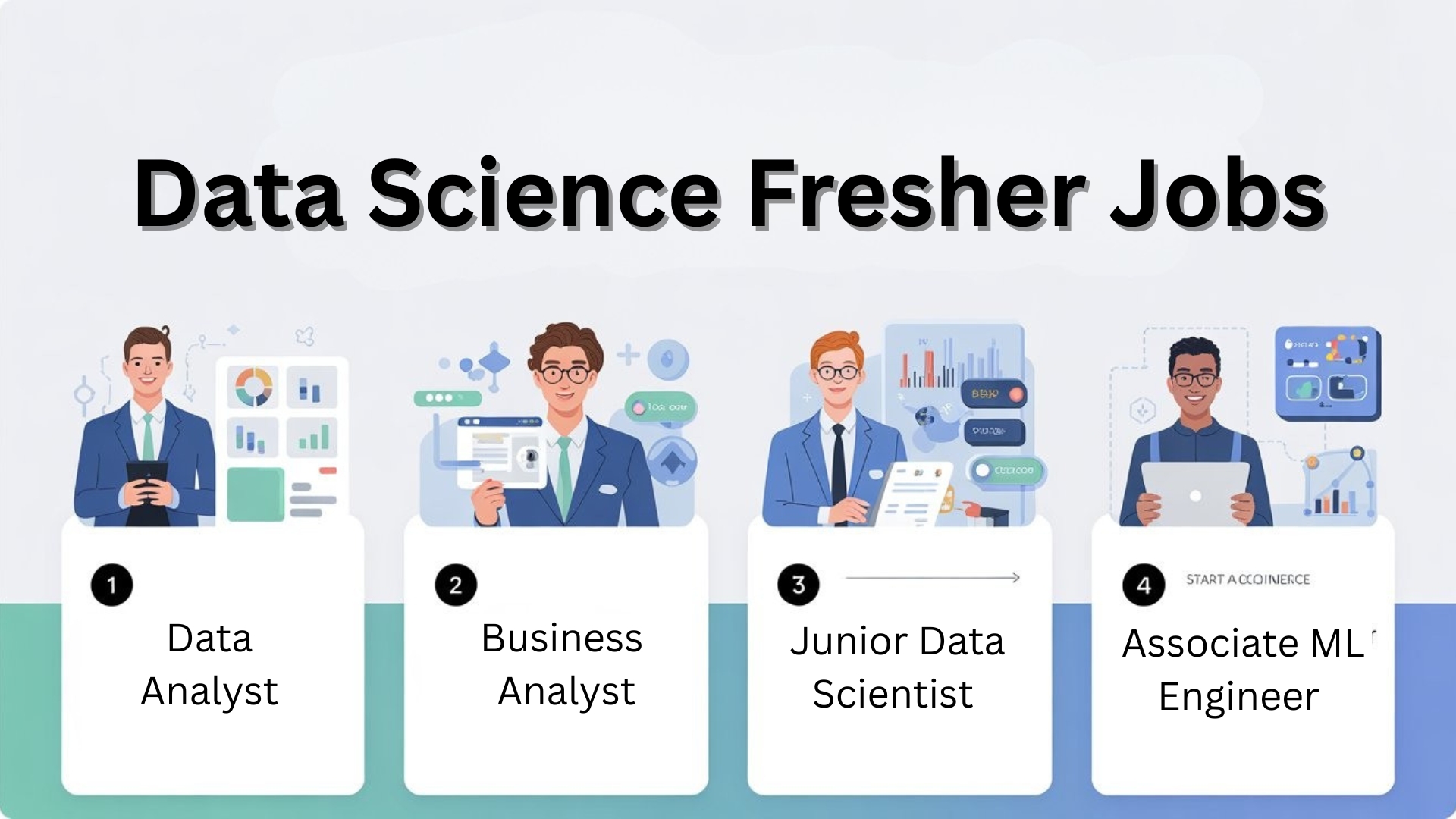

These roles focus on reporting, basic models, and working with senior data members. Over time, you take on heavier problems and own full projects.
Look for a course that supports you here with:
- GitHub portfolio setup
- Mock interviews and feedback
- Guidance on which roles to apply for first
Popular Articles: selenium interview questions
Data Science Certification: Does It Really Matter?
A data science certification is useful, but only as part of the whole picture.
Recruiters check:
- Can you explain core concepts simply?
- Do you have real, visible projects?
- Can you solve basic problems on the spot?
So choose a course that:
- Gives a recognized certificate and
- Pushes you to build 2–3 strong end-to-end projects
- Helps you publish those projects (GitHub, portfolio, LinkedIn posts)
That mix builds both credibility and proof.
How to Compare Data Science Courses Online
When you compare any data science course online, use this quick checklist:
- Curriculum depth
Does it cover Python, SQL, statistics, ML, and projects? - Project quality
Are projects realistic, or just toy datasets? - Mentor support
Do you get live doubt clearing, or only recorded videos? - Career support
Is there help with resumes, interviews, and job search? - Learning format
Does the schedule work for you as a beginner or working pro? - Honesty of marketing
Does the site talk clearly about timelines and effort?
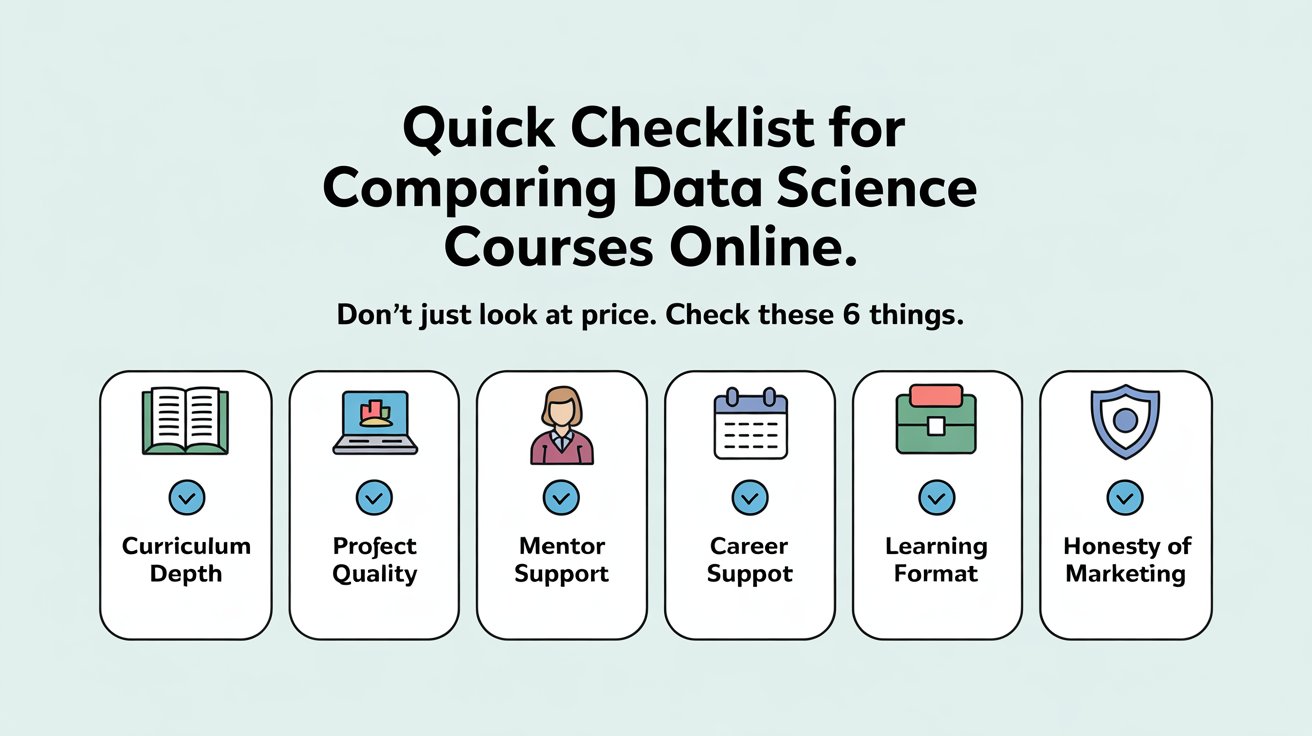

If a course looks good on all six, you can consider joining.
Final Thoughts: Picking Your Data Science Course in 2026
Choosing a data science course online is a big decision, but it does not have to feel scary.
You now know:
- What data science means
- Who can join and what eligibility looks like
- Which skills matter most
- How salary and fresher roles work
- What to check before you pay any fee
Next, shortlist 2–3 courses. Study their syllabus, talk to their team, and check learner stories. Then pick the one that feels structured, honest, and supportive of your goals.
With the right course and steady practice, “I’m curious about data” can turn into “I work in data science now” faster than you think.
To go deeper, you can also join our live data science webinar “Become a Data Scientist—faster, with AI-powered skills.” We’ll walk through Python → ML → GenAI with a live mini project and real career guidance—save your seat and bring your questions.
FAQs
Q1. What does a data science course teach?
A data science course teaches you how to use Python, SQL, statistics, and machine learning to turn raw data into insights and decisions. You also learn to build projects that show real business impact.
Q2. What is the data science course eligibility for beginners?
Most data science course eligibility criteria are simple: basic maths, logical thinking, and commitment to learn. You can join as a fresher, working IT professional, or even from a non-IT background if you’re ready to practice regularly.
Q3. How long does it take to become job-ready in data science?
With a structured data science course online and consistent effort, many learners take around 4–9 months to become job-ready. The exact time depends on your starting point, how much you practice, and the depth of your projects.
Q4. What data science skills do companies expect?
Companies look for strong data science skills like Python, SQL, data cleaning, statistics, machine learning basics, and clear communication. They also value real projects, problem-solving ability, and the confidence to explain your models in simple terms.
Q5. Is data science salary worth the effort in 2026?
Data science salary can be attractive because businesses rely more on data-driven decisions. Freshers often start in analyst or junior data roles, and pay grows as your skills, projects, and domain understanding improve over time.
Q6. Do I need a data science certification to get a job?
A data science certification helps, but it’s not enough by itself. Recruiters care more about your projects, how you think about data, and how well you explain your work. The best certification programs combine theory, hands-on projects, and career support.
Q7. What is an AI and data science course?
An ai and data science course combines core data science topics with modern AI tools and concepts. You learn not only how to analyse data, but also how to use AI to speed up workflows, build smarter models, and stay relevant in future roles.
Q8. What are data science fresher jobs I can target?
Common data science fresher jobs include Data Analyst, Business Analyst, Junior Data Scientist, and entry-level ML Engineer. A strong portfolio and clear fundamentals increase your chances in these roles.
We Also Provide Training In:
- Advanced Selenium Training
- Playwright Training
- Gen AI Training
- AWS Training
- REST API Training
- Full Stack Training
- Appium Training
- DevOps Training
- JMeter Performance Training
Author’s Bio:


Content Writer at Testleaf, specializing in SEO-driven content for test automation, software development, and cybersecurity. I turn complex technical topics into clear, engaging stories that educate, inspire, and drive digital transformation.
Ezhirkadhir Raja
Content Writer – Testleaf