
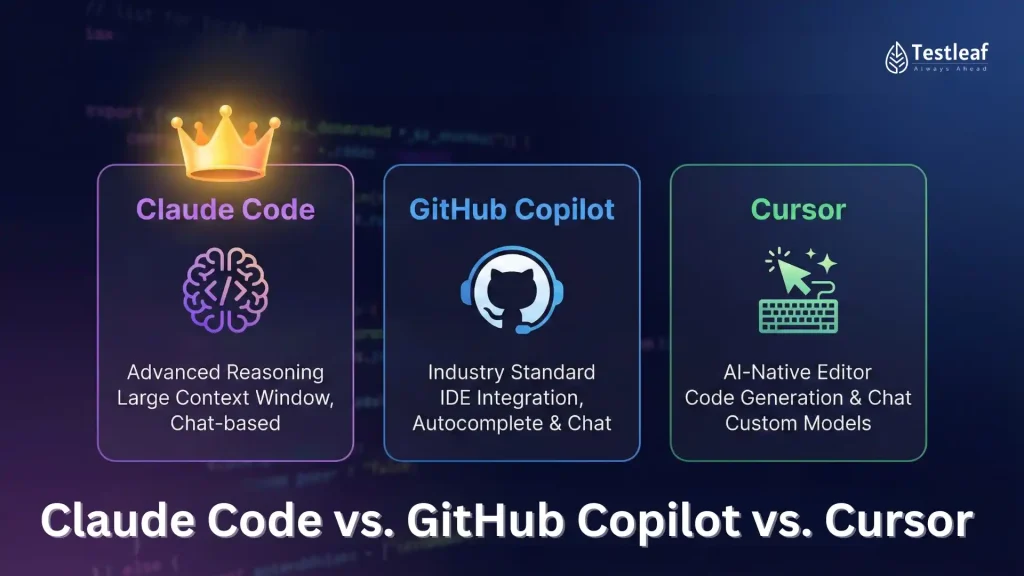
Something unusual happened in early 2026.
It wasn’t a product launch.
It wasn’t earnings.
👉 It was an AI capability update.
And yet, billions vanished from stock markets overnight.
When Anthropic introduced Claude Code and its security capabilities, cybersecurity and software stocks dropped sharply—some by 10–13% in a single day .
Why?
Because for the first time, investors realized:
👉 AI is no longer assisting developers.
👉 It is starting to replace entire layers of software workflows.
The Real Question: Are AI Coding Tools Still Just “Assistants”?
For years, tools like:
- GitHub Copilot
- Cursor
- ChatGPT
Have been positioned as coding assistants.
They:
- Suggest code
- Autocomplete functions
- Help debug
But they still depend on human direction.
Claude changed that narrative.
Continue Reading: epam interview questions
The Shift: From Coding Assistant → Autonomous Software Agent
Claude Code introduced something fundamentally different:
👉 System-level reasoning across entire codebases
Instead of:
- Suggesting a function
- Fixing a bug
Claude can:
- Scan entire repositories
- Understand logic flows
- Detect vulnerabilities
- Suggest fixes end-to-end
It’s not autocomplete.
It’s autonomous engineering behavior.
How Claude Code Just Rewrote the Rules of Software Testing
This is where things get disruptive.
Traditional software testing relies on:
- Predefined test cases
- Static rules
- Manual validation
Claude Code changes that by:
1. Understanding Systems, Not Just Code
It analyzes relationships across files, dependencies, and logic flows—not just lines of code.
2. Detecting Hidden Vulnerabilities
Claude identified 500+ real vulnerabilities in open-source projects during early testing
3. Prioritizing Risk Automatically
Instead of flagging everything, it ranks issues based on real-world impact.
4. Suggesting Fixes (Not Just Problems)
Traditional tools say: “Here’s the issue.”
Claude says: “Here’s the fix.”
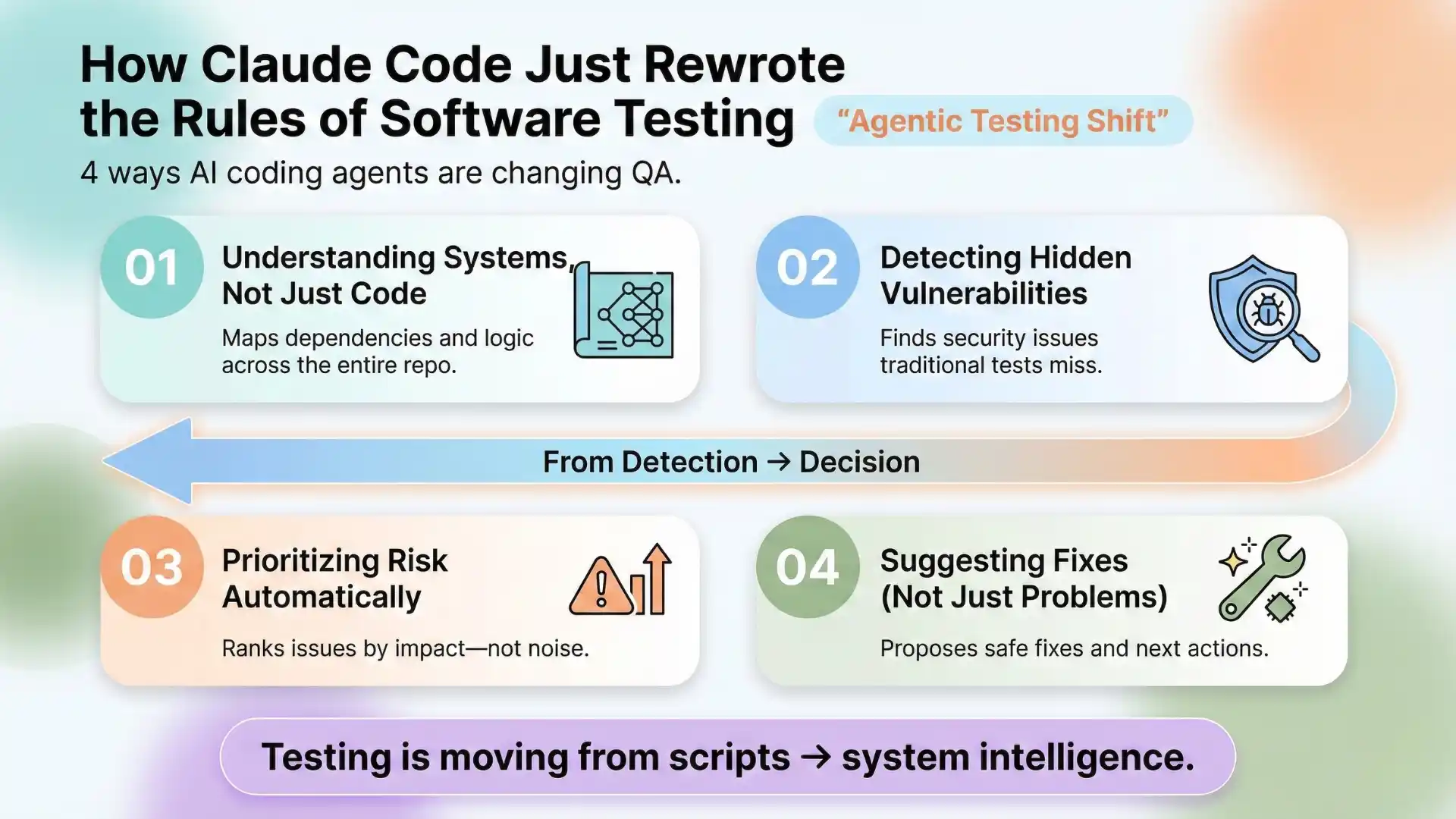

👉 This transforms testing from detection → decision-making
You Might Also Like: Automation testing interview questions
Claude vs Copilot vs Cursor (What’s Actually Different)
AI Coding Tools Compared
| Capability | Claude Code | GitHub Copilot | Cursor |
| Scope | Full codebase reasoning | Line-level suggestions | Contextual editing |
| Intelligence | System-level | Function-level | File-level |
| Testing | Risk-based validation | Limited | Limited |
| Security | Deep vulnerability detection | Basic suggestions | Minimal |
| Autonomy | High (agent-like) | Low | Medium |
The Core Difference
- Copilot → helps you write code faster
- Cursor → helps you navigate and edit smarter
- Claude Code → helps you understand and fix entire systems
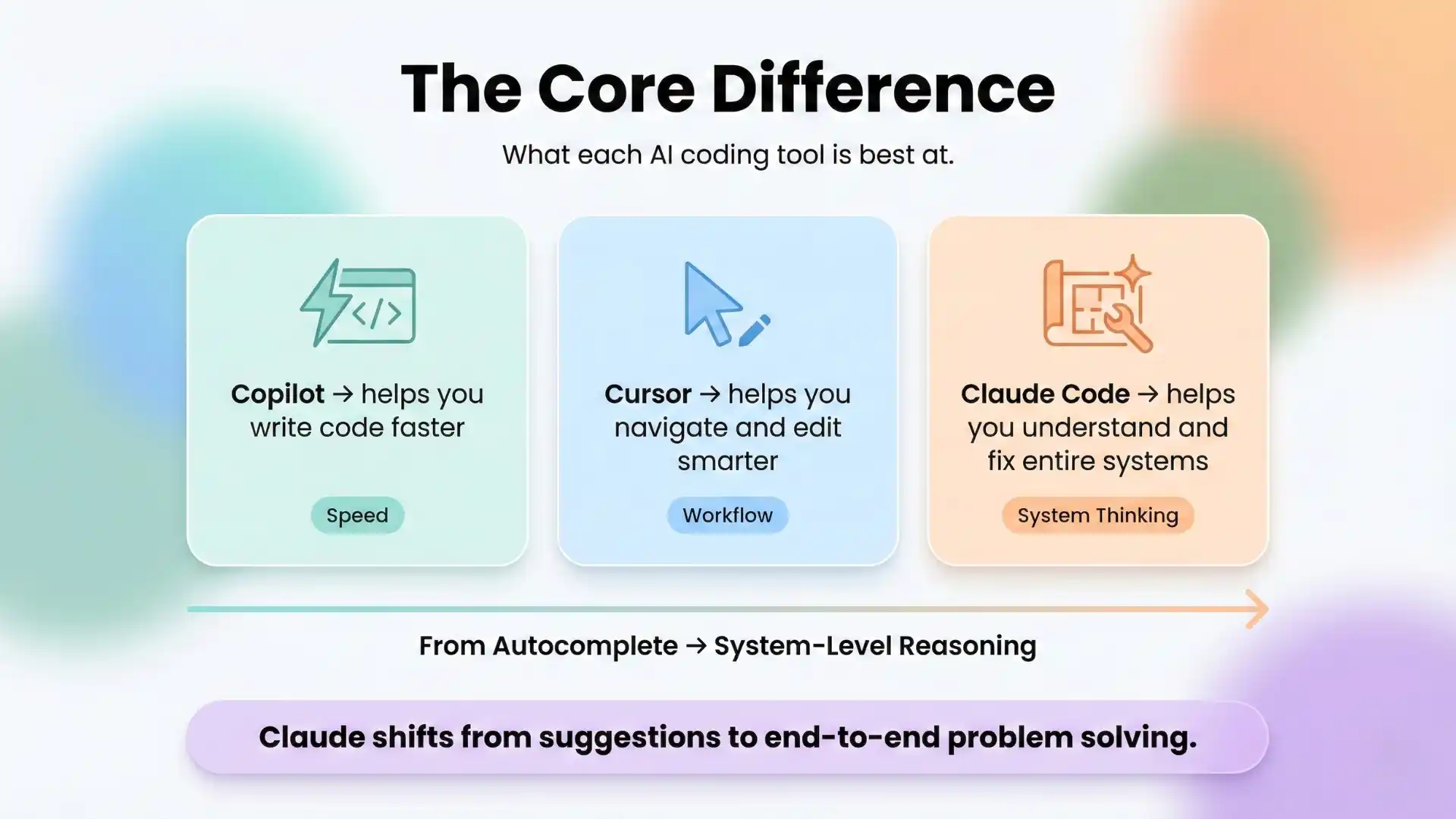
That’s a category shift
Why Markets Reacted So Strongly
The market didn’t react to features.
It reacted to implications.
1. Threat to Cybersecurity Industry
Claude Code Security:
- Scans entire codebases
- Detects vulnerabilities
- Suggests patches
This directly competes with:
- Static analysis tools
- Security platforms
Result:
👉 Cybersecurity stocks fell up to 11% instantly
2. Threat to Legacy Software (IBM Case)
Claude demonstrated ability to:
- Understand legacy code (COBOL)
- Modernize systems
Result:
👉 IBM stock dropped 13%—worst in 26 years
3. Fear of “SaaS Replacement”
Investors started asking:
👉 What happens if AI agents:
- Write code
- Fix bugs
- Maintain systems
Do we still need:
- Expensive SaaS tools?
- Large engineering teams?
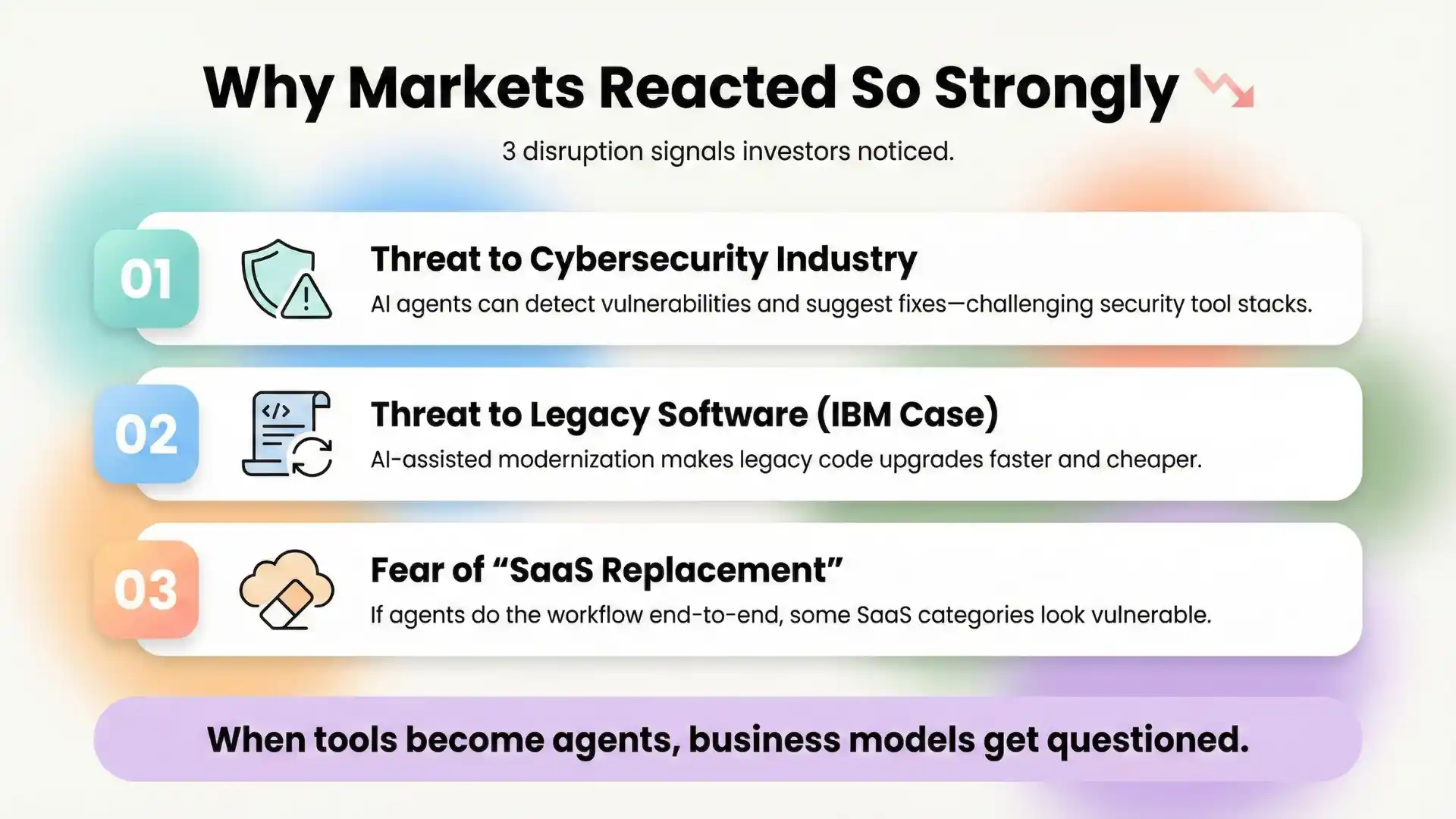
This fear triggered a broader software sector sell-off
Additional Resources: AI and ML engineer salary in india 2026
The Bigger Insight: Claude Is Not a Tool—It’s Infrastructure
This is the real difference.
Copilot and Cursor:
👉 Improve productivity
Claude:
👉 Changes how work gets done
It is moving toward:
- Autonomous agents
- End-to-end workflows
- System-level decision-making
This is what some call:
👉 The shift from “coding tools” to “AI coworkers”
What This Means for Developers & QA Engineers
This is not about tools anymore.
It’s about roles.
Developers
Move from:
- Writing code
To:
- Designing systems
- Reviewing AI-generated logic
AI in Software Testing
In traditional testing:
- You define rules
- You validate expected outcomes
- You rely on deterministic behavior
With AI-driven systems like Claude:
- Systems behave probabilistically
- Outputs vary based on context
- Testing shifts from validation → evaluation
👉 You are no longer testing “what should happen”
👉 You are evaluating “what could happen”
Why This Changes QA Completely
Modern QA engineers must now:
- Evaluate AI-generated outputs
- Detect bias and inconsistencies
- Validate system behavior under uncertainty
- Monitor model performance over time
👉 This is the shift from test execution → system intelligence


Why This Matters Now (Not Later)
This is not a “future trend.”
It’s already happening.
- Stocks are reacting
- Enterprises are experimenting
- AI tools are evolving rapidly
Even partnerships and enterprise integrations are expanding, showing Claude is being positioned as a workflow platform, not just a model
What is Claude Code?
Claude Code is an AI-powered software engineering tool that can analyze entire codebases, detect vulnerabilities, and suggest fixes using system-level reasoning instead of simple code suggestions.
Key Takeaways
- Claude Code operates at system-level, not line-level
- It introduces autonomous debugging and testing
- Markets reacted due to disruption fears
- AI is shifting from tools to infrastructure
- QA and development roles are evolving rapidly
Final Thoughts
For years, AI in coding was about speed.
Now, it’s about understanding.
Claude is not just helping developers write code faster.
👉 It’s helping systems think, debug, and evolve
And that’s why markets reacted.
Because this isn’t just a better tool.
👉 It’s the beginning of a new software paradigm.
FAQs
1. How is Claude Code different from GitHub Copilot?
Claude Code performs system-level reasoning and debugging, while Copilot focuses on code autocomplete and suggestions.
2. Why did markets react to Claude Code?
Investors reacted due to its potential to replace traditional software tools, impacting cybersecurity and legacy software companies.
3. Is Claude Code better than Cursor?
Claude is stronger in system-level analysis and testing, while Cursor is optimized for developer workflows and editing.
4. What is Claude Code used for?
It is used for analyzing codebases, detecting vulnerabilities, debugging systems, and improving software quality.
5. Does Claude replace developers?
No, it augments developers by automating complex tasks and enabling system-level thinking.
We Also Provide Training In:
- Advanced Selenium Training
- Playwright Training
- Gen AI Training
- AWS Training
- REST API Training
- Full Stack Training
- Appium Training
- DevOps Training
- JMeter Performance Training
Author’s Bio:


Content Writer at Testleaf, specializing in SEO-driven content for test automation, software development, and cybersecurity. I turn complex technical topics into clear, engaging stories that educate, inspire, and drive digital transformation.
Ezhirkadhir Raja
Content Writer – Testleaf