


“Roadmap to Effectiveness: Unlocking the Secrets of Test Architect!”
Introduction
Becoming a test architect is not a one-step promotion. It is a career progression that combines testing fundamentals, automation depth, framework thinking, system design awareness, and strong technical judgment. A test architect is expected to do more than write or review tests. The role requires designing scalable quality systems, choosing the right testing strategies, and helping teams build reliable automation across products and platforms. This roadmap explains the skills, stages, and mindset needed to grow into that role.
How do you become a test architect?
To become a test architect, you need strong testing fundamentals, programming ability, framework design knowledge, API and non-functional testing skills, plus practical understanding of cloud, DevOps, and scalable automation strategy.
Key Takeaways
- A test architect needs more than UI automation skills.
- Programming, design patterns, APIs, non-functional testing, cloud, and DevOps all matter.
- Career growth to test architect is a staged journey, not a shortcut.
- The role requires both technical depth and systems thinking.
- A clear roadmap makes career growth more practical and less confusing.
Why the Test Architect Role Matters
A test architect plays a different role from a tester or automation engineer. The responsibility is not limited to executing tests or building scripts. A test architect helps define automation direction, framework structure, quality strategy, tool choices, and scalable testing practices across teams. That is what makes the role valuable in mature engineering organizations. This is an inference based on the article’s own skill list, which goes beyond execution and includes framework design, non-functional testing, cloud, DevOps, and system automation.
Test Architect Population
Looking into the test architect population in the entire industry, the statistics show that very few intend in becoming test architects.
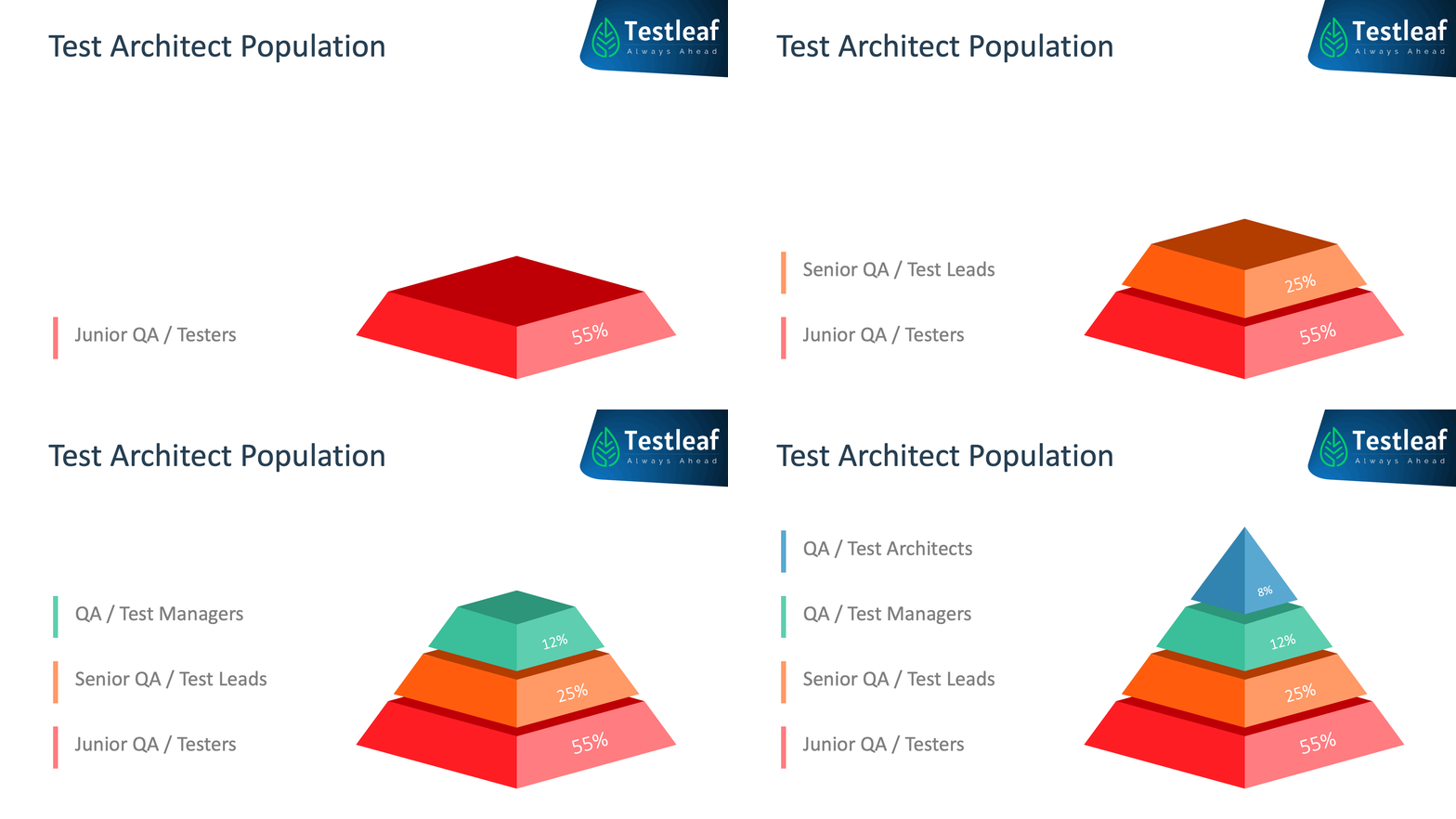
As per data, we can see only 8% of the people in the market have set up their careers as test architects. Test architect is an individual contributor role that has particular openings and creates rare market demandsRoadmap to Becoming Most Effective Test Architect.
Now lots of openings are coming in, so choose your predominant organization like Service, Captive, and Product companies. On analyzing the average salary for test architects, it is around 32 lakhs. Great, it is a very reasonable amount of money, right?
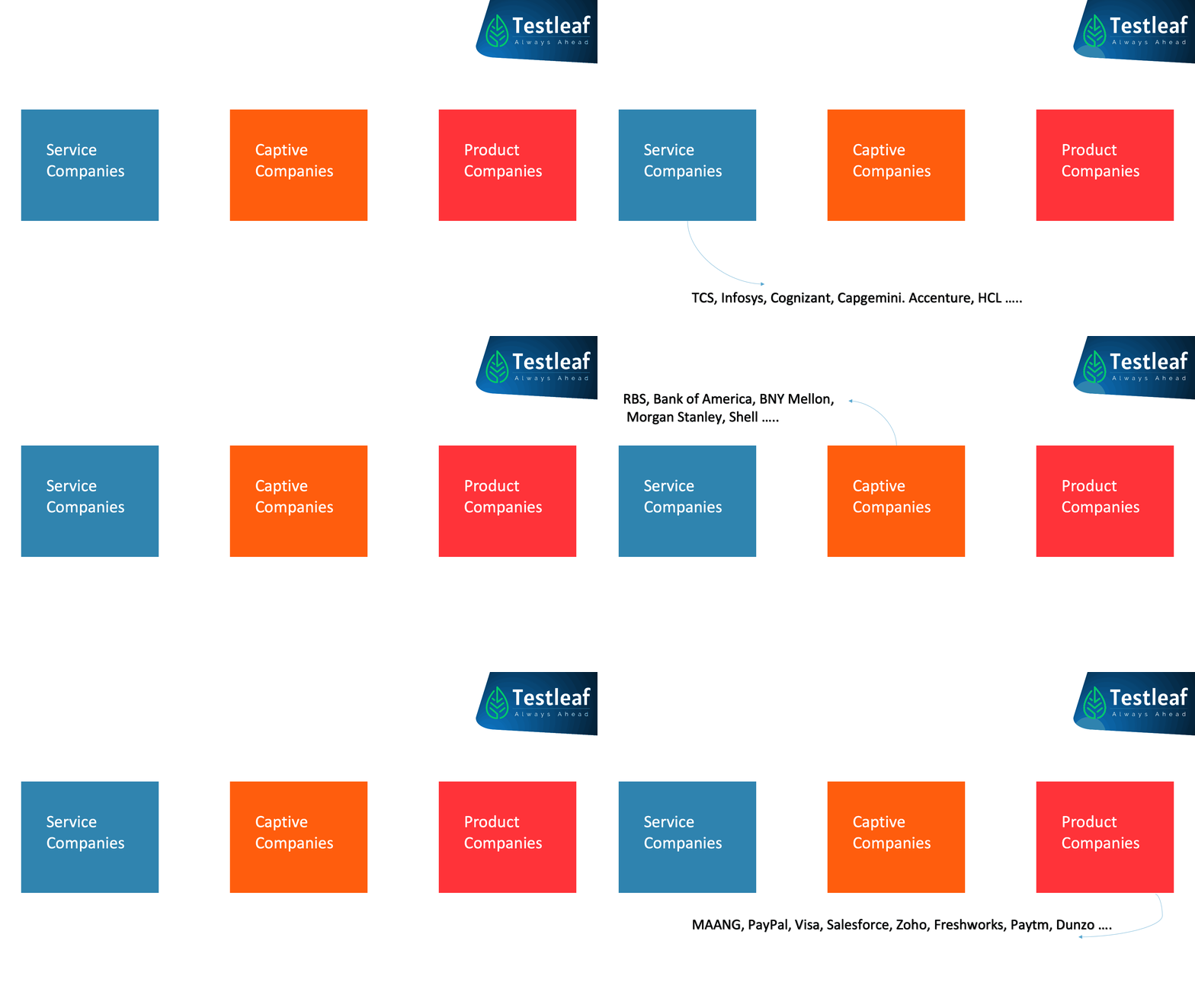
Now lots of openings are coming in, so choose your predominant organization like Service, Captive, and Product companies. On analyzing the average salary for test architects, it is around 32 lakhs. Great, it is a very reasonable amount of money, right?
If you are a person who spent 8+ years in the testing field but does not know how to reach the spot, then here is the digestive road map to follow to become a test architect,

A Practical Roadmap to Becoming a Test Architect

- Enable a Growth Mindset
Consistent learning and adaptability are important for your career growth; nobody can reach heights without a growth mindset. If we watch successful people carefully, their first step is to believe in themselves and dream about what they want to be. So first, we should know where we want to go and why we need to be there. - Identify the Missing Skills
If you wish to uplift your career, first choose the top companies you want to place on, then start to identify the missing skills you need to reach there. Here I listed the top 10 skills you need to be a Test Architect- Test Case Enumeration (functional)
Indeed, as the tester, you may be good at test case writing, but maybe not exactly. Sometimes mistakes in a test case might cause leakage in a revenue or performance issue in the system, which takes time to resolve. We must focus on 360 coverage in the testing process to overcome these issues. - Programming and DSA
As a test architect, there is no need to know multiple programming languages, depth in a single programming language is more sufficient. Most companies are looking for basic proficiency in data structures and algorithms. Ultimately the matter of approach is more important than problem-solving techniques. - Design Patterns
Test architects must possess skills to efficiently design a new automation framework. A design pattern is a basic structure; hence you should have a complete understanding of frameworks and design pattern types like,
Creational – class and object composition
Structural – the relationship between entities
Behavioural – communication patterns between object - Agile, TDD (progress)
Test Driven Development is the best approach where the test cases are tested first, and in case of failure, the new code is written with the agile principle; this makes code simple and avoids duplicate code. As the test architect, you should know to build unit test cases. When you design TDD, you should remember to write positive test cases instead of negative ones. - Front-End Automation (UI)
There are a lot of tools in the field for performing web-based automation. As the test architect, you should focus on tools architecture, internals, and their differences. The preferable tools are WebDrive, puppeteer, playwright, and cypress… ensure that you are an expert in one of these tools and know the use of it. - Back-End Automation API
Back-end testing ensures the web application is free from database corruption or errors. To be a test architect, you should additionally want to be skilled in in-service automation, preferably using Microservices. Working on API is good, but you need a special focus & understanding of messages, events, and queues. - Non-Functional Testing
Preferably, you should be able to work on performance testing and security testing in a professional style. Especially Focus on performance engineering helps to find the source of the problem, and it will help to solve the issues easily. In addition, directing on accessibility and usability will greatly assist the process.
It is recommended to use the following testing tools: JMeter, Gatling, Locust, and vulnerability. - Cloud Automation
You should first be proficient in cloud fundamentals and cloud solutions; next, you should be capable of handling edge test cases. Also, Know Cloud computing platforms like – AWS, AZURE, and GCP. - DevOps Automation:
DevOps include a variety of technologies, but you don’t need to cover all. Make it simple with these three tools at any build, source control, CI-CD tool – Maven, Git, Jenkins.
In addition, you should also be skilled at containerization and orchestration – Docker & K8S
- System Automation
System automation is the most important top skill you need to be an expert at, which helps to know the internal structure execution. Knowing these steps gives you depth understanding of the system automation process and be skilful in structure execution- Understand the problem and create the design scope
- Propose high-level design and get buy-in
- Design deep dive
- Contribute to test-driven development
- Test Case Enumeration (functional)
- Study & Implement
Find out the skill you are lacking and work up on it. Then Study the missing skill then implement it practically. - Assess & Practice
Evaluate the implantation output and practice it. Consistency is the most important thing to becoming an expert in what you want to learn. - Mock Interview
Do more mock interviews before attending the interview; this helps you to crack opportunities in desired companies and gives you better ideas. - Attend Interviews
An interview is a door to the opportunity you seek; this makes you stronger technically. Attend a lot of interviews with top companies and gain more experience.
- Refactor skills
Refactor your skill from the experience of an interview you have attended and improve your learnings. - Offers, Negotiate (career switch)
As the path was clear, enjoy the offers you have. Finally, move into the position you looked for – “Test Architect.”
Core Skills You Need to Become a Test Architect
Foundation Skills
- Test design and coverage thinking
- Functional testing fundamentals
- Strong understanding of defects, risk, and validation
Technical Depth Skills
- Programming and DSA
- Design patterns
- UI automation expertise
- API and backend automation
Advanced Quality Skills
- Performance and non-functional testing
- Accessibility and usability awareness
- System automation thinking
Platform and Delivery Skills
- Cloud fundamentals
- DevOps basics
- CI/CD awareness
- Containers and orchestration
This structure is based directly on the article’s listed skill areas, but it makes the learning path much easier to understand.
What Tools Should a Test Architect Understand?
A test architect does not need to master every tool on the market. But the article rightly points to important areas: web automation tools such as Playwright, Cypress, and Selenium WebDriver; API and service-level understanding; non-functional testing tools such as JMeter and Gatling; and delivery ecosystem tools such as Git, Jenkins, Docker, and Kubernetes. The real goal is not tool collection. It is knowing which tool fits which testing problem.
Conclusion
Becoming a test architect is a progression of depth, not just experience. The role demands stronger technical fundamentals, broader system understanding, better framework thinking, and the ability to design scalable quality strategy. The good news is that the path becomes much clearer when you break it into stages. Focus on the right skills, apply them practically, refine them with feedback, and move step by step. That is how test engineers grow into test architects.
Always keep an eye on improving your testing skills, as these will help you become an even better test architect.
Thank you for reading!
FAQs
What does a test architect do?
A test architect designs scalable testing strategy, framework direction, tool selection, and automation structure across teams and systems.
How do you become a test architect?
You become a test architect by building strong fundamentals in testing, programming, framework design, APIs, non-functional testing, cloud, and DevOps, then applying those skills through practical experience.
What skills are most important for a test architect?
Important skills include programming, design patterns, test design, UI automation, API testing, non-functional testing, cloud, DevOps, and system automation.
Does a test architect need coding skills?
Yes. Coding skills are important because test architects need to understand programming, automation frameworks, and scalable technical design.
How many stages are there in the roadmap to become a test architect?
The roadmap includes 8 major milestones, such as mindset, skill-gap analysis, learning, implementation, assessment, mock interviews, real interviews, and refinement.
We Also Provide Training In:
- Advanced Selenium Training
- Playwright Training
- Gen AI Training
- AWS Training
- REST API Training
- Full Stack Training
- Appium Training
- DevOps Training
- JMeter Performance Training
Author’s Bio:


As CEO of TestLeaf, I’m dedicated to transforming software testing by empowering individuals with real-world skills and advanced technology. With 24+ years in software engineering, I lead our mission to shape local talent into global software professionals. Join us in redefining the future of test engineering and making a lasting impact in the tech world.
Babu Manickam
CEO – Testleaf