Testleaf

Playwright

Hero image showing Playwright CI/CD pipeline automation with test execution workflow, code dashboard, deployment flow, and modern QA pipeline integration for faster release confidence.

Playwright in CI/CD: Why Modern QA Teams Are Redesigning Their Automation Pipelines

  In the previous blog, we explored the advanced Playwright capabilities modern QA teams cannot ignore — from auto-waiting and network interception to debugging tools and AI-driven automation possibilities. During a conversation with Babu Manickam, another important point became very clear: “Automation is no longer valuable if feedback comes too late. Modern QA is all …

Playwright in CI/CD: Why Modern QA Teams Are Redesigning Their Automation Pipelines Read More »
Mastering Playwright: Advanced Features Modern QA Teams Cannot Ignore

  In the previous blogs of this series, we explored why Playwright is rapidly becoming the future of automation testing and how beginners can start learning it effectively. But this is where things become truly interesting. Because Playwright is not becoming popular only because it is faster than Selenium. It is becoming popular because it …

Mastering Playwright: Advanced Features Modern QA Teams Cannot Ignore Read More »

Getting Started with Playwright: A Beginner’s Guide for Modern Testers

  In this blog series, based on insights shared during a conversation with Babu Manickam, we are exploring why Playwright is becoming one of the most talked-about tools in modern automation testing. Beginners can start learning Playwright by understanding basic automation concepts, learning locators, practicing TypeScript basics, building small real-world projects, handling dynamic web elements, …

Getting Started with Playwright: A Beginner’s Guide for Modern Testers Read More »

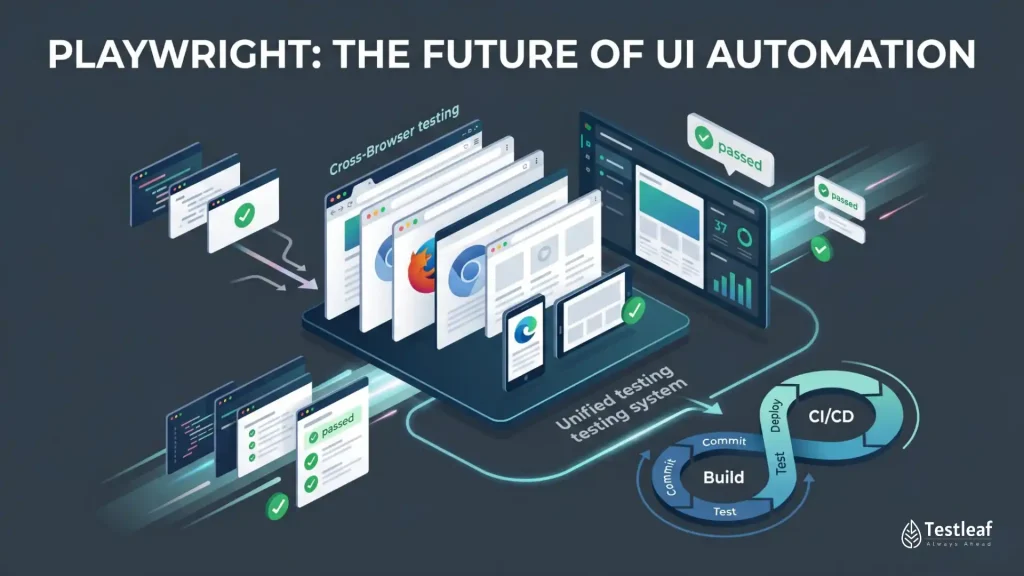
Playwright: The future of UI automation showing cross-browser testing, unified testing system, and seamless CI/CD integration for efficient test execution and faster automation cycles.

Why Playwright is the Future of UI Automation – Playwright Q&A: From Basics to Advanced

  In this blog series, based on an insightful Q&A with Babu Manickam, we’ll explore Playwright, a modern tool for automation testing. In this first blog, we’ll dive into why Playwright is quickly becoming the preferred tool for UI automation and how it is shaping the future of test automation. Playwright is considered the future …

Why Playwright is the Future of UI Automation – Playwright Q&A: From Basics to Advanced Read More »

The Silent Reason Playwright Frameworks Become Hard to Maintain

  Most Playwright frameworks do not become hard to maintain because Playwright is weak. They become hard to maintain because teams slowly normalize duplication. One login block gets copied into five test files. One mock API response gets repeated across multiple specs. One “temporary” helper becomes permanent. One user creation flow is pasted again and …

The Silent Reason Playwright Frameworks Become Hard to Maintain Read More »

Title image for Playwright performance testing showing UI test automation, performance signals, user interaction speed, and modern QA workflow for detecting performance bugs.

Why Your UI Tests Miss Performance Bugs — And How Playwright Fixes It

  Most QA teams think they’re testing performance. They’re not. They’re testing systems, not experience. And that gap is exactly why users still complain: “The app feels slow” “Clicks don’t respond immediately” “It works… but it’s frustrating” Here’s the uncomfortable truth: Passing tests don’t guarantee a fast experience. The Blind Spot in Modern QA Traditional …

Why Your UI Tests Miss Performance Bugs — And How Playwright Fixes It Read More »

Title image for a blog on Playwright and AI in software testing, showing how smart QA teams are rethinking the test pyramid to reduce slow pipelines, flaky tests, and inefficient automation.

Playwright + AI: Why Smart QA Teams Are Rethinking the Test Pyramid (Before It Slows Them Down)

  Your test suite is growing. But is your confidence? Most QA teams don’t notice the problem early. At first, automation feels like progress: more Playwright tests more coverage more confidence But a few months later, reality starts to show up: pipelines take longer to run failures become harder to trust debugging consumes more time …

Playwright + AI: Why Smart QA Teams Are Rethinking the Test Pyramid (Before It Slows Them Down) Read More »

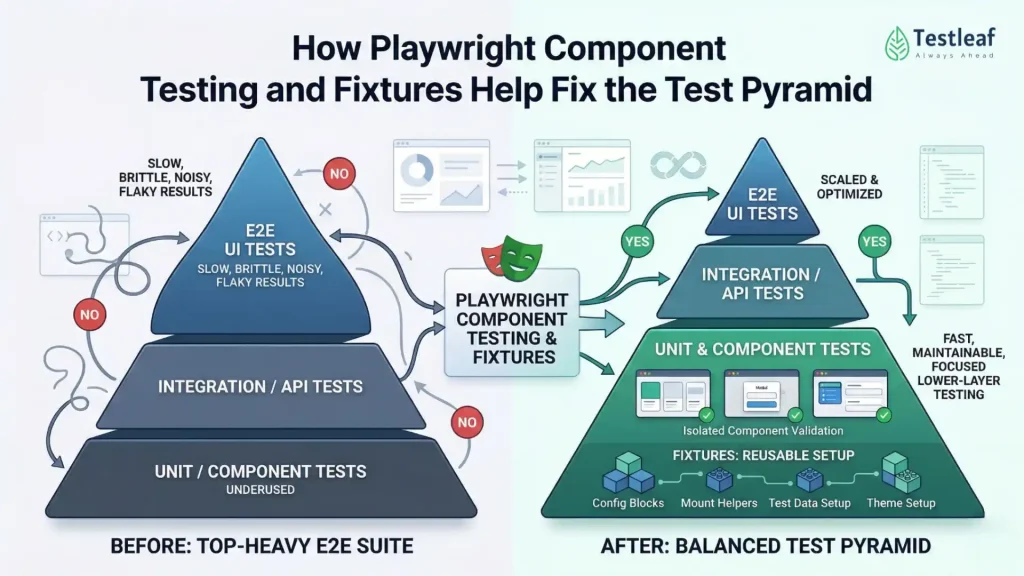
Title image showing how Playwright component testing and fixtures help fix the test pyramid through faster UI checks, better test placement, and more maintainable automation.

How Playwright Component Testing and Fixtures Help Fix the Test Pyramid

  Many QA teams say they want faster feedback, lower flakiness, and more maintainable automation. But their test strategy often says the opposite. They are still using full end-to-end journeys to validate UI behavior that should have been caught much earlier, much faster, and at much lower cost. That is not just a tooling issue. …

How Playwright Component Testing and Fixtures Help Fix the Test Pyramid Read More »

Playwright + AI based visual noise filtering

Playwright + AI: AI-Based Visual Noise Filtering

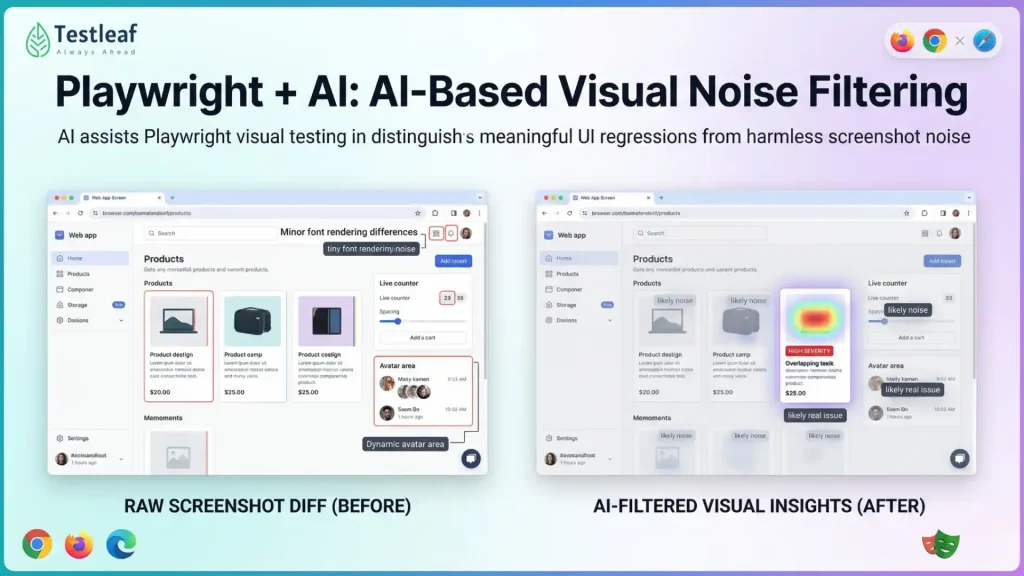
  Visual testing is powerful—but it also introduces a new problem: “Which differences actually matter?” Sometimes a screenshot diff fails because of: Slight font rendering differences 1-pixel shifts Dynamic ads or live counters Minor color shifts on different machines You don’t want your team constantly chasing false alarms. That’s where AI-based visual noise filtering can …

Playwright + AI: AI-Based Visual Noise Filtering Read More »

Accelerate Your Salary with Expert-Level Selenium Training

X