

When I first began my career as a tester, manual testing was the primary mode of operation. Every feature, every bug, every user scenario required hands-on testing. As the product grew, so did the number of tests. What started as a manageable load quickly became overwhelming. Regression cycles stretched into days, not hours. Bugs slipped through the cracks, and the team was constantly firefighting.
But automation was the answer. Over time, we implemented a structured automation strategy, and the impact was nothing short of transformative. Today, I can confidently say that automation helped us reduce manual testing effort by 90%. Here’s how we did it and why it’s the future of QA.
The Struggles with Manual Testing
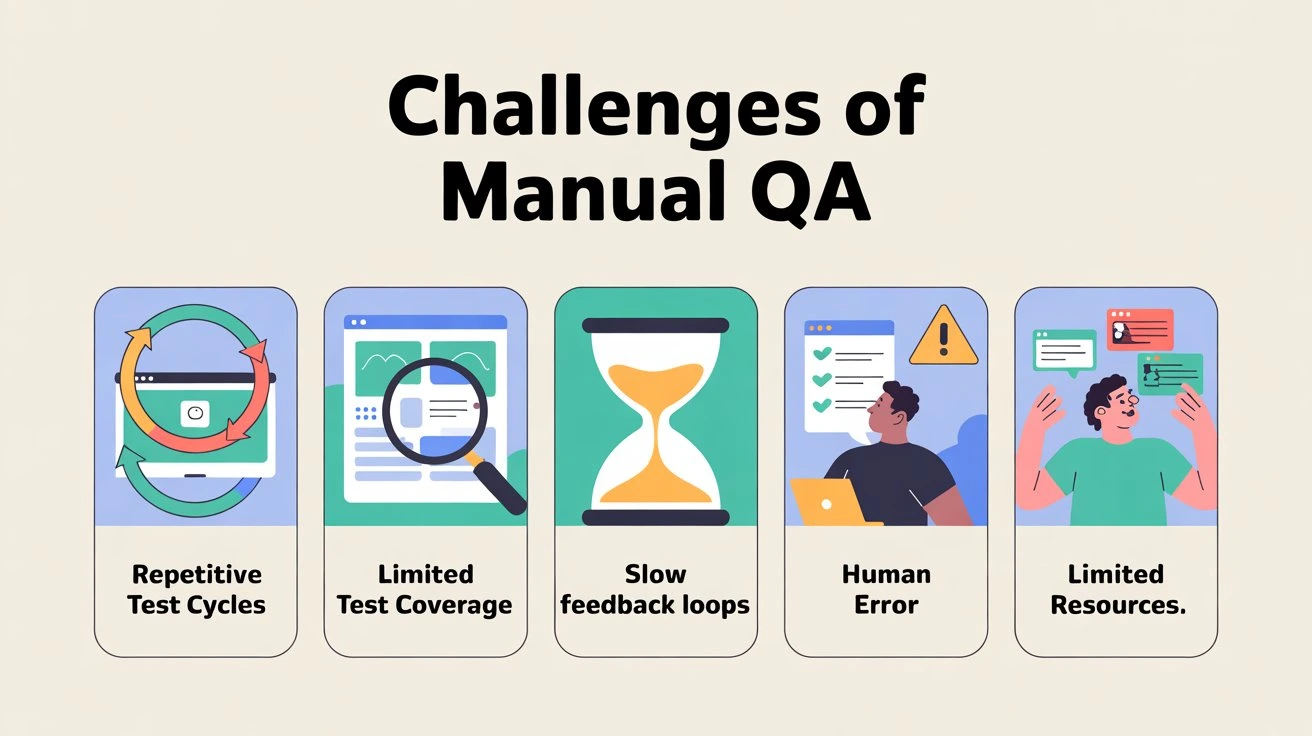
Before we embraced automation, manual testing consumed a disproportionate amount of our time. Here’s a snapshot of the issues we faced:
1. Repetitive Test Cycles
Regression testing, which had to be repeated with every release, was tedious. Running the same set of test cases for every minor code change resulted in repetitive tasks that drained resources and extended release timelines.
2. Limited Test Coverage
We were so focused on manually running tests that we couldn’t cover as many scenarios as we needed. Many edge cases were missed because manual testing simply wasn’t scalable or efficient enough.
3. Slow Feedback Loops
Since we were constantly running tests manually, there was a lag in feedback to the development team. Developers had to wait for hours or even days for feedback on whether their changes broke anything.
4. Human Error
Manual testing, by nature, is prone to human error. It’s easy to miss something when performing the same tasks repeatedly. Sometimes, steps were skipped, or bugs were misreported due to inconsistent execution.
5. Limited Resources
The more manual testing we did, the fewer resources we had for exploratory testing or focusing on new features. This imbalance slowed down innovation and increased the time it took to validate new releases.
Popular Articles: playwright interview questions
The Shift to Automation
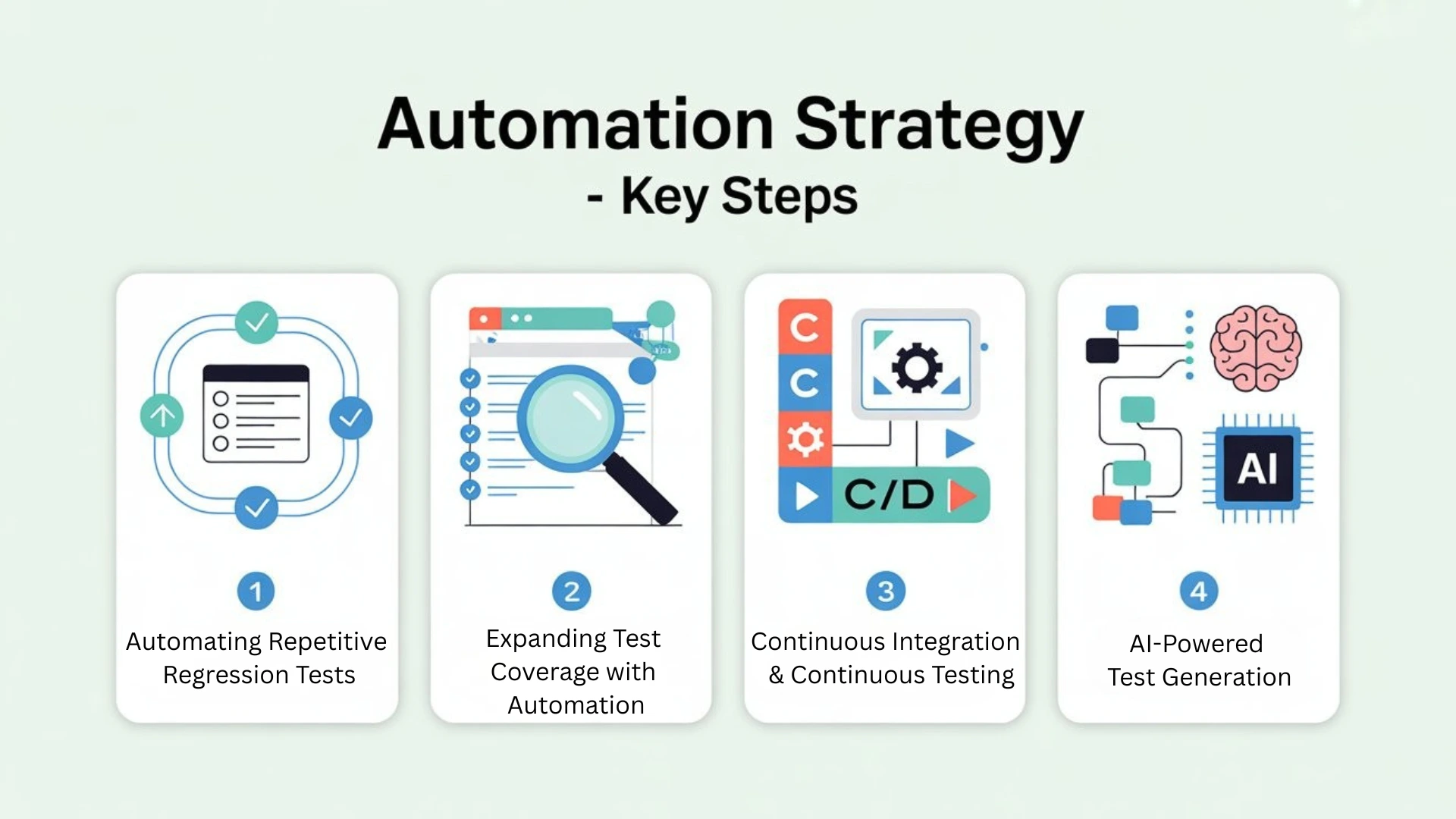
Recognizing these challenges, we decided to integrate automation into our testing strategy. It wasn’t about replacing manual testers; rather, it was about empowering the team to focus on higher-value activities while letting automation handle repetitive tasks. Here’s how we made the shift:
1. Automating Repetitive Regression Tests
We started with the most time-consuming, repetitive test cases—those that needed to be run with every release. Instead of executing these manually, we used Selenium and TestNG to automate the entire regression suite. This allowed us to run hundreds of tests in minutes, compared to the hours or days it took manually.
This automation also had a snowball effect. As the suite grew, we could run it daily to catch bugs early in the development cycle, instead of waiting for manual testing to happen at the end of the sprint.
2. Expanding Test Coverage with Automation
With automation handling the bulk of the regression testing, we could now expand our test coverage to include more edge cases, negative tests, and exploratory tests that were previously too time-intensive to execute. Automated tests could now cover scenarios that we never had the bandwidth to address manually.
Additionally, we could run tests across multiple browsers, devices, and operating systems simultaneously, giving us the flexibility to test environments that weren’t possible with manual testing alone.
3. Continuous Integration and Continuous Testing
Integrating our automated tests into the CI/CD pipeline was a game-changer. Now, every time a developer pushed a new commit, automated tests would run instantly, providing immediate feedback. The result? Faster feedback loops that allowed developers to catch and fix issues much quicker.
CI/CD and automated testing also meant that we no longer had to wait for the testing phase at the end of the sprint. Automated tests ran continuously in the background, keeping everything in check throughout the development process.
4. AI-Powered Test Generation
To further speed up the automation process, we started exploring AI-powered test generation tools. These tools automatically generated test cases based on user interactions, making it easier to scale our automation efforts. By leveraging AI, we could create tests for new features and edge cases with minimal input, significantly cutting down the time it took to write and maintain tests.
The Impact of Automation: Reducing 90% of Manual Effort
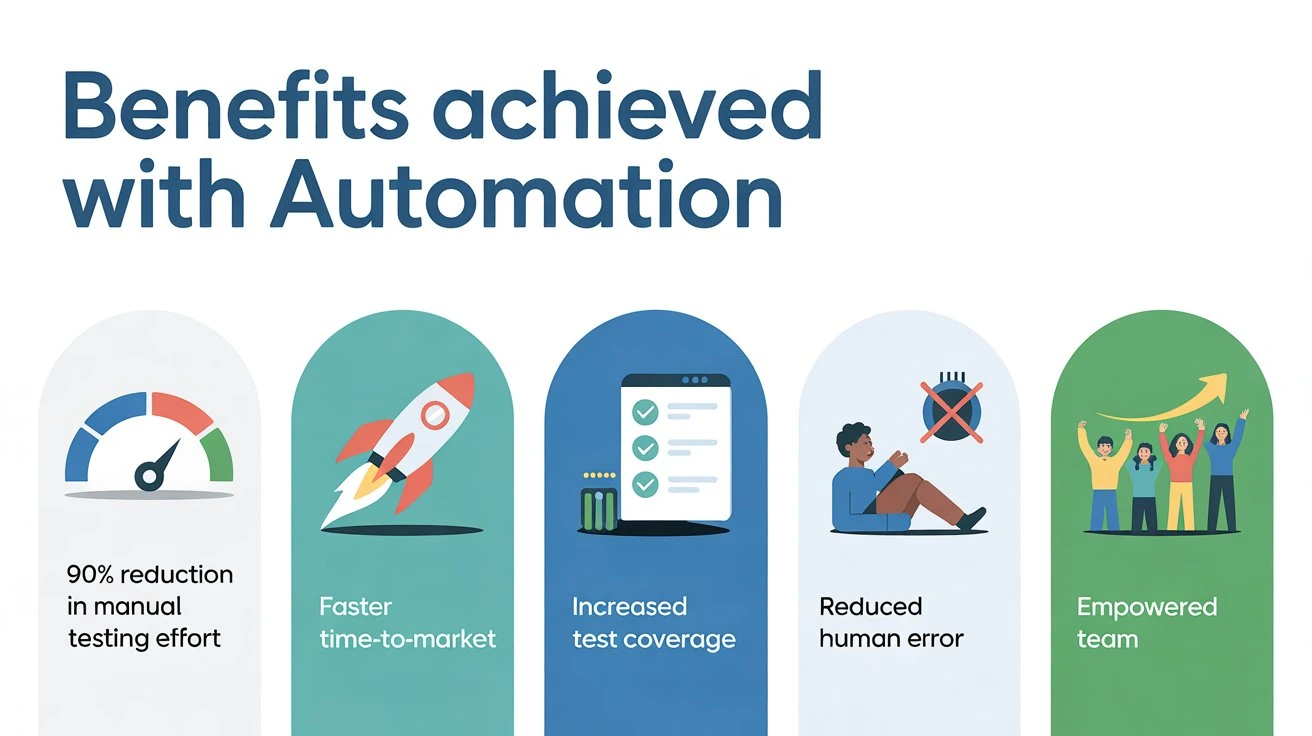
By the time our automation strategy was fully integrated, the results were undeniable. Here’s the impact:
1. 90% Reduction in Manual Testing Effort
With automated regression suites running as part of our CI pipeline and additional edge cases being tested automatically, we saw a 90% reduction in the amount of time we spent on manual testing. Tasks that previously took days now took just hours—or in many cases, minutes.
2. Faster Time-to-Market
Automated testing allowed us to deliver releases faster and more reliably. With rapid feedback loops and automated tests running as soon as code was committed, issues were caught and resolved early in the cycle, shortening the time to get products out the door.
3. Increased Test Coverage
Automation opened the door to testing scenarios we couldn’t afford to manually execute, such as stress tests, load tests, and multi-browser testing. With automation handling the bulk of the repetitive tasks, we could focus on testing high-impact user flows and conducting more exploratory testing.
4. Reduced Human Error
Automated tests eliminated the variability introduced by human testers. They consistently executed every test with precision, ensuring that we had repeatable, reliable results every time. This increased our confidence in the overall quality of the product.
5. Empowered Team
Our team shifted focus from routine test execution to quality improvement. With automation handling the repetitive tasks, we could now focus on higher-value activities such as exploratory testing, performance analysis, and test strategy. This allowed us to take a more proactive approach to quality rather than simply reacting to bugs.
Other Helpful Articles: automation testing interview questions
Key Takeaways: How to Successfully Implement Automation
Looking back, I can clearly see the core factors that led to our success:
1. Start with a Clear Automation Strategy
Don’t automate just for the sake of it. Focus on areas with the highest return on investment, like regression tests and high-impact user scenarios. Build a strategy that scales and aligns with the product’s needs.
2. Invest in CI/CD and Test Maintenance
Integrating automation with a robust CI/CD pipeline is critical for real-time feedback. But automation alone isn’t enough—test maintenance is just as important. Keep your test suite lean, up-to-date, and relevant to the current state of the application.
3. Make Automation a Continuous Process
Treat automation as a living, evolving process. Keep adding new tests, refining old ones, and leveraging new tools as they become available. With each iteration, your automation suite will become more comprehensive and valuable.

4. Empower Your Team to Innovate
With routine tasks out of the way, allow your team to focus on innovative testing, finding new ways to ensure product quality. Empower them to think creatively about what tests should be automated and how to make the process more efficient.
Conclusion
Automation has fundamentally transformed our testing process. By reducing 90% of manual testing effort, we’ve freed up valuable time, increased test coverage, and accelerated our release cycles.
From my perspective, automation is no longer a luxury—it’s a necessity. With the right strategy and tools, it’s possible to automate key workflows while still allowing room for manual testing and innovation. Automation is about working smarter, not harder, and it’s the backbone of a future-proof QA process.
If you haven’t already, I highly recommend embracing automation. It’s the future of quality assurance, and the results speak for themselves.
FAQs
Q1. How did you reduce 90% of manual testing effort?
We started by automating repetitive regression tests, integrating them into the CI/CD pipeline, expanding coverage to more browsers and scenarios, and later using AI-powered test generation. Over time, most of the routine checks ran automatically, leaving only high-value manual work.
Q2. What were the biggest challenges with manual testing before automation?
Manual testing caused repetitive regression cycles, limited coverage, slow feedback for developers, frequent human error and heavy use of tester time, leaving little room for exploratory testing or innovation.
Q3. Which tests should a team automate first?
Start with high-volume, repetitive regression tests that run in every release, especially for critical user flows like login, checkout and core dashboards. These deliver the fastest time savings and create a solid base suite to plug into CI/CD.
Q4. How did CI/CD and continuous testing help?
By wiring automated tests into the CI/CD pipeline, every code commit triggered test runs and gave instant feedback. This caught issues earlier, shortened regression cycles and made releases more predictable and less stressful.
Q5. What role did AI-powered test generation play?
AI tools helped generate additional test cases from user interactions, especially for new features and edge cases. This reduced the time spent writing tests manually and made it easier to scale coverage without adding more testers.
Q6. How did automation change the QA team’s work?
With 90% of repetitive manual effort removed, the team could focus on exploratory testing, performance checks, strategy and improving test design. Automation became the backbone, and testers moved from repetitive execution to higher-value quality engineering.
We Also Provide Training In:
- Advanced Selenium Training
- Playwright Training
- Gen AI Training
- AWS Training
- REST API Training
- Full Stack Training
- Appium Training
- DevOps Training
- JMeter Performance Training
Author’s Bio:

Content Writer at Testleaf, specializing in SEO-driven content for test automation, software development, and cybersecurity. I turn complex technical topics into clear, engaging stories that educate, inspire, and drive digital transformation.
Ezhirkadhir Raja
Content Writer – Testleaf