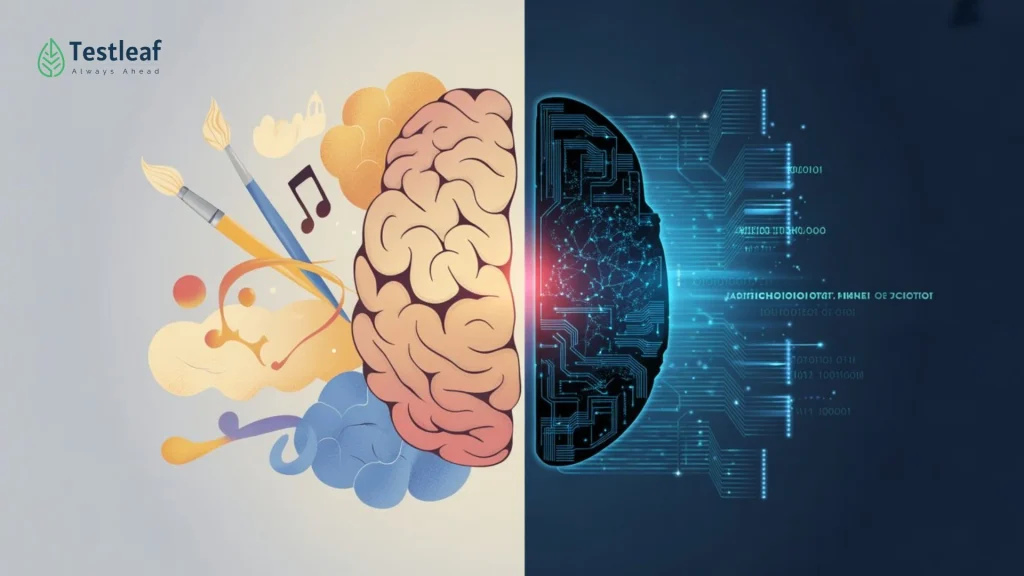
Artificial Intelligence is evolving faster than any technology we have seen before. From content generation to autonomous decision-making systems, AI is now embedded in daily business operations. This rapid growth has triggered an unavoidable question: Will artificial intelligence eventually replace human intelligence?
As we move into 2026, the real answer is more nuanced. AI is transforming how work is done, but it is not replacing what makes humans truly intelligent. Understanding the difference between artificial intelligence and human intelligence is critical for professionals, businesses, and students planning their future.
Understanding Artificial Intelligence in Simple Terms
Artificial Intelligence refers to machines designed to perform tasks that normally require human intelligence. These tasks include data analysis, pattern recognition, prediction, automation, and decision support.
AI systems learn from:
- Large datasets
- Historical patterns
- Predefined algorithms
What makes AI powerful is speed and scale. A machine can process millions of data points in seconds. However, AI does not “understand” information the way humans do. It operates within boundaries defined by data and code.
Recommended for You: manual testing interview questions
What Makes Human Intelligence Unique
Human intelligence is the result of:
- Conscious thinking
- Emotional awareness
- Creativity
- Moral reasoning
- Real-world experience
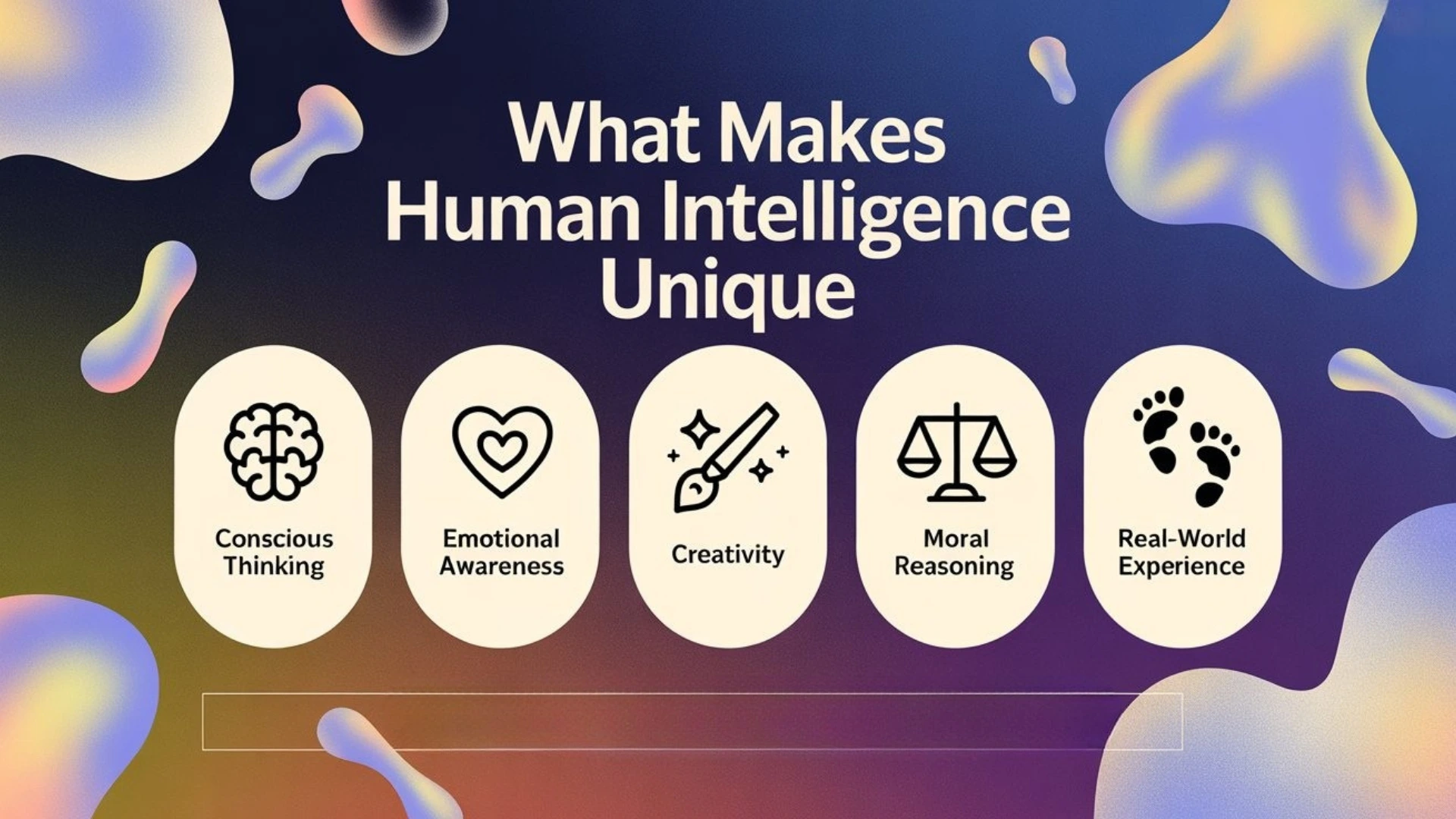
Humans can learn from limited data, adapt instantly to new situations, and apply judgment even when information is incomplete. Unlike AI, humans can ask why, not just what.
This difference becomes more important—not less—as technology advances.
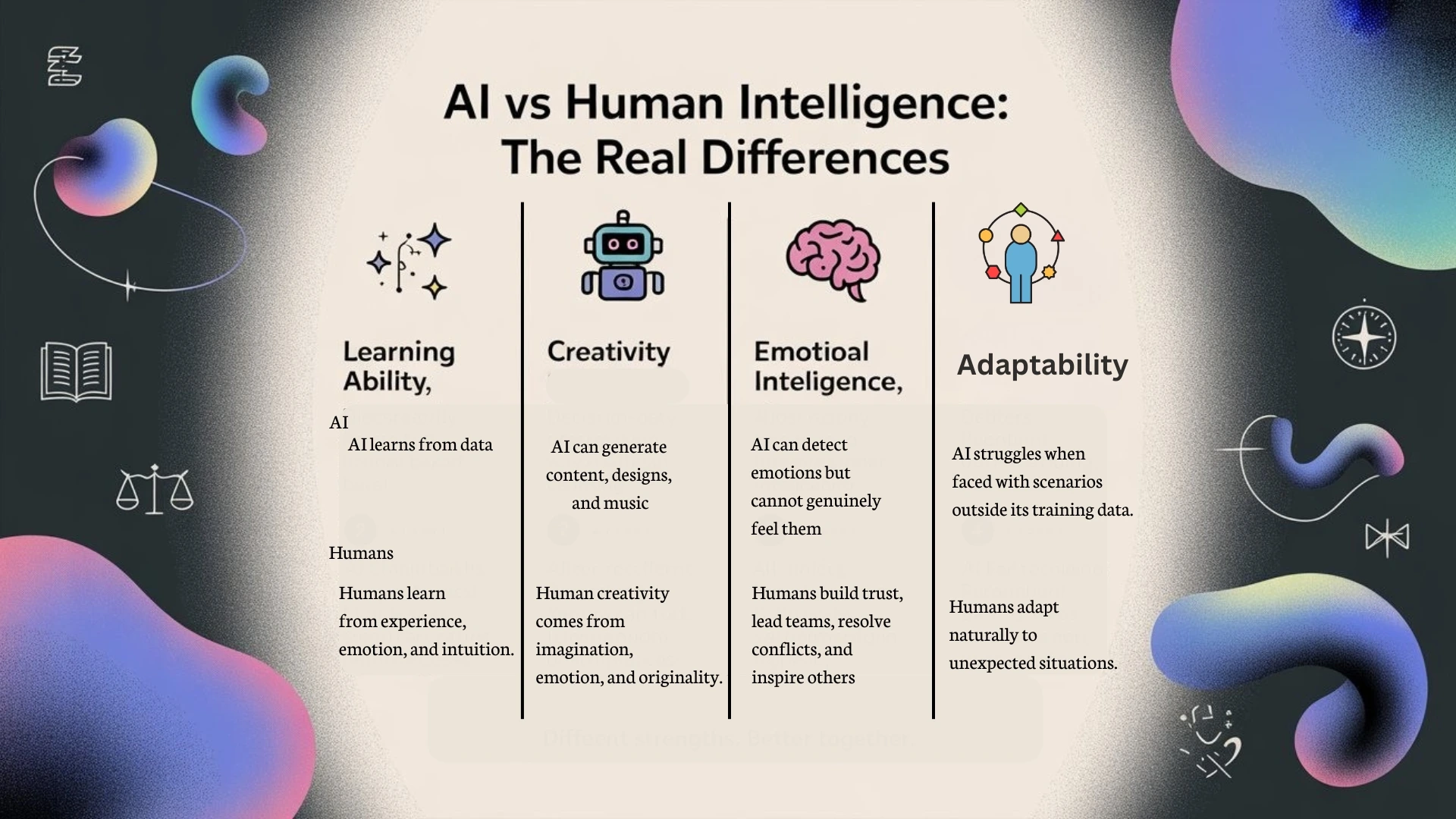
Artificial Intelligence vs Human Intelligence: The Real Differences
1. Learning Ability
AI learns from data. Humans learn from experience, emotion, and intuition. A human can adapt after one mistake. AI often needs thousands of examples.
2. Creativity
AI can generate content, designs, and music—but it does so by recombining existing patterns. Human creativity comes from imagination, emotion, and originality.
3. Decision-Making
AI decisions are rule-based and probability-driven. Human decisions consider ethics, empathy, and long-term consequences that cannot be fully quantified.
4. Emotional Intelligence
AI can detect emotions but cannot genuinely feel them. Humans build trust, lead teams, resolve conflicts, and inspire others—skills that remain irreplaceable.
5. Adaptability
Humans adapt naturally to unexpected situations. AI struggles when faced with scenarios outside its training data.
Why the “AI Will Replace Humans” Narrative Is Misleading
The idea that AI will completely replace humans is built on a flawed assumption—that intelligence is only about efficiency. In reality, intelligence also includes:
- Judgment under uncertainty
- Ethical responsibility
- Creativity without precedent
- Social connection
AI replaces tasks, not thinking. Jobs that rely purely on repetitive processes are at risk. Roles that require reasoning, creativity, leadership, and collaboration are becoming more valuable.
Other Helpful Articles: playwright interview questions
The Future Is Human–AI Collaboration, Not Competition
By 2026, the most successful professionals will not compete with AI. They will work with it.
AI will:
- Automate repetitive tasks
- Improve accuracy
- Support faster decisions
Humans will:
- Define strategy
- Apply context
- Make ethical choices
- Drive innovation
This collaboration model is already visible in software testing, healthcare, finance, and marketing. AI enhances productivity, while humans remain accountable for outcomes.
How This Shift Impacts Careers and Skills
The demand is moving away from “tool users” toward problem solvers.
Future-proof skills include:
- Critical thinking
- Domain expertise
- Communication
- Creativity
- Decision-making under uncertainty
Technical knowledge remains important, but human intelligence skills are what differentiate professionals in an AI-driven world.
Don’t Miss Out: AI and ML Engineer salary in india
Why Human Intelligence Will Still Lead in 2026 and Beyond
AI will continue to grow more powerful. But power does not equal understanding.
Human intelligence:
- Creates meaning
- Builds relationships
- Innovates beyond data
- Takes responsibility
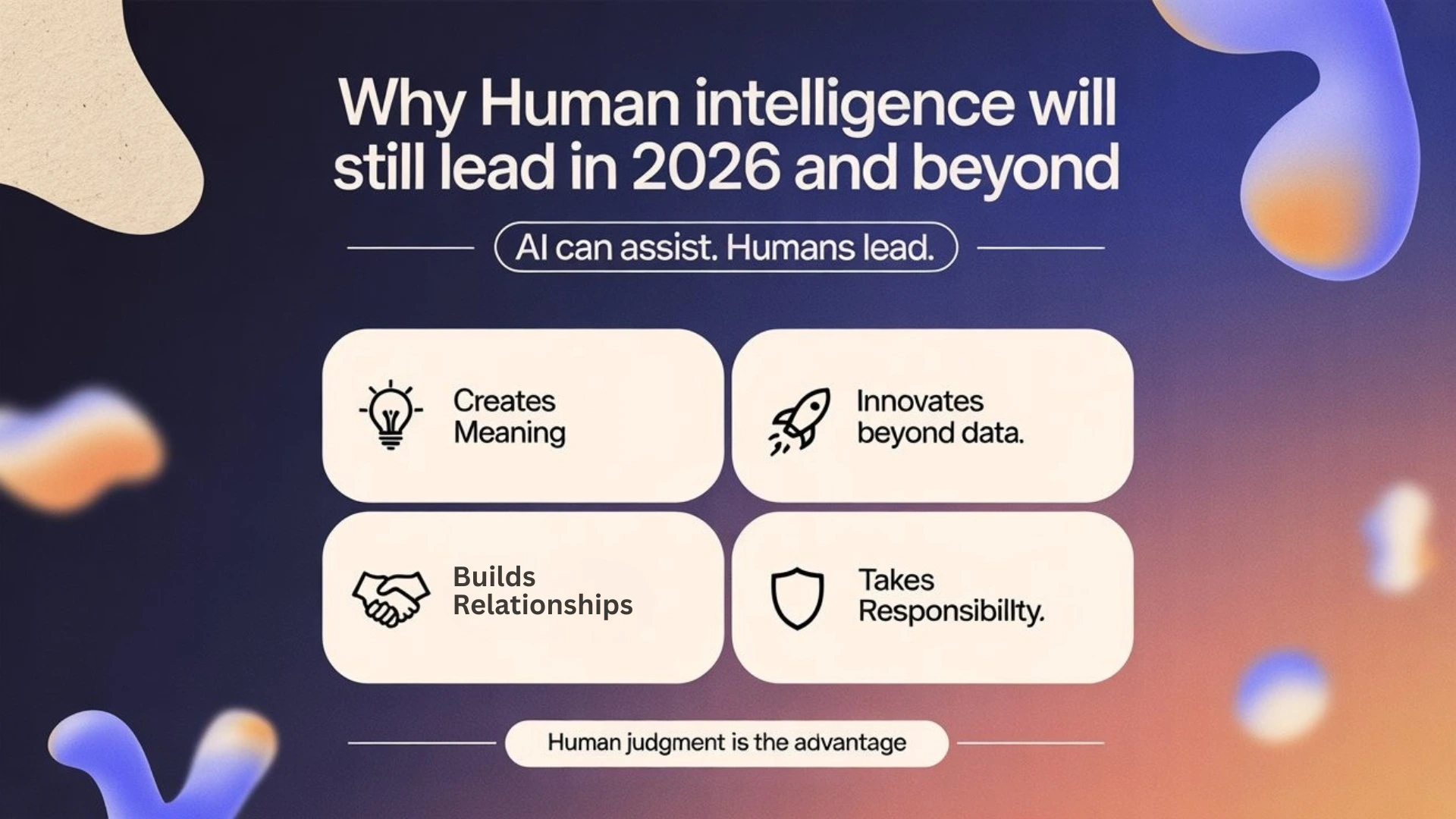
These qualities cannot be automated.
The future does not belong to AI alone. It belongs to humans who know how to use AI intelligently.
Final Thoughts
Artificial intelligence is reshaping industries, but it is not replacing human intelligence. Instead, it is redefining how intelligence is applied. In 2026 and beyond, success will depend on how effectively humans combine their cognitive strengths with intelligent machines.
Those who understand this balance will not be replaced—they will lead.
Building on this perspective, the next logical step for QA professionals is learning how to apply AI responsibly and effectively in real testing environments. As organizations increasingly adopt AI in software testing, testers who understand how to collaborate with AI systems—rather than compete with them—gain a significant career advantage. Our hands-on training programs at Testleaf is designed to translate this understanding into practical skills. To support this journey, we invite you to attend our AI Master Class for QA Professionals – Master AI Agents, where you will learn how to work with AI agents and integrate them into modern QA workflows with confidence.
FAQs
1. What is the main difference between artificial intelligence and human intelligence?
Artificial intelligence processes data and follows algorithms, while human intelligence involves creativity, emotional understanding, critical thinking, and ethical judgment.
2. Will artificial intelligence replace human intelligence in 2026?
No, artificial intelligence will not replace human intelligence in 2026. Instead, AI will automate tasks, while humans focus on decision-making, creativity, and problem-solving.
3. Why is human intelligence still important in an AI-driven world?
Human intelligence enables adaptability, empathy, ethical reasoning, and innovation—capabilities that artificial intelligence cannot fully replicate.
4. How does AI impact careers in software testing?
AI in software testing automates repetitive tasks, but skilled testers are still needed to design strategies, validate results, and ensure quality outcomes.
5. What skills should professionals focus on to stay relevant with AI?
Professionals should focus on critical thinking, domain expertise, communication, creativity, and learning how to work effectively with AI systems.
We Also Provide Training In:
- Advanced Selenium Training
- Playwright Training
- Gen AI Training
- AWS Training
- REST API Training
- Full Stack Training
- Appium Training
- DevOps Training
- JMeter Performance Training
Author’s Bio:

Content Writer at Testleaf, specializing in SEO-driven content for test automation, software development, and cybersecurity. I turn complex technical topics into clear, engaging stories that educate, inspire, and drive digital transformation.
Ezhirkadhir Raja
Content Writer – Testleaf