
In 2026, the era of traditional testing is coming to an end.
Automation has long been about running tests faster, but today’s real challenge is to make the right decisions based on that testing data. A modern CI/CD pipeline isn’t just a series of test executions—it’s a data-rich system where decisions need to be made quickly. The problem isn’t how to run tests; it’s how to interpret their results and determine what should happen next.
This is where AI-powered insights and Playwright’s detailed test reports are revolutionizing test automation.
The Growing Complexity of Test Automation: A Shift in Focus
In 2026, software teams are increasingly working with test suites that produce more data than ever before. For every pull request (PR), engineers face reports that include:
- Hundreds of passing tests
- A handful of failures
- Traces, screenshots, and logs
- Retry signals, flaky tests, and multiple environments
But not all of this data is actionable in its raw form. What matters isn’t just knowing that tests passed or failed—it’s knowing why they failed and what that means for the future of the project. This is where AI and Playwright step in.
Also, Know More About: playwright interview questions
Playwright + AI: A Game Changer for Test Reporting
Playwright already provides highly structured test results that AI can work with: HTML reports, trace data, test results, retry information, screenshots, and timing signals. By layering AI on top of these artifacts, teams can turn these raw outputs into short, actionable explanations—saving both time and resources.
What AI-Summarized Reports Solve
The challenge with traditional test reports is their operational noise. For example, a failed test run might show:
- 3 tests failed
- 2 tests retried
- Screenshots attached
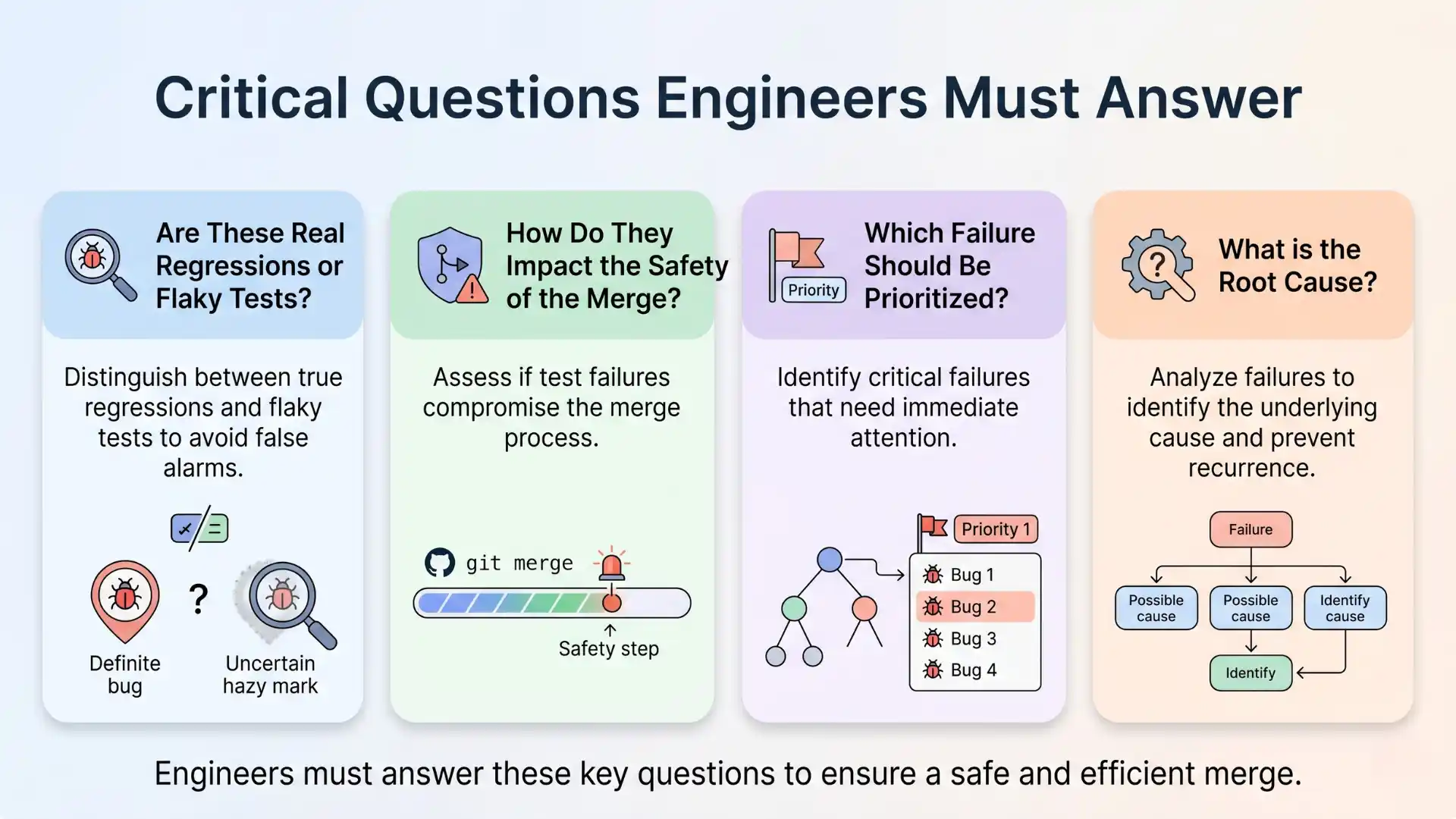
But that’s not enough to make quick decisions. Engineers must still answer critical questions:
- Are these real regressions or flaky tests?
- How do they impact the safety of the merge?
- Which failure should be prioritized?
- What is the root cause?

AI changes the game by summarizing these results into plain, human-readable language.
Example AI-Summarized Build Report:
Build Summary
- 182 tests passed
- 2 tests failed after retry
- 1 flaky test recovered
- Main issue: login redirect failing on Firefox only
- Suggested owner: frontend/auth team
- Merge risk: medium
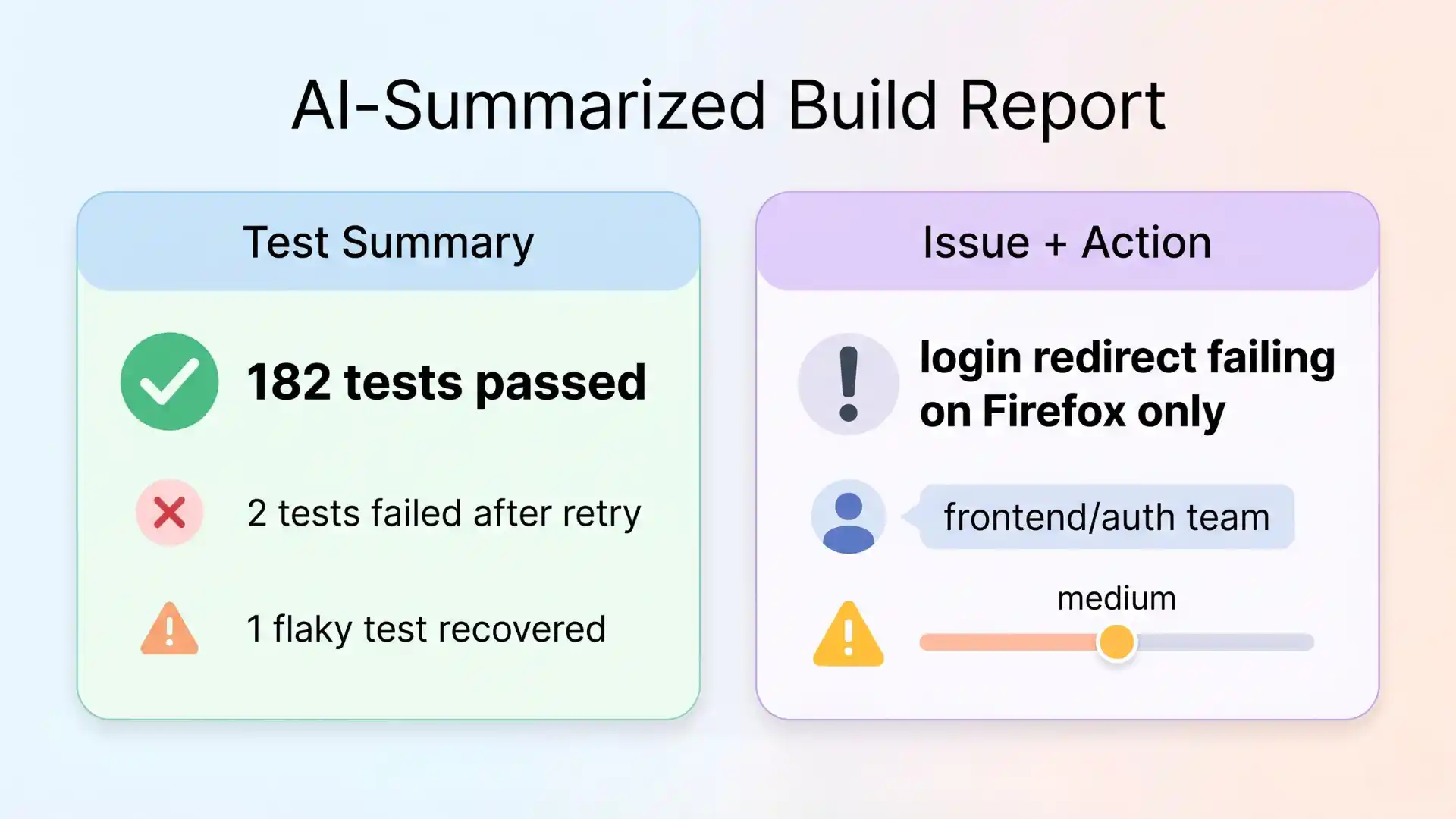
This makes it much easier for a pull request reviewer to quickly understand and decide whether to merge the code, without needing to dig through hundreds of lines of logs and traces.
Recommended for You: Highest paying companies in india
AI-Powered PR Gate Rules: Making Smarter Merge Decisions
In CI/CD pipelines, not every failure should block a merge. Some failures are minor and do not affect core functionality. AI-enhanced PR gate rules make it possible to adjust merge blocking policies based on context, giving teams the flexibility to focus on what’s most important.
AI’s Role in Smarter PR Gates
Instead of a simple “Any test failure blocks the merge” policy, AI-assisted gates can consider factors such as:
- Was the failure caused by a quarantined flaky test?
- Did it pass on retry?
- Is it isolated to a non-critical environment?
- Does trace evidence suggest a product bug or a test instability?
Example AI-Powered Gate Decision:
Decision: Block Merge
- Critical Playwright smoke test failed consistently
- Trace shows 500 error in /orders/confirm endpoint
- Suggested owner: checkout/backend team
In contrast, failures in non-critical areas might trigger only a warning or escalate for human review if AI confidence is low.
Building Trust in CI: Governance Benefits Beyond Efficiency
The real value of AI in CI/CD testing goes beyond convenience. By using AI for summarizing reports and intelligent PR gate decisions, teams can significantly improve the governance of their CI pipelines.
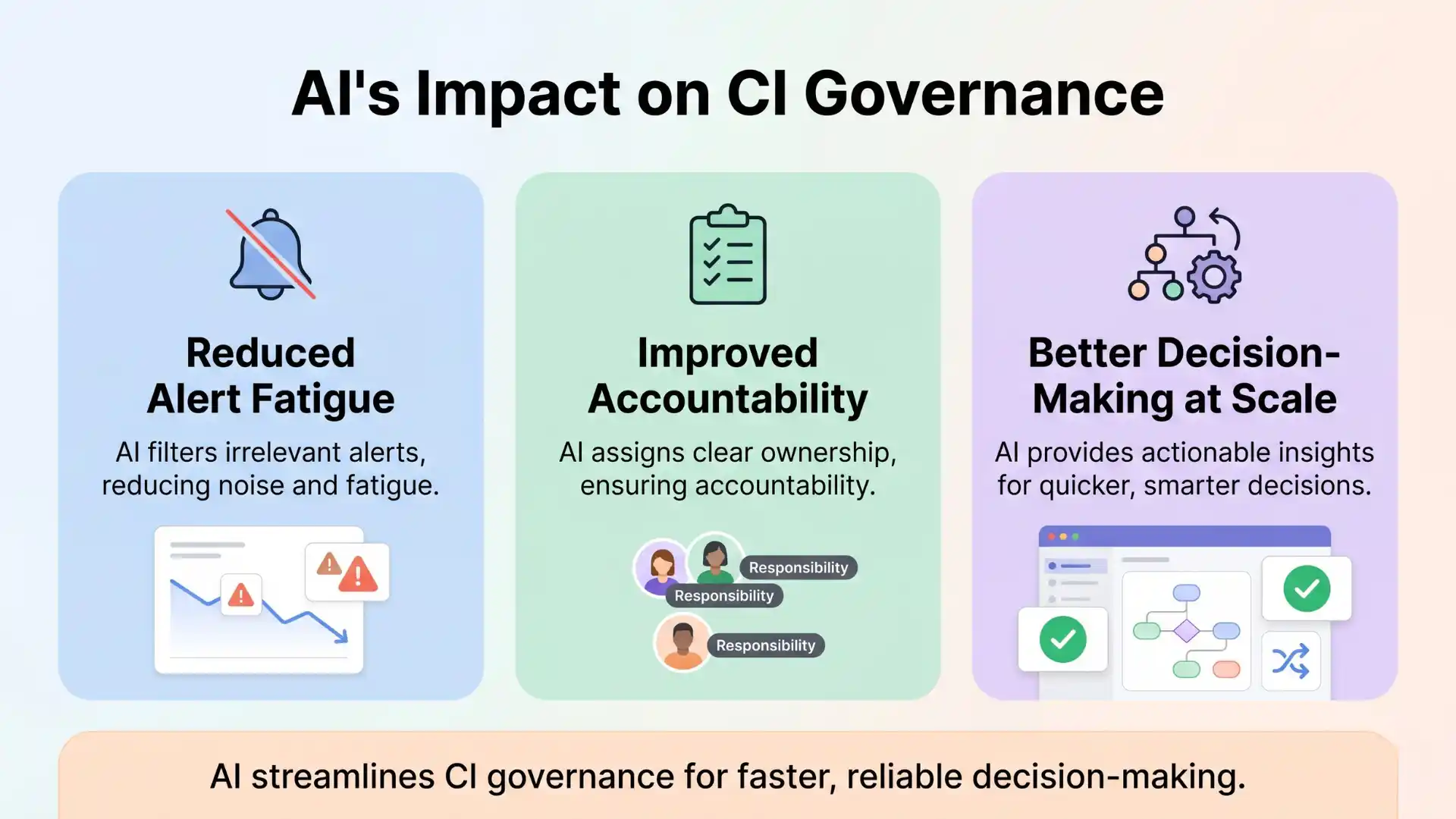
AI’s Impact on CI Governance
- Reduced Alert Fatigue
Teams no longer waste time addressing every red build. AI summaries highlight the tests that truly matter, allowing for better triage and focus. - Improved Accountability
AI ensures test failures are grouped, categorized, and routed to the appropriate teams, making it clear who should take action. - Better Decision-Making at Scale
As test suites grow larger, humans cannot manually inspect each test result. AI helps scale decision-making by providing clear, concise reports that allow teams to act quickly.
AI-Summarized Playwright Reports: The Next Step for High-Maturity Teams
In high-maturity teams, the challenge isn’t just test execution—it’s making better decisions faster. Playwright already provides detailed evidence through reports, traces, and logs. By adding AI on top of these reports, teams gain the ability to:
- Summarize the results in short, actionable formats
- Group failures into related clusters
- Provide root cause insights from test traces
- Make smarter PR gate decisions based on context
The future of QA isn’t about running more tests. It’s about decisions made at the speed of insights. AI-summarized reports and smart PR gates will help teams keep pipelines healthy and build trust in their CI systems.
Continue Reading: Top 10 product based companies in chennai
Why This Matters: The Real Power of AI-Summarized CI Reports
As software development moves toward more complex, data-driven workflows, AI-assisted testing and CI will become an essential part of the pipeline. It’s not just about automation; it’s about decision intelligence—using data to make the right decisions, faster.
Research & References to Back the Thought Leadership
- Stack Overflow Developer Survey 2025: 84% of developers are already using AI tools in their daily work (Stack Overflow Survey).
- DORA Metrics: According to DORA, high-performing teams using AI tools see up to 30% faster lead times and more stable releases (dora.dev).
- Playwright Docs: Playwright’s trace-based debugging is a key reason why its artifacts are perfect for AI summarization (Playwright Docs).
Key Takeaways
- AI summarization turns noisy test reports into actionable insights.
- Smarter PR gate rules help prioritize merges based on real engineering risk, not just failures.
- Governance becomes easier as AI reduces alert fatigue and improves accountability.
- Playwright is ideal for rich artifact generation, and AI enhances its value for smarter decision-making in CI pipelines.
Want to see how AI-summarized Playwright reports can transform your CI/CD workflow? Get in touch with Testleaf for personalized Playwright + AI solutions that will help scale your testing, reduce triage times, and make your merge decisions smarter.
FAQs
How does AI improve test automation with Playwright?
AI enhances Playwright’s test automation by summarizing test results, identifying key issues, and making smarter merge decisions, improving decision intelligence in CI/CD pipelines.
What are AI-summarized reports in test automation?
AI-summarized reports convert detailed Playwright test results into actionable insights, allowing teams to make faster decisions and prioritize real engineering risks.
Why are AI-powered PR gates beneficial in CI/CD?
AI-powered PR gates evaluate failures in context, considering factors like flaky tests and test retries, allowing for smarter merge decisions based on engineering risk.
What role does AI play in CI pipeline governance?
AI reduces alert fatigue, improves accountability, and ensures that only relevant test failures are addressed, enabling better decision-making and scaling governance efforts.
How can AI in testing reduce triage times?
By automatically summarizing test results and grouping related failures, AI in testing reduces triage times, allowing teams to focus on the most critical issues efficiently.
What is the future of AI in test automation?
The future of AI in test automation lies in decision intelligence—using AI to analyze testing data, provide insights, and enable faster, smarter decisions to keep CI/CD pipelines healthy.
We Also Provide Training In:
- Advanced Selenium Training
- Playwright Training
- Gen AI Training
- AWS Training
- REST API Training
- Full Stack Training
- Appium Training
- DevOps Training
- JMeter Performance Training
Author’s Bio:


Content Writer at Testleaf, specializing in SEO-driven content for test automation, software development, and cybersecurity. I turn complex technical topics into clear, engaging stories that educate, inspire, and drive digital transformation.
Ezhirkadhir Raja
Content Writer – Testleaf