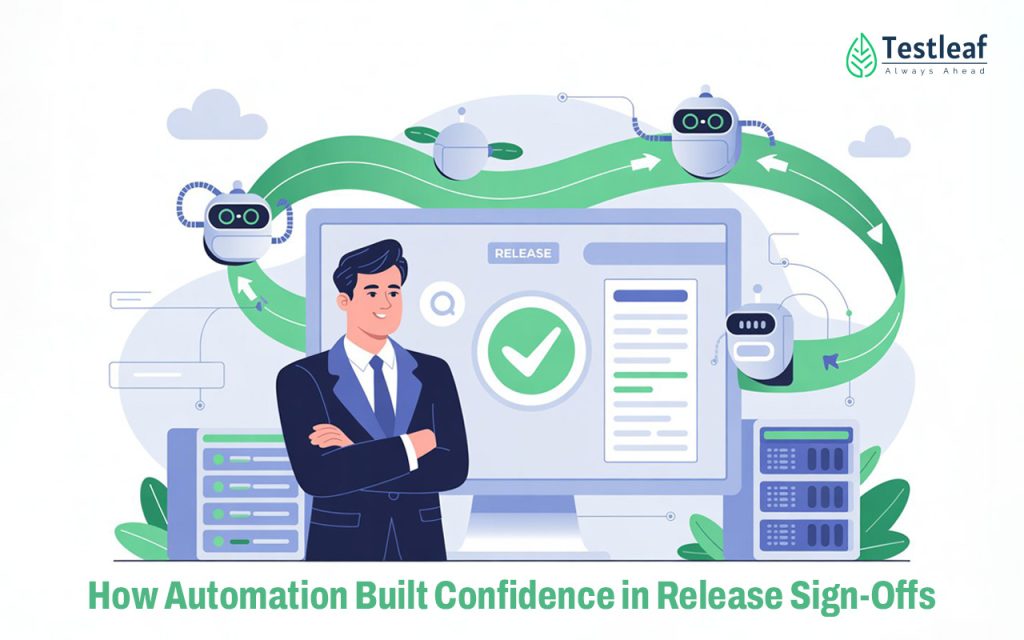
In my early days as a QA engineer, release sign-offs were always stressful, time-consuming, and full of uncertainty. We spent hours compiling test results, capturing screenshots, preparing reports, and holding lengthy meetings with developers and stakeholders. Even then, confidence was never absolute—there was always a lingering doubt: Did we miss something? Did a flaky test give us a false green?
Over time, I realized that manual processes alone could never guarantee reliable release validation. That’s when automation became a game-changer. By integrating automated tests throughout the development lifecycle and connecting them to CI/CD pipelines, we transformed release sign-offs from a painful ritual into a confident, data-driven process. Here’s how automation helped us build trust, efficiency, and stability in our releases.
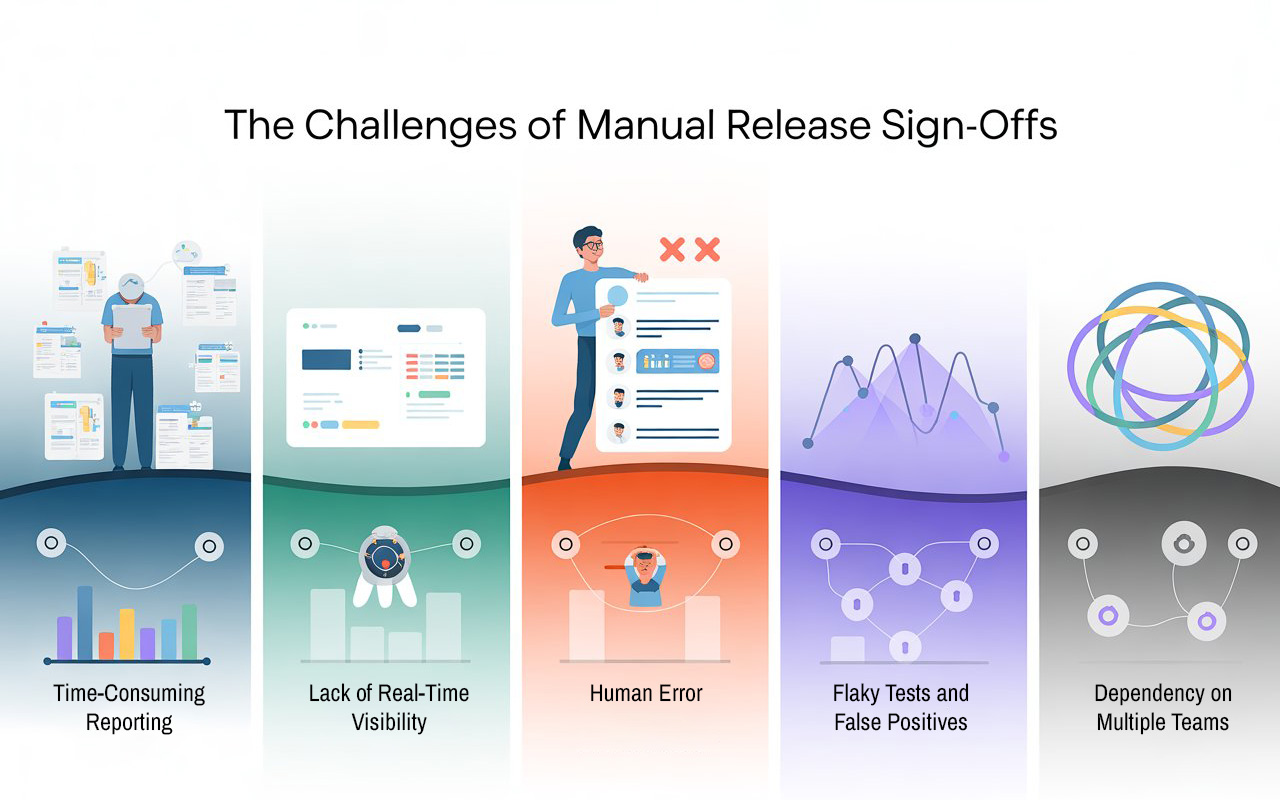
The Challenges of Manual Release Sign-Offs
Before we implemented automation, release sign-offs were plagued with several challenges:
1. Time-Consuming Reporting
Compiling results from multiple test runs, environments, and modules often took hours or even days. Screenshots had to be manually captured, logs reviewed, and reports summarized for stakeholders.
2. Lack of Real-Time Visibility
Manual sign-offs meant stakeholders only saw a snapshot of test results after execution was complete. By the time results were shared, environments might have already changed, making it hard to act on issues quickly.
3. Human Error
Manual report generation introduced errors and inconsistencies. Screenshots might be missed, logs misinterpreted, or defects overlooked, undermining confidence in the release.
4. Flaky Tests and False Positives
Without automated pipelines and robust reporting, intermittent failures were difficult to differentiate from real defects. This led to unnecessary delays and repeated validation cycles.
5. Dependency on Multiple Teams
Release validation often depended on input from developers, QA, and third-party teams. Coordinating evidence and approvals manually was time-intensive and error-prone.
Don’t Miss Out: automation testing interview questions
How Automation Transformed the Sign-Off Process
Automation revolutionized release sign-offs by addressing these challenges directly. Here’s how we approached it:
1. Integration with CI/CD Pipelines
By connecting our automated tests to the CI/CD pipeline, every commit triggered instant validation across all environments:
- Smoke tests ran immediately after deployment, ensuring critical workflows were stable.
- Full regression suites executed in parallel, covering end-to-end functionality.
- Stakeholders could monitor real-time test progress without waiting for manual reports.
Automation made the pipeline predictable, reliable, and transparent, which directly built confidence in the results.
2. Centralized Test Evidence
We moved from scattered screenshots and logs to centralized evidence repositories:
- Videos of test execution captured the full flow of interactions.
- HAR files and network logs documented backend responses and API behavior.
- Screenshots and logs were linked to specific test cases, providing context for every failure.
This rich evidence allowed developers and stakeholders to reproduce failures quickly, reducing back-and-forth and accelerating defect resolution.
3. Eliminating Manual Report Compilation
Automation eliminated the need to manually compile results:
- Dashboards provided real-time pass/fail status for each test suite and environment.
- Metrics like test execution time, failure trends, and flaky test rates were automatically calculated.
- Automated alerts notified stakeholders immediately of critical failures, eliminating delays.
By automating reporting, QA could focus on analyzing results and improving coverage rather than preparing documents.
4. Mitigating Flaky Tests with Retry Logic
Some failures were due to environmental issues or timing delays. We implemented retry logic for unstable tests:
- Tests were retried a limited number of times before marking a failure.
- This approach filtered out transient failures, ensuring that pipeline results reflected true defects.
- Developers no longer had to question whether a red build indicated a real issue or a transient glitch.
5. Automated Phase-Based Sign-Offs
Automation enabled phase-by-phase validation:
- Dev Environment – initial smoke tests ensure the build is stable.
- QA Environment – full regression validates core workflows and edge cases.
- Preprod Environment – environment parity testing confirms production readiness.
- Production – post-deployment smoke tests verify live behavior.
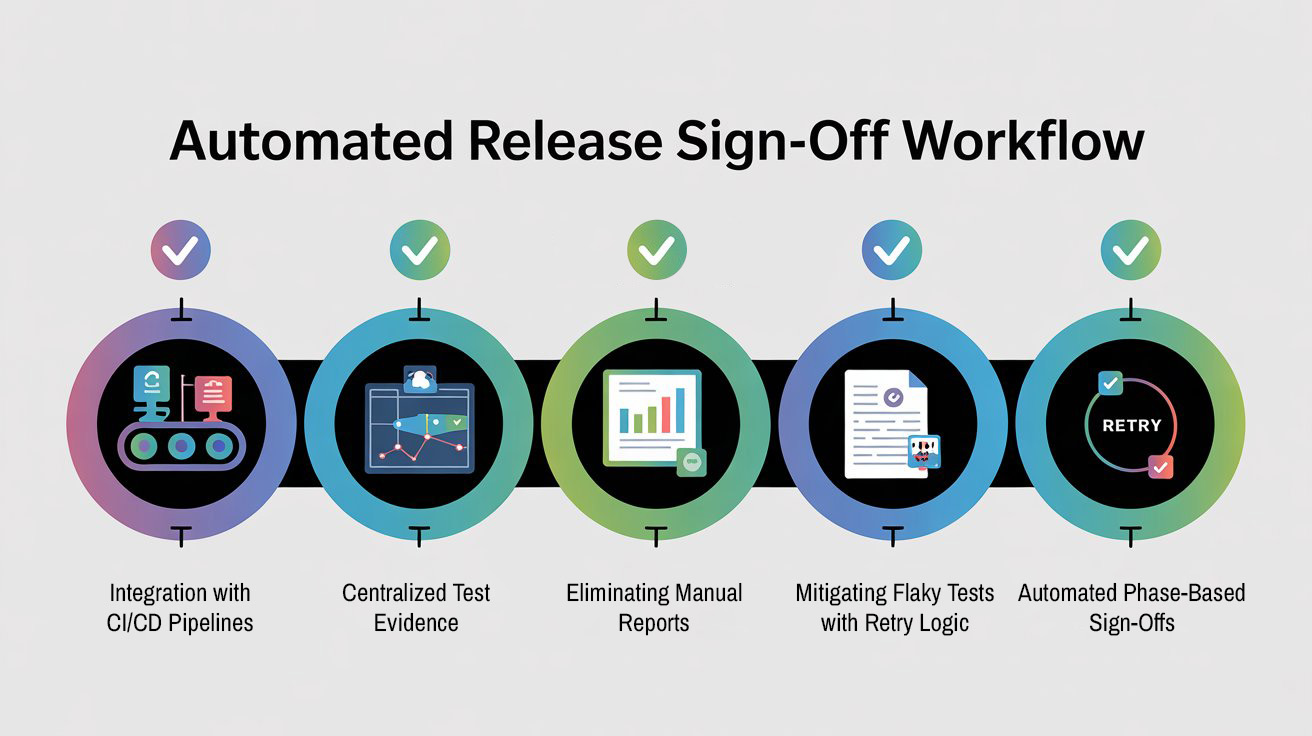
Each stage automatically reported results, and only builds that passed all phases moved forward. This structured approach eliminated the need for repeated manual re-execution.
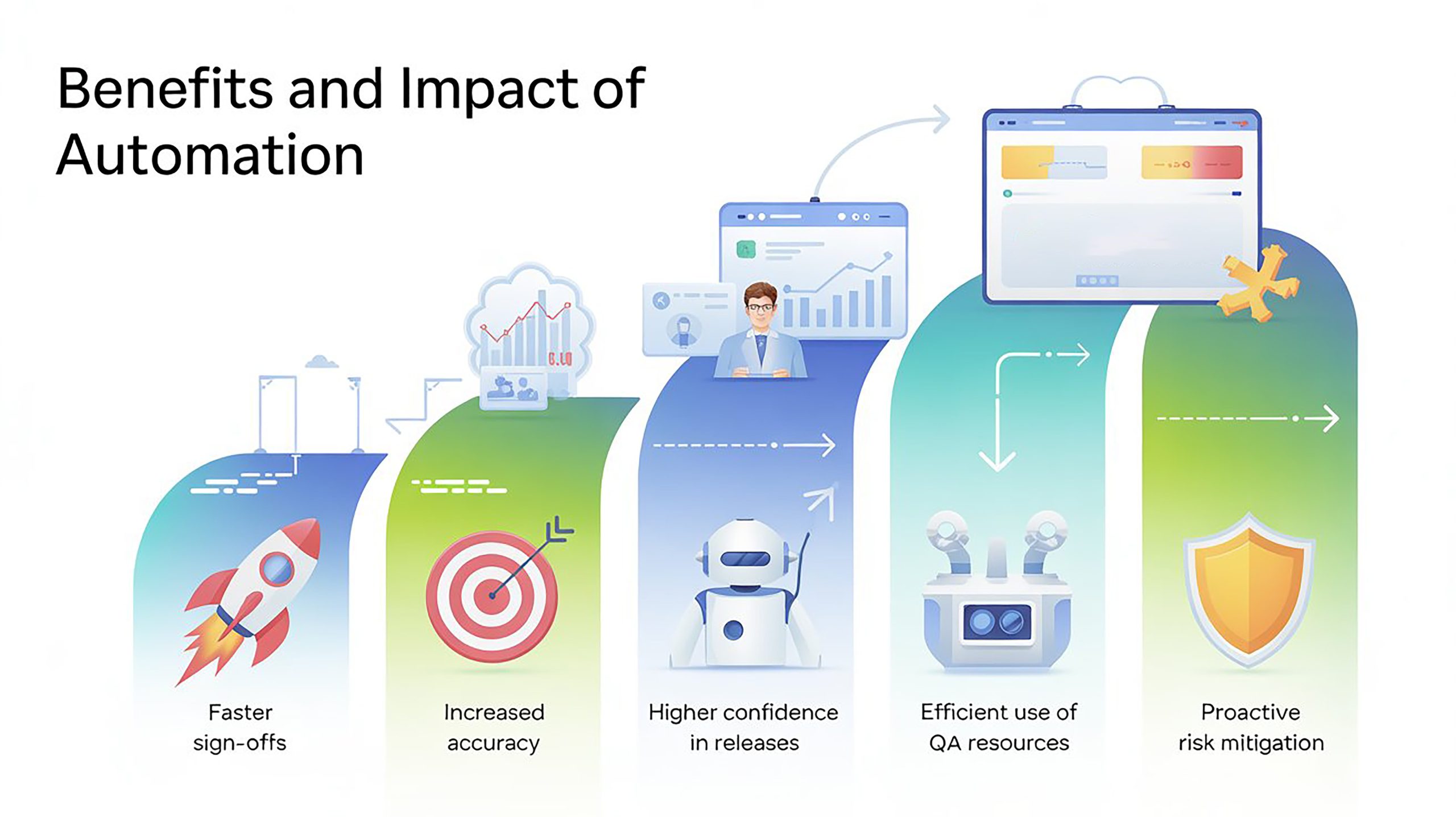
Benefits of Automation in Release Sign-Offs
Implementing automation produced tangible benefits across QA and the broader team:
1. Faster Sign-Offs
Automated test execution and reporting reduced sign-off preparation from hours to minutes. Stakeholders could approve releases with confidence based on real-time data.
2. Increased Accuracy
With centralized, evidence-rich results, errors caused by human oversight were eliminated. Every failure could be traced, reproduced, and resolved efficiently.
3. Higher Confidence in Releases
Green builds now reliably reflected application stability. Developers and product managers trusted the results, enabling faster releases with fewer manual checks.
4. Efficient Use of QA Resources
QA teams could focus on exploratory testing, complex workflows, and framework improvements instead of repetitive report generation.
5. Proactive Risk Mitigation
Automated evidence, dashboards, and retry logic helped identify issues early, reducing the likelihood of critical production failures.
Lessons Learned
From my experience, a few key principles emerged:
- Automation Is About Confidence, Not Just Speed
The primary goal of automation in release sign-offs is building trust in the pipeline, not just reducing manual effort. - Evidence Is Essential
Rich, contextual test evidence allows teams to understand failures quickly and make informed decisions without relying solely on QA explanations. - Phase-Based Validation Works Best
Validating builds incrementally across environments reduces risk and ensures that only stable releases reach production. - Maintainability Matters
Automated tests and dashboards must be regularly reviewed and updated to reflect application changes. Outdated automation can undermine confidence.

Real-World Impact
Since implementing automation for release sign-offs:
- Release preparation time decreased by over 70%.
- Manual report generation became obsolete, freeing QA to focus on improving test coverage.
- Developers resolved defects faster due to rich, contextual evidence.
- Stakeholders trusted the pipeline, leading to quicker approvals and faster time-to-market.
- Flaky tests were minimized, and CI/CD pipelines became reliable and predictable.
From my perspective, automation transformed sign-offs from a stressful bottleneck into a confidence-building process. QA was no longer a gatekeeper; we became strategic enablers of quality.
Conclusion
Manual release sign-offs are slow, error-prone, and stressful. Automation solves these challenges by providing reliable, real-time evidence, eliminating repetitive reporting, and ensuring phase-based validation.
From my experience as a tester, automation doesn’t just accelerate sign-offs—it builds confidence across the team, reduces risk, and strengthens trust in the QA process. For any QA team looking to future-proof releases, investing in automated release validation is non-negotiable.
Automation turns sign-offs from a bottleneck into a strategic advantage, allowing teams to focus on delivering high-quality software faster and with greater confidence.
FAQ
Q1. What is a QA release sign-off?
A QA release sign-off is the final confirmation that a build has passed all required tests and quality checks before going live. It’s based on evidence from test execution, defect status and environment readiness, and signals that the release is safe to deploy.
Q2. Why are manual release sign-offs so stressful?
Manual sign-offs require compiling reports, screenshots and logs from many runs and environments. This takes hours, introduces human error and still leaves doubt about missed scenarios or flaky tests that gave false greens.
Q3. How does test automation improve release sign-offs?
Automation connects tests to CI/CD pipelines, runs smoke and regression suites on every build, and produces real-time dashboards. This makes results transparent, repeatable and evidence-based, so stakeholders can approve releases with higher confidence.
Q4. What kind of evidence should automated tests capture for sign-off?
Strong pipelines capture videos of execution, screenshots, logs and HAR or network traces linked to each test. This rich evidence helps developers quickly reproduce issues and reduces back-and-forth between QA and engineering.
Q5. How do you handle flaky tests in CI/CD pipelines?
You can add controlled retry logic for known unstable tests, monitor flaky test rates on dashboards and regularly refactor problem cases. This filters out transient issues and ensures red builds indicate real defects, not noise.
Q6. What is phase-based release validation?
Phase-based validation runs different levels of automation across Dev, QA, preprod and production environments. Only builds that pass each stage move forward, reducing risk and making the release process predictable and repeatable.
Q7. What benefits did you see after automating release sign-offs?
After automation, release prep time dropped dramatically, manual reports became unnecessary, flaky tests were minimized and stakeholders trusted the pipeline. This led to faster approvals, fewer production issues and QA acting as a strategic enabler, not a bottleneck.
We Also Provide Training In:
- Advanced Selenium Training
- Playwright Training
- Gen AI Training
- AWS Training
- REST API Training
- Full Stack Training
- Appium Training
- DevOps Training
- JMeter Performance Training
Author’s Bio:

Content Writer at Testleaf, specializing in SEO-driven content for test automation, software development, and cybersecurity. I turn complex technical topics into clear, engaging stories that educate, inspire, and drive digital transformation.
Ezhirkadhir Raja
Content Writer – Testleaf